Sauter au contenu principal
actuellecd

Blogue

56 résultats
  • 1
  • 2
  • 3
  • 4
  • 5
  • 6
  • 7
  • 8
  • 9
  • Elle a son mot à dire dans Interlude

    «Review», Fanny Po Sim Head, Interlude, 7 août 2025
    mardi 12 août 2025 Presse

    Composer, improviser, and saxophonist Joane Hétu has been a vital figure in Quebec’s experimental music scene since the 1980s. Her latest album, Elle a son mot à dire (She Has Her Say), released with Ensemble SuperMusique, brings together compositions written between 2001 and 2023 in a vivid, genre-defying live performance. In recent interviews with both Hétu and trumpet player Émile Fortin, I had the opportunity to explore the creative process behind this album and their views on improvisation, collaboration, and performance.

    The album, recorded live in May 2023, reflects Hétu’s signature blend of notated music, improvisation, and text. Though the pieces weren’t composed under a unified theme, Hétu explains that her fascination with language and expression shapes the project: “I didn’t work from a specific theme, but as the title suggests, I explored words I wanted to bring together in a single concert. It’s a unique performance built around language.”

    Several of the album’s works are based on original texts, some of which have been long-held, while others are newly written. Vivante, for example, features Hétu on voice and Michel F Côté on percussion in a free improvisation based on a text from 2005 that had never been performed before. In Mot elle a, the singer’s part is fully composed, while the percussionist improvises within a set of guidelines. Other pieces, like Elle qui est-elle?, feature a hybrid form—composed structures with space for instrumental solos, including trumpet and tuba.

    For Hétu, this balance between structure and freedom is essential. She describes herself as drawn to “radical improvisation”—music made without scores or directions, relying purely on listening, interaction, and spontaneity. “Improvising takes less time to prepare than a fully notated piece,” she notes, “but it requires a different kind of attention—grace, intelligence, and musicality in the moment.”

    The album was created with Ensemble SuperMusique, a variable-geometry collective Hétu co-directs alongside founding member Danielle Palardy Roger. For this project, the group included seven musicians—instrumentalists and vocalists—whose diverse backgrounds and creative input shaped the sound of the performance. The concert wasn’t just about music; it was a total experience. Costumes, makeup, movement, and staging all played a role in supporting the sonic language of the pieces.

    One of the performers, Émile Fortin, a classically trained trumpet player and improviser, spoke enthusiastically about the process. “We had about 18 hours of rehearsal, which is a lot for a single performance,” they shared. “Some of the pieces used small percussion or toys instead of our main instruments. The visual element mattered too—we had specific colours, costumes, and makeup. It all helped us feel that the concert was conceived as a whole.”

    Émile’s exploration of new music began in graduate school, when a seminar on Vinko Globokar’s Laboratorium introduced her to performance techniques beyond traditional orchestral methods. Her musical identity developed through free improvisation, acting, movement, and performance art. Today, Émile performs in a variety of contexts, from solo work to ensemble settings, and manages their projects, which are centered on experimental and community-engaged music.

    She describes free improvisation not only as a musical approach but as a way of relating to others: “It’s like a social model. Sometimes you instantly connect with the other musicians, sometimes you don’t — but you still have to listen and respond. It teaches you how to be present and relevant, just like in a real conversation.” In improvised settings, silence, restraint, and timing become as important as sound itself.

    Hétu shares this deep commitment to listening, both in performance and as a composer. While her compositions often begin with texts and melodies that live in her mind for months or years, she always seeks to preserve space for interpretation and dialogue. One thing that distinguishes her work is the way she writes with performers in mind. Émile emphasised this point: “Joane doesn’t just write for the trumpet—she writes for me. She lets each musician’s personality shape the music.”

    For those new to experimental music, both artists encourage live listening. “This music isn’t difficult if you allow yourself to let go,” Hétu said. Émile agreed, highlighting the energy of live interaction as a defining feature: “If you can attend a free improvisation performance, that’s where you’ll feel it—especially the moment when something clicks between the musicians.”

    They both recommend the track Vivante as a good starting point. “It’s just voice and percussion, but it swings in a way that’s very immediate,” Émile said. “It almost feels like a song you’d hear on the radio, but with so much freedom.”

    Beyond Elle a son mot à dire, Hétu continues to mentor and collaborate across generations, helping keep Montréal’s new music ecosystem vibrant and intergenerational. Meanwhile, Émile carries this ethos forward in their projects, including a wind trio called Williwaw, known for performances that blur the boundaries of instrument, object, and identity.

    Together, Hétu and Émile exemplify the power of experimental music to create space for individuality, community, and discovery. In this album, and in their artistic lives, they remind us that sound can speak — even when words fail to convey the full meaning.

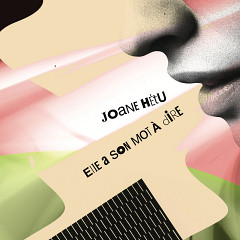
    In this album, and in their artistic lives, they remind us that sound can speak — even when words fail to convey the full meaning.

    Elle a son mot à dire dans Anne Carlini

    «Review», Anne Carlini, Anne Carlini, 1 juillet 2025
    jeudi 7 août 2025 Presse

    For those unaware, born in 1958 in Montréal, where she still lives and works, Joane Hétu is a musician, composer, improviser, conductor, cultural worker and manager.

    Winner of the prestigious Freddie Stone Award in 2006 for her involvement in Canadian creation music, Hétu wields her two instruments, voice and alto saxophone, combining the flexibility of one and the urgency of the other in a symbiosis that is uniquely hers. She directs the noise choir Joker, which she founded in 2012 and for which she created, among others, the works Où est-il donc ce rêve? (2014) and Langoureusengagée (2017).

    She co-directs the Ensemble SuperMusique (ensemble of 6 to 20 musicians) with Danielle Palardy Roger since 1998 and thus propels the creation and interpretation of graphic scores as well as directional gestures in improvised music to the fore. Ardently passionate about contemporary and improvised music, she has been hosting the Mercredimusics series with Jean Derome and Lori Freedman since 2001.

    In recent years, she has composed for the Ensemble SuperMusique, the Bozzini Quartet, the Now Orchestra, Quasar saxophone quartet and Instruments of Happiness. She forms, with Jean Derome, the magical duo Nous perçons les oreilles and she directs the quintet Castor et compagnie which is dedicated to lewd and loving songs.

    Her latest release, Elle a son mot à dire, captures Hétu once again leading Ensemble SuperMusique through thirteen of her pieces — most of them new compositions alongside select revisited works from earlier periods.

    Continuing to demonstrate her continued resistance to artistic pigeon-holing, moving fluidly between ambient textures and quasi-operatic vocal explorations (amongst others), the new album opens on the enchantingly ambient delights of Elle n’a pas de mot, the fervently captured Mot elle a and the atmospherically-charged Elle n’est pas un animal and then brings us the organic Un idéal, the fluctuating tones of Avoir le motton, and then we get the rhythmic Vivante.

    Along next is the spatially effective Lumière and the short but sweet Chant à elle, and these are in turn backed seamlessly by the creatively thought-provoking Jojo dit, the hinged Elle n’est pas un animal, the veritably enrapturing Elle a dit oui, the set rounding out on another atmospheric, animalistic cut Elle a son mot à dire, closing on the languishing beauty within Elle qui est-elle?.

    … passant avec fluidité entre textures ambiantes et explorations vocales quasi-opératiques (entre autres)…

    Elle a son mot à dire dans nitestylez.de

    «Review», Baze Djunkiii, nitestylez.de, 4 août 2025
    mercredi 6 août 2025 Presse

    Put out on the circuit via the long standing Avantgarde imprint that is Ambiances Magnetiques on June 27th, 2k25 is Joane Hetu’s Elle a son mot à dire, a new album by the widely recognized Quebec-based saxophonist and vocalist turned composer which has been recorded in collaboration with Ensemble SuperMusique of and in which Hetu has played a pivotal part ever since it came to life back in 1998. The album, presenting a total of 13 pieces both new and revisited over the course of approx. 52 minutes, engages in haunted, tentative and truly ethereal Ambient x Deep Listening Music with the opening piece Elle n’a pas de mot before the subsequent Mot elle a brings forth a powerful and absolutely captivating vocal performance by Sarah Albu who is backed by stripped down and slightly ritualistic percussions surely about to resonate with an audience still fond of mid-90s Björk for a reason or two. Furthermore pieces like Un idéal cater super minimalist rhythm signatures topped by ever thickening repetitive vocal layers whereas the intro sequence of Avoir le motton evokes faint memories of EthioJazz, Vivante serves slightly Industrial-infused Avantgarde x Leftfield Pop based on a captivating, intense Spoken Word performance, Lumière enters a grey area between dreamstate and nocturnal unrest with its fluttering vocals and electronic swells whereas Elle a dit oui ventures off into multi-layered quasi-acappella vocal madness and therefore might be the most suitable score piece for an highly absurd theatrical stage performance, and probably our favorite cut on this album, just to name a few. Quite an interesting a diverse journey, this. Go check!

    Quite an interesting a diverse journey, this. Go check!

    Elle a son mot à dire dans Salt Peanuts

    «Review», Jan Granlie, Salt Peanuts, 4 août 2025
    mercredi 6 août 2025 Presse

    Joane Hétu ble født i Montréal i Canada i 1958, hvor hun fortsatt bor og arbeider. Hun er musiker, komponist, improvisatør, dirigent og kulturarbeider, Hun bruker sine to instrumenter, vokal og altsaksofon, og «kombinerer fleksibiliteten til det ene og det andres viktighet i en symbiose som er unik for henne», som det står i presseskrivet. Hun dirigerer støykoret JOKER, som hun grunnla i 2012, og som hun blant annet skapte verkene Où est-il donc ce rêve? (2014) og Langoureusengagée (2017) for. Hun har vært meddirigent for Ensemble SuperMusique sammen med Danielle Palardy Roger siden 1998, og hun jobber mye med grafiske partiturer, samt det hun kaller «retningsbestemte gester i improvisert musikk frem i forgrunnen».

    Som en dyktig komponist og tekstforfatter har hun samlet over åtti tekster og sanger i sine notatbøker og på innspillinger. På sin nye utgivelse presenterer hun innspillingen av konserten «Elle a son mot à dire», med nye sammensetninger av, så vel kjente som ukjente sanger og reorkestrerte tekster. Her tar musikerne tak i Hétus ord og tar oss med inn i Hétus sin musikalske verden på en original måte.

    Her fremfører hun 13 samtidsmusikalske «strekk» sammen med Ensemble SuperMusique, hvor hun selv spiller altsaksofon og leder bandet, sammen med vokalisten Sarah Albu, trompeteren Émilie Fortin, tubaisten Julie Houle, accordionisten Luzio Altobelli, perkusjonisten Noam Bierstone, og Michel F Côté på perkusjon og elektronikk.

    Dette er en samling svært varierte låter, hvor deler av ensemblet medvirker for at Hétus skal få fram de ideene hun er ute etter hele vegen. Og vokalisten Sarah Albu har en toneangivende rolle gjennom hele utgivelsen.

    Dette er blitt en moderne utgivelse som heller mer mot samtidsmusikken enn den «streite» jazzen. Men gjennomgående er dette spennende og interessant musikk. Og hadde jeg forstått det franske språket, hadde nok dette møtet blitt enda mer spennende. Musikken er variert, det er utmerkede musikere, og kapellmesteren serverer musikk det er vanskelig å sette i bås, men en kunstner som Maja Ratkje dukker av og til opp i bakhodet under lytting, noe som får meg til å lytte på platen mange ganger. Spennende, interessant og, ikke minst, morsomt!

    Passionnant, intéressant et, surtout, amusant!

    Elle a son mot à dire dans Making a Scene!

    «Review», Dee Dee McNeil, Making a Scene!, 1 août 2025
    mercredi 6 août 2025 Presse

    Joane Hétu is a composer, saxophonist and vocalist who has been a pivotal figure within Quebec, Canada’s vibrant avant-garde, experimental music scene. The title of this album translates to “She has a say in the Matter.”

    Hétu is joined on this album by Sarah Albu (another voice), Émilie Fortin on trumpet, Julie Houle playing tuba, Luzio Altobelli on accordion, Noam Bierstone and Michel F Côté on percussion with Côté adding electronics to her musical repertoire, and all of the musicians mentioned sing and manipulate objects in addition to playing their primary instruments. The result of Joane Hétu’s musical genre is somewhat ethereal. Fair to say, it refuses categorization.

    The group opens with a piece entitled, Elle n’a pas de mot that translate to “She Has no Words.” It sounds like what I would imagine the universe to sound like. Mysterious humming, that hangs in space like clouds. An instrument that sounds like a flute, dances across the arrangement, produces a ringing in my ears that is pleasant and captivating. Her press package explains that ‘whirly tubes’ were used to create these soundscapes. These are ribbed hoses that are spun professionally above or beside the players.

    The next composition features vocalist Sarah Albu to the forefront to interact with the percussionist. She presents a semi-operatic performance that is quite rhythmic, singing in a language other than English. I’m assuming it is French, since the album title and song titles are all in French. This arrangement is very percussive, even the vocals.

    The next song titled Elle n’est pas un animal translates to “She is not an animal.” There are several vocals used on this song, including male and female singers, vocal harmony and individual voices. Whistle sounds, spoken word and percussion creates a cacophony of moods. There is very little music during this experimental track.

    A composition Joane Hétu calls Un idéal uses voices once again with percussion to create a mood. Using a texture of voices with sharp instrumental punctuations, it almost feels like sound effects instead of a song. Then comes Avoir le motton, a composition from 2001 that features Hétu’s saxophone intertwining with Emilie Fortin’s trumpet talents. Human gasps and coughs enter the production unexpectedly, including a somewhat grotesque vocal solo. It’s quite experimental.

    This musical experience demands an acquired taste. It’s both experimental and avant-garde. Her original music explodes into the universe, blending feminist discourse, spoken word and phonetic delirium into her arrangements with unexpected and purposeful abandon.

    Sa musique originale explose dans l’univers, mêlant discours féministe, spoken word et délire phonétique dans ses arrangements avec un abandon inattendu et délibéré.

    Elle a son mot à dire dans Paris-Move

    «Critique», Patrick Dallongeville, Paris-Move, 29 juillet 2025
    mercredi 6 août 2025 Presse

    Avec pareil état civil, on serait tenté à moins d’user de ce jeu de mots (dont elle doit pourtant être lasse): “Joane, qui es-tu?“. C’est qu’en dépit de ses quatre décennies et demie de carrière artistique, cette saxophoniste, vocaliste, improvisatrice et compositrice québecoise (bardée de prix dans son pays) n’est encore connue dans notre Hexagone que d’un cercle restreint d’initiés. Également à la tête du label de musiques expérimentales DAME et co-directrice de la maison de production SuperMusique, elle dirige aussi le quintette Castor et compagnie, et se produit en duo avec Jean Derome sous l’appellation Nous perçons les oreilles… Sur ce nouvel album (enregistré en concert à l’Édifice Wilder de Montréal, le 3 mai 2023), elle est accompagnée de Sarah Albu (voix), Émilie Fortin (trompette), Julie Houle (tuba), Luzio Altobelli (accordéon), Noam Bierstone (percussions), Michel F Côté (percussions, électronique), qui chantent et manipulent tous des objets divers et variés, en sus de leurs fonctions principales. Tout en revisitant trois de ses compositions antérieures (de 2001 à 2005), elle propose neuf nouvelles pièces, dont celle d’ouverture (la bien intitulée Elle n’a pas de mot), qui superpose un chant sans paroles à un chœur de “tubes tourbillonnants” (tuyaux cannelés tournant au-dessus ou à côté du musicien, et pirouettant au gré de la série harmonique). Avec Mot elle a, la chanteuse Sarah Albu s’adonne à diverses percussions, selon une scansion vocale tour à tour fervente et exubérante, ainsi qu’un rythme emprunté partiellement au Boléro de Ravel, tandis qu’avec ses bruitages et chants d’oiseaux, le ludique Elle n’est pas un animal (scindé en deux parties) rappelle les facéties de la Campagnie des Musiques à Ouïr. Sur Un idéal (de 2003), Avoir le motton (de 2001) et Jojo dit, le chant se fait essentiellement rythmique, au fil d’une partition ponctuée d’interjections vocales et instrumentales abruptes. Sur Vivante (2005), Joane prend le lead pour énumérer ses propres vicissitudes organiques sur fond de percussions domestiques. Entamé en canon romain, Elle a dit oui dérape bientôt en épellation émaillée de jappements et de percussions sur récipients plastiques, avant que la plage titulaire ne révèle sa simple fonction d’interlude (caquètements aviaires, miaulements et hennissements à l’appui). Ce périple s’achève avec le rêveur Elle qui est-elle?, qu’introduit une trompette bientôt rejointe par le tuba et l’accordéon, pour former une sorte de fanfare circassienne mélancolique. Un album évoquant autant le théâtre de Zouc, Ariane Mnouchkine et Jérôme Deschamps que l’esprit pataphysique d’Albert Marcœur et du Gong des débuts. Pisse-froids ultra-rationalistes s’abstenir.

    Un album évoquant autant le théâtre de Zouc, Ariane Mnouchkine et Jérôme Deschamps que l’esprit pataphysique d’Albert Marcœur et du Gong des débuts.
    ★★★★
  • 1
  • 2
  • 3
  • 4
  • 5
  • 6
  • 7
  • 8
  • 9