Sauter au contenu principal
actuellecd

Blogue

59 résultats
  • 2
  • 3
  • 4
  • 5
  • 6
  • 7
  • 8
  • 9
  • 10
  • Drifter dans Sequenza 21

    «Review», Christian Carey, Sequenza 21, 27 avril 2017
    jeudi 27 avril 2017 Presse

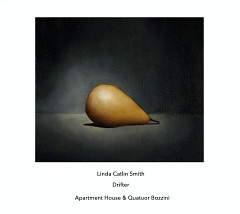
    Born in the US and residing in Canada for more than a quarter century, Linda Catlin Smith has become a fixture on that country’s cultural radar. She has been welcomed and feted as one of Canada’s own. For instance, she is only the second woman to win the Jules Léger Prize for Chamber Music and has had a long association with the ensemble ArrayMusic, whom she served as Artistic Director. Several recordings have been released of her music, but last year’s Dirt Road won her critical acclaim and belated notice in the United States, ending up on many critics’ “best of year” lists (mine included). Released by Another Timbre, Dirt Road was merely a foretaste of that label’s commitment to Canadian music. Another Timbre has recently released a set of five recordings in its Canadian Composers series (another batch of five is due later this year). Catlin Smith features prominently, with the double disc Drifter serving as Volume 1 in the series. Other composers include Martin Arnold, Isiah Ceccarelli, Chlyoko Szlavnics, and Marc Sabat.

    Drifter’s program is performed by two chamber groups: Apartment House and Bozzini Quartet. The “drifting” in question is not itinerant hitchhiking, but rather the placid tempo pathways frequently chosen by Catlin Smith. The piano trio Far from Shore, played here by Philip Thomas, Anton Lukiszevieze, and Mira Benjamin, is a case in point. Slow, soft music for the trio, often reminiscent of Morton Feldman’s approach (one that Catlin Smith acknowledges as a signature influence on her work) abides alongside passages of colorful piano chords. The spectrum moves from inexorably repeated constrained sets of pitches, to chromatic counterpoint, to whole washes of sound. The intuitive sensibility that Catlin Smith claims as her approach in preference to any dogmatic systemization clearly allows her to move through constantly changing musical terrain, all the while maintaining an organic sense of each piece. How does she manage this? An interview in the booklet accompanying the Canadian Composers set quotes her as saying, ”Listening. Lots of listening.” One could do worse as a composer in any style to listen as carefully as Catlin Smith does.

    Cantelina (2013) for viola and vibraphone, played by Emma Richards and Simon Limbrick, presents another of the composer’s interests, one in heterogenous instrumental pairings. Both here and in the Piano Quintet ( 2014), another of Catlin Smith’s predilections, exploring tightly knit counterpoint in close registral positions, is featured. The overlapping in Cantilena is quite fetching (it is a combination that should be explored by more composers and one I’ll keep in my own hip pocket) and it is equally affecting when writ large in the quintet. The title work is also for a seemingly challenging combination, piano and classical guitar, played by Philip Thomas and Diego Castro Magas, but Catlin Smith’s gentle daubs of coloristic harmony and unequal ostinatos work beautifully in this duo context as well. Mon Qui Tremblais (1999), played by Thomas, Benjamin, and Limbrick, has a pulse-driven piano part that is joined by sustained violin and bowed pitched percussion. An interesting notational device is used: rather than writing out all the notes and rhythms, the composer specifies that the musicians silently read a Rimbaud poem and use its speech rhythms to shape the musical work (for instance, the percussionist gets his attack points from the accented French syllables).

    Bozzini Quartet appears in two string quartets by Catlin Smith. Folkestone (1999) pits a persistently high violin line against blocks of slow articulated, syncopated chords played by the other three members (these have an almost accordion-like quality in their spacing). Gradually, other lines emerge from the texture, with the cello playing a poignant solo dissonant with the rest of the harmony. The chordal passages begin registrally to disperse, bringing the locus of activity closer to the violin’s sustained flautando melody. Mid-register lines now break free and the chords move in double time for a brief stretch before ceding the terrain to widely spaced and again slowly articulated harmonies. This alternation of patterns includes still more elements to be introduced: pizzicatos, duets, flashes of quartal harmonic brilliance, and a bass-register cello melody made truly weighty by the registers it has balanced against before. Clocking in at more than 32 minutes, Folkestone is a substantial and thoroughly captivating composition. Gondola involves members of the quartet coming in and out of unison and a gentle boat-rocking pacing that Catlin Smith describes thus: ”The title loosely refers to its slight undulation or floating qualities — a subtle motion or disturbance of the surface, like trailing the hand in water.”

    Evocative imagery for truly evocative music-making. Drifter is an album (a double-album at that) worth savoring.

    Evocative imagery for truly evocative music-making.

    Drifter dans All About Jazz

    «Review», John Eyles, All About Jazz, 22 avril 2017
    samedi 22 avril 2017 Presse

    Fittingly, the series opens with one of its aces, a double album of Linda Catlin Smith compositions. Where Dirt Road featured the fifteen-part title piece, from 2006, played by Apartment House members Mira Benjamin on violin and Simon Limbrick on percussion, Drifter presents more of an overview of her work, consisting of ten compositions from 1995 through to 2015. Recorded between February and July 2016, mainly at the University of Huddersfield, the pieces are variously played by Bozzini Quartet and members of Apartment House; as is typical of Another Timbre, the recording and sound quality is first-rate throughout, allowing the pieces to be heard to best effect.

    The music here has all of the qualities that Dirt Road led one to expect of a Smith composition — gentleness, subtlety, emotion, attention to detail, a sense of melody, tranquillity — but goes beyond the range of that album. The quartet pieces (exemplified by “ Folkestone ”) certainly display Smith’s talents to excellent effect, but the fewer instruments that are present the better Smith tends to sound, as she seems to savour the sound of each individual instrument. That proposition is tested to the limit on three tracks that feature just one instrument, “ Ricercar ” played by Anton Luksozevieze on cello, “ Galanthus with Benjamin on violin, and “Poire ” with Philip Thomas on piano; all three draw one in and make riveting listening.

    Drifter is impossible to fault; it is impeccable from first note to last.

    Drifter is impossible to fault; it is impeccable from first note to last

    Mattempa dans The Squid’s Ear

    «Mattempa», The Squid’s Ear, 12 avril 2017
    mercredi 12 avril 2017 Presse

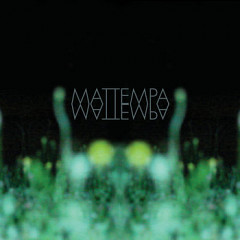
    Patterned after Canadian physician and author Jacques Ferron’s book Gaspé Mattempa, where he postulated a character whose creation fantasy stems from a purely acoustic phenomenon. The rustling of the trees on the mountain, takes the form of a mythical creature: satan-mattempa or the squalling of the Madeleine, half voodoo character, half-Nordic, Barron’s cousin Saturday, holed up in the cold mountains of the Gaspésie imaginary. In the book he wrote: “Creature noise, always present and absent at the same time, his singing blurs the horizon, the boundary between land, water and air.”

    Éric Normand works with that material into these 8 musical works, imaginative and complex pieces for improvisation. Though purely acoustic, the works have the feel of bridging worlds into the electroacoustic improv realm, much like the literature they reflect bridges worlds into the mythological. Fascinating.

    Fascinating.

    Dôme dans The Wire

    «Review», Tristan Bath, The Wire, no 398, 1 avril 2017
    samedi 1 avril 2017 Presse

    Dôme documents an installation work by Montréal saxophonist / clarinettist Philippe Lauzier. Composed for a specially made contraption comprising bells, zithers, a Korg and several motors, the music nonetheless feels distinctly organic. Quite how Lauzier plays the music is tough to discern from the recording — the jangling strings and tinkling bells sound like they’re being jabbed at by motorised ghosts in the machine. For long passages all the elements fire at once, although the loveliest moment comes at the end of Far Side, when alarm clocks, bells and strings take it in turns in a motorised conversation. However they were assembled, both 17 minute single takes are surprisingly luminescent and joyful.

    However they were assembled, both 17 minute single takes are surprisingly luminescent and joyful.

    Tropical Fun & General Lightness dans The WholeNote

    «Review», Ken Waxman, The WholeNote, no 22:7, 1 avril 2017
    samedi 1 avril 2017 Presse

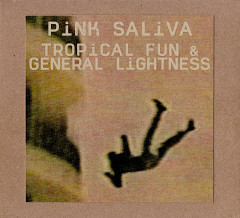
    Don’t be fooled by the tile of this album by Montréal band Pink Saliva (PS). The two-CD set is anything but light and fun. That’s because the 24-tracks consist of moderato-paced oscillating drones, percussion pivots and brass squeals that in a (Morton) Feldman-like fashion unfold slowly while squirming forward. On the other hand, band members Alexandre St-Onge who plays electric bass and electronics; Michel F Côté, whose skill encompasses percussion, steel guitar and all manner of electronics; and Ellwood Epps, who varies his trumpet sound with a series of mutes; are canny enough to limit their compositions to between two and four minutes.

    Overall, the tunes’ appeal is in how precisely like light bulbs in a socket, the musicians’ ideas adhere and subsequently illuminate. For instance a track such as Mario & Salvio is measured out in double bass thumps, making rhythmic sense of brass squeaks and hamster-wheel-like cranks, while (J. von P.) transforms from doom-laden drumming, as it’s opened up with molecule-sized brass bites to reach a theme of satisfying nonchalance. Like its subject matter, Nixon à la television shows that the band can be down and dirty in its exposition but by its conclusion use focused string pulses and relaxed drum pops to direct the narrative to soar sympathetically upwards.

    Tropical Fun & General Lightness easily proves that the trio members are experts in creating the musical equivalent of Instagram photos or pointed tweets. But without appearing to be too old-fashioned, longer tracks with more extensive solos would demonstrate how well PS stacks up against the wok of earlier, innovative improvisers.

    Tropical Fun & General Lightness easily proves that the trio members are experts in creating the musical equivalent of Instagram photos or pointed tweets.

    Trio dans The WholeNote

    «Review», Stuart Broomer, The WholeNote, no 22:7, 1 avril 2017
    samedi 1 avril 2017 Presse
    It’s improvised music in which the three are so in tune that it never seems responsive, resembling instead the inevitability, consistency and variegation of water, stone, earth or air.
  • 2
  • 3
  • 4
  • 5
  • 6
  • 7
  • 8
  • 9
  • 10