Sauter au contenu principal
actuellecd

Blogue

59 résultats
  • 1
  • 2
  • 3
  • 4
  • 5
  • 6
  • 7
  • 8
  • 9
  • Rowetor dans Vital

    «Review», Frans de Waard, Vital, no 1085, 5 juin 2017
    lundi 5 juin 2017 Presse

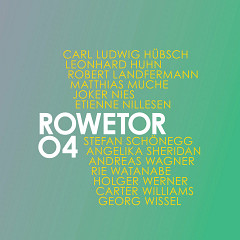
    On the website of Tour de Bras there is an explanation of this project: “Rowetor is a musical concept inspired by the guitar player Keith Rowe. The aim of the piece is to explore one static sound in the ensemble, to maintain it and in the same time interact with utmost care and openness for any necessary change”, and during two nights in 2015 and 2016 (September 30 and June 3), Carl Ludwig Hübsch, armed with his tuba, gathered a bunch of people on stage at the famous jazz club The Loft, in Cologne, Germany, to perform this. Maybe it’s something he did before, seeing this is ‘Rowetor 03’ and ‘Rowetor 04’? In the latter we have thirteen players, mostly names I didn’t recognize, and in the first we have two more players, of which I only recognized the names Sharif Sehnaoui on acoustic guitar and Phlip Zoubek on piano (but I admit I didn’t search the entire history of Vital Weekly for each individual player). Hübsch gets credit for the composition and the mix; hence he’s listed here in the header of the review. I am not sure to what extent it is actually composed, or whether there are a bunch of guidelines along which the players can act and have freedom to play. ‘03’ is thirty-three minutes and ‘04’ is forty-two minutes. In both of these pieces time moves very slowly and individual instruments are blurred in the bigger picture. It is very hard to recognize in here, say, an acoustic guitar, bass, alto clarinet, low percussion, viola d’amore on ‘movement (inaudible)’ as played by Phuong Bui. Everything buzzes and sustains, but it moves; there is no question of a standstill. Upon close inspection, there is more happening ‘Rowetor 03’ than in ‘Rowetor 04’, but I must admit I seemed to enjoy the long quiet second half of the latter better. Everything becomes dark and spooky, like something big is going to happen, but all it does it build a mild crescendo towards the end, and then a gentle fade out. ‘Rowetor 04’ had an almost sine wave character most of the times, whereas ‘Rowetor 03’ sounded more orchestral in approach. It is not a bad piece, far from it, as this is cloud of sound passing over, dark and ominous, but in terms of preference I’d go for ‘Rowetor 04, with it’s suppressed suspension. It could have fitted on a single CD but it makes sense to do it on two.

    Everything buzzes and sustains, but it moves; there is no question of a standstill.

    Trio dans Jazz Word

    «Review», Ken Waxman, Jazz Word, no 128, 1 juin 2017
    jeudi 1 juin 2017 Presse

    Closely miked and closely knit, this eponymously titled CD captures four tracks of in-the-moment improvisations from Halifax-based guitarist Arthur Bull and visitors, Montréal drummer John Heward and American bassist Adam Linson. Like sophisticated linguists finally given a chance to speak the same language earlier studied in formal contexts, rapport is nearly instantaneous. Soon afterwards the three are unearthing a vein of connective musical inspiration like theoretical geologists discovering a valuable mineral deposit during a quarry visit.

    A picker, whose every timbre is outlined with crystal clarity like a diamond displayed on velvet, Bull’s echoing bent notes and slurred fingering usually establish the exposition, with Linson’s tremolo runs and thumping ostinato commenting on, contrapuntally challenging, or stretching the narrative still further. As unobtrusive as a pacifist at a National Rifle Association rally, Heward, also a noted visual artist, contents himself with the occasional distant rumble or ruff. Case in point is Improvisation (2), which works its way up from austere string plinks to spiccato top-of-scale thrusts from Linson, with the merest suggestion of electronic processing. Reaching a crescendo of drums slaps and rattles; sul ponticello double bass shrills; and staccato scurries along the guitar neck with chipmunk speed; the trio concludes the track with a distinctive balance between chicken-picking motions from Bull, that rest comfortably on top of Linson’s double bass string buzzes. Alternatively expanding the sound mixture to widening cascades or shrinking to microtones like an Alice in Wonderland potion, Improvisation (3) is the perfect prelude to the final track. Here Linson’s buzzing continuum, encompassing conservatory techniques steadies the tune’s foundation, while locking in with occasional drum patterns. Eventually the guitarist’s irregular twanging fastens tongue-and-groove with the bassist’s sideways string swipes, creating a crackling finale that’s both multiphonic and memorable.

    Bull often deals with more folk-based material; Heward is more oriented towards jazz; and Linson is an electronics experimenter. Yet together on this CD they manage to coordinate their ideas with the best qualities of a long-time working group.

    Like sophisticated linguists finally given a chance to speak the same language earlier studied in formal contexts, rapport is nearly instantaneous. Soon afterwards the three are unearthing a vein of connective musical inspiration like theoretical geologists discovering a valuable mineral deposit during a quarry visit.
  • 1
  • 2
  • 3
  • 4
  • 5
  • 6
  • 7
  • 8
  • 9