Sauter au contenu principal
actuellecd

Blogue

96 résultats
  • 8
  • 9
  • 10
  • 11
  • 12
  • 13
  • 14
  • 15
  • 16
  • La règle dans Downtown Music Gallery

    «Review», Bruce Lee Gallanter, Downtown Music Gallery, 30 janvier 2015
    vendredi 30 janvier 2015 Presse

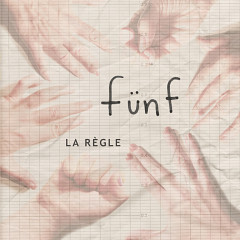
    Sporadic sonic exchanges exploring guidelines, graphic scores, or completely improvised with an expansive instrumentation, La Règle was recorded between two residential basements on Berri Street, and live on a campus community radio station from 2011 to 2014 in various formations. None of the pieces feature all six members of Fünf simultaneously. What’s interesting about this Quebecois sextet is that they are all women and the liner notes doesn’t quite list their instrumentation other than amps, objects, homemade synths and oscillators, all DIY analog stuff. The sounds are carefully created, tapping on mics, humming, soft drones, static, German spoken word samples, test patterns, a busy signal, sniffles, quiet feedback, etc. The music unfolds organically and has a John Cage like vibe. The sounds do a good job of evoking a mood, like slowly changing scenery in a European art house film.

    The music unfolds organically and has a John Cage like vibe. The sounds do a good job of evoking a mood, like slowly changing scenery in a European art house film.

    Pour en finir dans Downtown Music Gallery

    «Review», Bruce Lee Gallanter, Downtown Music Gallery, 30 janvier 2015
    vendredi 30 janvier 2015 Presse

    This trio has been together for twenty years and this is their sixth disc. Although each member has come from much different backgrounds, (Côté from Bruire with 2 dozen discs/projects, Falaise from Miriodor/2 dozen other discs & St-Onge from assorted Québécois units & a solo effort), they definitely have a group sound. Without knowing the instrumentation in advance, it would be difficult to tell who is playing what on this fine disc. There are several layers of odd metallic, electronic, mysterious, spinning lines going on at the same time. This music has a somewhat disorienting yet magical quality which creates series of mind-altering moodscapes. Quietly fascinating.

    Quietly fascinating.

    Monk Work dans Downtown Music Gallery

    «Review», Bruce Lee Gallanter, Downtown Music Gallery, 30 janvier 2015
    vendredi 30 janvier 2015 Presse

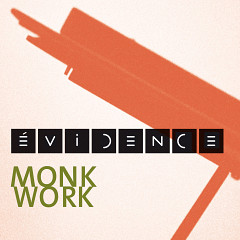
    This is only the third disc from Evidence who formed in 1985, one per decade. This disc was recorded the same week that Evidence played the entire Thelonious Monk catalogue at a three-day festival in Montreal in the Spring of 2014, no easy feat. This trio has a joyous, jubilant quality that I dig. They sound as if they are having fun, swaggering slyly all the way. It is rare to hear Monk’s music played by an electric bassist but Mr. Cartier’s playing is central to the way this trio sounds. There are a number of highlights here like hearing “Jackie-ing” played on bari sax with such exuberance or the occasional solos from the bass or drums which have that effervescent quality and are an extension of the melody/theme. If you have ever seen a film of Thelonious Monk playing in concert, you know that liked to dance around the bandstand at times, his movements reflecting the structure and energy of the song being played. Hearing this music played by Evidence made me want to dance around as well. It just feels right or righteous.

    It just feels right or righteous.

    Monk Work dans Le Devoir

    «Vitrine du disque», Serge Truffaut, Le Devoir, 30 janvier 2015
    vendredi 30 janvier 2015 Presse

    Le saxophoniste Jean Derome, le bassiste Pierre Cartier et le batteur Pierre Tanguay sont des gens très malins, dans le sens le plus intelligent du terme. À l’instar de ce qu’a fait Ben Riley, ex-batteur de Thelonious Monk, ils arrangent et réinterprètent les chefs-d’œuvre de ce dernier sans piano. Ils évitent ainsi les écueils de la comparaison stylistique et nous obligent, dans le sens le plus noble du terme, à goûter autrement toutes les subtilités sonores et sentimentales du capitaine Monk. Baptisé Évidence, du nom d’une composition du grand sachem du jazz, ce trio, il faut souligner mille fois plutôt qu’une, ausculte et contemple le grand livre des originalités monkiennes depuis… 1985! Les musiciens reprennent des thèmes connus, il va sans dire, auxquels ils ont greffé des pièces obscures, comme Work, Two Timer et Dreamland. Bon. Cet album est tout simplement époustouflant. Car à l’intelligence du jeu ils ont collé le sens aigu des nuances et la joie. Oui, ce Work est aussi joyeux. Bref, un régal.

    … tout simplement époustouflant. […] Work est aussi joyeux. Bref, un régal.

    La vie commence ici dans Sorties Jazz Nights

    «Critique», Christophe Rodriguez, Sorties Jazz Nights, 29 janvier 2015
    jeudi 29 janvier 2015 Presse

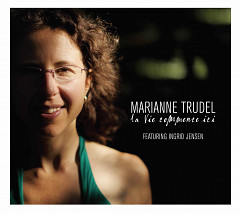
    Pianiste aux idées et dynamo d’un jazz montréalais, Marianne Trudel célèbre sa nomination pour les Junos dans la catégorie jazz. Dans La vie commence ici où elle fait tandem avec la trompettiste Ingrid Jensen, tout est en place pour un grand disque qui juxtapose des couleurs.

    Entre le versant moderniste et le courant jazz de chambre, nul besoin d’être un spécialiste de la note bleue pour s’y retrouver. Avec en plus Jonathan Stewart au saxophone, Morgan Moore à la basse et Robbie Kuster à la batterie, un ensemble soudé qui connait le métier et les échanges avec la trompettiste au son soyeux, nous y sommes. Bravo, Marianne!

    Pianiste aux idées et dynamo d’un jazz montréalais, Marianne Trudel célèbre sa nomination pour les Junos dans la catégorie jazz. Dans La vie commence ici où elle fait tandem avec la trompettiste Ingrid Jensen, tout est en place pour un GRAND disque qui juxtapose des couleurs.

    Time of the Sign dans Frank Styles

    «Review», Kevin McNeilly, Frank Styles, 15 janvier 2015
    jeudi 15 janvier 2015 Presse

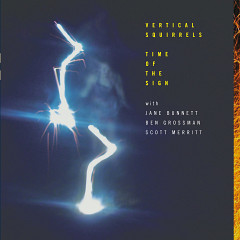
    Time of the Sign, the third album from the improvising collective Vertical Squirrels (and their second on Montreal’s Ambiances Magnétiques label), is a modest masterpiece, and ranks for me among the very best recordings of 2014. Vertical Squirrels formed as a quartet in 2008 in Guelph; its core members are faculty at the university there, three of them researchers with the Improvisation, Community and Social Practice (ICaSP) research initiative. Pianist Ajay Heble is the founder and (until this year) Artistic Director of the Guelph Jazz Festival, and his academic and curatorial work have brought him into close contact with some of the finest free improvisers in contemporary music. Guitarist Daniel Fischlin has collaborated with Heble on key works in improvisation scholarship (including The Other Side of Nowhere [Wesleyan, 2004] and The Fierce Urgency of Now [Duke, 2013]) and is an eminent Shakespearean. Electric bassist Lewis Melville taught in the Department of Botany (now Molecular and Cell Biology), and the quartet’s original percussionist Rob Wallace was an ICaSP postdoctoral fellow. In the years leading up to the recording of Time of the Sign in June, 2012, Wallace moved on to other academic employment, and was replaced by drummer Ted Warren.

    The band is expanded to a septet for this recording, and includes Jane Bunnett (on flute and soprano saxophone), Scott Merritt (on guitar) and Ben Grossman (on hurdy-gurdy), with contributions from Larry Cramer (on trumpet) and — not, perhaps, to be underestimated — Dave Clark (improvised conduction). Many of the musicians double on miscellaneous electronic and little instruments, an echo of some of the performance practices of the Association for the Advancement of Creative Musicians in Chicago. The Vertical Squirrels’ electronic press kit suggests that the group was “initially conceived as an informal outlet to get Heble back into playing piano after years of curating the Guelph Jazz Festival (but rarely performing himself),” but the music doesn’t centre on Heble. Lewis Melville also (on this and the other recordings) is credited as the principal producer, and seems to be something of the instigator for the group. (A recording of his composition for foghorns at the Sound Symposium in St. Johns Newfoundland is also used as a sonic underlay for the last track on the album.) But I think it’s important to emphasize the decentred character of this music: not that it’s ever incoherent, but that no single voice ever predominates or directs. There are no solos on this record, which is partly why I wanted to emphasize something like its modesty: not to say that any of the players is ever diffident or deferential; if anything, each contributor’s line or instrumental texture only adds to the gathering energies, the obvious vitality and shared dynamism that every track evinces. But there is also a proactive humility, a thoroughly engaged mutual practice of listening, that informs this music: each player seems instinctively to know when to sound and when to lay out, and what results is a set of warmly shifting, variegated accretions, folds of resonance and dehiscence, an electro-acoustic version of what Byron, of all poets, once called “voluptuous swell.”

    By saying that there are no solos, I don’t mean to indicate as absence of melodic line or improvisational drive, but rather that this music emerges from simultaneous reciprocities, layers of polymorphic call-and-response but also of departures and excursuses that loop in and out of the general, generative flow. (The music was recorded live, open to the public, over the course of two days: the session announcement is still on Facebook.) The press kit, again, compares their music to some of the improvisational jams of Frank Zappa, and I can hear that, certainly, in their communal emphasis on rock ostinato, riff and groove. But I hear a collation of influences, closer at times to, say, Ornette Coleman’s Prime Time group around Virgin Beauty (1988) — without the insistently spiky harmolodic angles of the leader’s alto — or, at other moments, echoes of the audio-Americana of Lyle Mays and Pat Metheny. (Ted Warren’s electronically treated vocals on the title track closely recall Mark Ledford’s melodic doublings with the PMG.) The compiled electric pianos of Miles Davis’s In a Silent Way sometimes feel present, and the opening track, Falling from the Ground Up, recalls as it unfolds McCoy Tyner’s work from the early 1970s, while Lewis Melville basslines fall at several points into a Tinariwen-like pulse. None of these audible influences ever quite settles or takes hold for more than a minute or two, however, and what emerges as each cut builds is a buoyant, unstable and living audio organism, a porosity. Each time I listen, I hear new things, other textures: the shifting mesh, for instance, of Fischlin’s and Merritt’s guitars set against the phasing, metallic stringiness of Grossman’s hurdy-gurdy and Heble’s roiling and gangly piano makes for a rich differential polyphony. This music is essentially collaborative not because it demands agreement but because it honours co-creative multiplicity, a coming together apart, not to produce community in difference, not to overcome a plural and sometimes unruly lived humanity, but a community of differences, a soundscape that embraces and welcomes the open auditory field of the many, of disenclosure, of more. Time of the Sign is one of the great recordings of committed collective improvisation.

    Time of the Sign is one of the great recordings of committed collective improvisation.
  • 8
  • 9
  • 10
  • 11
  • 12
  • 13
  • 14
  • 15
  • 16