Sauter au contenu principal
actuellecd

Blogue

99 résultats
  • 1
  • 2
  • 3
  • 4
  • 5
  • 6
  • 7
  • 8
  • 9
  • S’enfouir, Ailleurs dans Vital

    «Review», Frans de Waard, Vital, no 859, 3 décembre 2012
    lundi 3 décembre 2012 Presse

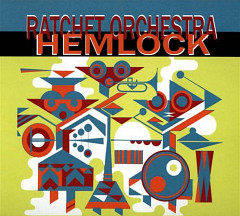
    Two new releases on one of Montréal’s finer homes of anything improvised (be it rock, modern classical, computer), one by someone we heard before and a new name. That one is Bernard Falaise, who plays electric guitar and is part of improvising ensembles such as Miriodor, Klaxon Gueule, Les Projectionnistes, Diesel and others. As a composer he wrote pieces for Ensemble contemporain de Montréal (ECM+) , Quartango and the Isis Quartet, as well as for film, theatre and choreography. I assume he plays the guitar here as well but also the piano, and uses some kind of way to process that playing. I assume, but am not sure, that this is the computer. It’s maybe more a gist than a certainty on y part. Twenty pieces, somewhere between under one minute and just under three minutes, with a total length of thirty-three minutes. An album of action, I should think, packed with ideas. On the website Falaise is quoted: “A suite of five pieces repeated four times. At each repetition, I scratched, twisted, dislocated, polluted, deboned, objected. A record about exhaustion, saturation and sinking. That’s how it is.” I don’t agree, necessarily. It’s not really exhausting to hear all of this music, but things do indeed appear and disappear rather quickly from time to time. As outlined five pieces, repeated four times (which you can see, more or less, by the equal lengths of respective songs), which have a fine sensible character to it. Part experimental, part improvised, a bit of musique concrete like, but perhaps due to its brief character also a bit ‘pop’ like in approach. Short, sketch like ideas, but nevertheless quite worked out into well formed compositions. An excellent CD, I thought, full of sparkling pieces, strange moves and with an exciting brief character per track. Certainly moving around various musical circles.

    Less tracks — six — and a bit longer — thirty-five minutes — is the new release by Alexandre St-Onge, who is a well-known musician from Montréal, who has played with such bands as Et Sans, K.A.N.T.N.A.G.A.N.O., Klaxon Gueule, Pink Saliva, Mineminemine, Shalabi Effect and Undo and has already released seven solo CDs for labels as Oral, Alien8, Squint Fucker Press and Namskeio. His main instrument is the bass, sometimes acoustic, but on his new solo CD the electric one and also the computer. Here we deal with an interesting combination of improvisation and musique concrete. I assume — again and again — that he feeds the recordings of his bass playing through the computer, perhaps in real time, perhaps not, where it’s being transposed and pitched up and down the scale. That’s is nice, but I must admit that I though the CD was also a bit too much based on a single idea, which happened to take six almost identical forms. The improvised plucking of the bass, and the transposition of those sounds is something we know after a while, and one wonders if there is anything more that could be done. Probably there is, but it’s not happening here. That is a pity. No matter how brief the whole album is (well, a real LP length by old standards of course), the similarity in approaches works a bit against the album as a whole, whereas each track individually is actually quite nice.

    An excellent CD, I thought, full of sparkling pieces, strange moves and with an exciting brief character per track.

    Hemlock dans (Free) Jazz Alchemist

    «Ratchet Orchestra», Bartek Adamczak, (Free) Jazz Alchemist, 18 novembre 2012
    dimanche 18 novembre 2012 Presse

    I felt that once I’ve copied the band’s members list my work is close to finished. The Ratchet Orchestra is led by Montréal based bass player Nicolas Caloia who composed all the tunes on Hemlock which is the big band’s second release. Just one look at the line-up gives you some idea about how huge might be the sound of this music.

    It is colourfull and rich and mesmerizes with the palette of shades and lights. Winnow starts the cd gently and peacefully, broad orchestral strokes paint a delicate landscape, strings’ cadenza rises like a sunshine and the trombone solo is like a children’s song. Captivating and enchanting as the morning’s gentle light.

    Dusty resembles in the beginning an african song, light melody dances glides over the steady slow beat, rhythmic ctrucutre filled with guitars, percussion, occasional riff by the brass section. Couple minutes into the track the guitar starts to stirr the pot with a distored solo and the music becomes frenzy as the other instuments join in, the third part of the piece the airy mood is brought upon a built-up orchestral chord.

    Yield brings back the joyfull and rhythmic african influences with a sudden if short waltz motive inbeetween.

    And there’s so much more to enjoy on the cd. Wish with its soulfull saxophone solo in the first part and frenetic fender piano-based groove in the second. A short yet to the point Kick which is an orchestral reading of jazz poetry (chords based on the repeated rhythmically in various order words: kick, that, habit, man). The peacefull Safety. The misterious Hemlock.

    The music on this cd is majestic, a constant flow of coulourfull images in high-resolution, it charms with the melodious substance but captivates with the harmonic depth and greandeur. It sweeps you with the reach and richness of musical vision. It’s scope far beyond jazz but improvisation remains one of the main ingredients. The about this 30-piece (sic!) unit is that the instruments don’t top each other, the goal is not to add “above” to the sound, cumulate it but rather broaden and enrich it. To hear 30 minds coexist in one space and cocreate is, to simply put it, infinitely inspiring. Bordering on jazz, classic orchestra music and movies score this is music of rare beauty and magnitude.

    Bordering on jazz, classic orchestra music and movies score this is music of rare beauty and magnitude.

    Hemlock dans Free Jazz Blog

    «Big(ger) Band Free Jazz: Ratchet Orchestra & Sonic Liberation Front», Paul Acquaro, Free Jazz Blog, 15 novembre 2012
    jeudi 15 novembre 2012 Presse

    I thoroughly enjoy orchestral music, big bands, symphonic adventures and daring arrangements, but I sometimes wonder, how do you pull off balancing writing and arranging with the spontaneity and subtle interactions found in smaller ensembles?

    To present an entirely non-scientific and inconclusive answer, I offer two case studies, the 30 piece Ratchet Orchestra from Montréal and the sprawling Sonic Liberation Front from Philadelphia.

    According to a short bio, Canada’s Ratchet Orchestra leader Nicolas Caloia has for over 20 years, “worked at creating a contemporary music generated by using accurately composed textures to channel collective improvisation.”

    If the guitar break about a quarter of the way into Dusty can be used as illustration, Caloia succeeds astoundingly well. From a prickly drip of melodic snippets to a full on skronk, joined by other woodwind voices, to some classic Fender Rhodes comping, the delicate orchestration that kick off the album (Winnow) give way to a full bodied group improvization. This is followed by the thoroughly composed and orchestrated snippet Yield, which is kind of fun light classical-pastiche. And so on through different approaches and styles, like Wish-Part 1 which is a avant-fusiony gem. While my attention drifted a tad towards the end, the closing Hemlock — part 2 snapped me back to attention.

    There is a great deal of variety on Hemlock. It is thoughtfully constructed and there are moments of inspiration and spontaneity throughout. […]

    So, do I answer my original question? Honestly, I’m not sure. Elements of composition and free playing are approached here in two very different ways, from the quiet sonic constructions of Hemlock to the Afro-Cuban stylistics of Jetway Confidential, all I can definitively say is that there is indeed a lot of room under the free jazz tent and the music is fantastic.

    … all I can definitively say is that there is indeed a lot of room under the free jazz tent and the music is fantastic.

    Hemlock dans Monsieur Délire

    «Journal d’écoute», François Couture, Monsieur Délire, 7 novembre 2012
    mercredi 7 novembre 2012 Presse

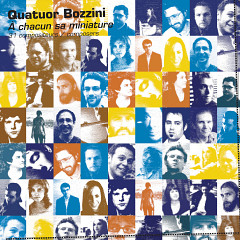
    Enfin, le disque du Ratchet Orchestra qui donne la pleine mesure de l’ensemble. Enregistré sur trois jours à l’Hotel2Tango, juste avant la prestation du groupe au FIMAV 2011, Hemlock propose un répertoire solide et maîtrisé. Trente musiciens s’attaquent ainsi aux compositions du contrebassiste et chef Nicolas Caloia. Oui, trente, et un instrumentarium purement big-band — la seule électricité en présence étant celle de deux guitares électriques. Et c’est presque tout le Montréal créatif qui participe: Jean Derome, Lori Freedman, Damien Nisenson, Gordon Allen, Tom Walsh, Joshua Zubot, Guido del Fabbro, Jean René, Sam Shalabi, Guillaume Dostaler, John Heward — et j’en passe plusieurs. Très heureux de voir Caloia et son ensemble avoir enfin droit au disque qu’ils méritent.

    Enfin, le disque du Ratchet Orchestra qui donne la pleine mesure de l’ensemble.

    Hemlock dans Discorder

    «Review», James Olson, Discorder, 1 novembre 2012
    jeudi 1 novembre 2012 Presse

    Ratchet Orchestra’s latest release Hemlock, like its namesake, can be difficult to ingest. This Montréal based collective of over 30 musicians present the listener with a fascinating yet puzzling set of free form orchestra jazz numbers. Recorded by Godspeed You! Black Emperor bassist Thierry Amar and produced by Nicolas Caloia, Ratchet Orchestra blends a variety of incongruent musical elements together with mixed results as a listening experience.

    Winnow eases the listener into the album with its dreamy introduction, punctuated by a pair of masterfully executed saxophone and trombone solos respectively. This slowing burning cut is easily one of the most sonically relaxed of the album. The arrival of a jarring string movement is the track’s only moment of unease. Ratchet Orchestra generally come off stronger on their shorter compositions, particularly on Yield, which bounces along in a stately manner on a rhythm infusing both elements of swing and waltz.

    The longer, more improvisational selections from Hemlock will likely be the sticking point for many listeners in terms of appreciating this album as a complete experience. The loose arrangements on tracks like Dusty and Safety highlight different sections of the orchestra and to showcase the undeniably impressive musical talent at play here. What gets lost in translation is a sense of purpose. At their best, these free form sound experiments can be mystifying in their absurdity. At their worst, these tracks can sound aimless, meandering, and unnecessarily cacophonous.

    Hemlock is an interesting listen to be sure. There’s enough going on to keep one attentive to all the different instruments, moods, and rhythms at play here. Its indulgences do add up after a while, resulting in a somewhat uneven album as a whole. It’s not everyone’s cup of tea, but it can be said that Ratchet Orchestra are definitely stretching and playing with the boundaries and taboos of jazz and orchestrated music.

    … it can be said that Ratchet Orchestra are definitely stretching and playing with the boundaries and taboos of jazz and orchestrated music.
  • 1
  • 2
  • 3
  • 4
  • 5
  • 6
  • 7
  • 8
  • 9