Sauter au contenu principal
actuellecd

Blogue

99 résultats
  • 9
  • 10
  • 11
  • 12
  • 13
  • 14
  • 15
  • 16
  • 17
  • Daniel Rothman, Ernstalbrecht Stiebler: Sens(e) Absence dans Le son du grisli

    «Critique», Guillaume Belhomme, Le son du grisli, 25 février 2012
    samedi 25 février 2012 Presse

    Sur Sens(e) Absence, le Quatuor Bozzini tend ses cordes et les arrange en fils télégraphiques. Sous l’archet, ceux-ci respirent: donc, se répètent. Mais sans lasser, tant les nuances et déviations inspirent de subtilité à ces deux pièces, signées Ernstalbrecht Stiebler et Daniel Rothman, couplées pour être d’un contemporain subtil.

    … tant les nuances et déviations inspirent de subtilité à ces deux pièces.

    Jean Derome, Joane Hétu: Le mensonge et l’identité dans Le son du grisli

    «Critique», Luc Bouquet, Le son du grisli, 25 février 2012
    samedi 25 février 2012 Presse

    Avec Jean Derome et Joane Hétu, compositeurs de cette œuvre, le Quatuor joue et parle (présentation des musiciens, citations diverses). En trois mouvements, Le mensonge et l’identité creuse et multiplie la cassure. Les cordes sont stridentes, acérées, oppressantes. Le quatuor à cordes est ici appréhendé comme un modèle de société, comme une communauté. Il témoigne des désunions (enchevêtrements des pièces), se déplace et se perd, sature la violence jusqu’à l’ultime tension mais maintient toujours le cap de l’échange et du partage. Bel exploit.

    Bel exploit.

    Martin Arnold: Aberrare dans Le son du grisli

    «Critique», Luc Bouquet, Le son du grisli, 25 février 2012
    samedi 25 février 2012 Presse

    Après avoir interprété Cage, Malcolm Goldstein et quelques autres, le Quatuor Bozzini (Charles-Edouard Marchand: violon, Clemens Merkel: violon, Stéphanie et Isabelle Bozzini: violon alto et violoncelle) s’intéresse aux œuvres de Martin Arnold, compositeur contemporain installé à Toronto.

    Dans ces quatre œuvres, quelques constantes: continuité et étirements-déplacements de la mélodie, silences, réminiscence de musique ancienne, unissons, variantes des hauteurs et refus de la bride, du motif, de la phrase. Soit une répétition-juxtaposition de mélodies que l’on croirait instantanées, improvisées; mélodies d’une simplicité enfantine, toujours tempérées et profondes.

    … mélodies d’une simplicité enfantine, toujours tempérées et profondes.

    Still Image dans The Globe and Mail

    «Review», Elissa Poole, The Globe and Mail, 24 février 2012
    vendredi 24 février 2012 Presse

    Owen Underhill’s music is a sea of fluid contrasts: the busy clockwork time of action and dance and the suspended time of contemplation; bold gestures that cut across static, glassy textures; counterpoint one can see through, like a forest of bare trees, yet folded into consonances. The Bozzini Quartet provides haunting interpretations of Underhill’s third and fourth string quartets, which sneak up on the heart via the head. Superb soloists grace the two wind quintets: Jeremy Berkman, who turns phrases into characters with eloquent tone and smooth line in Underhill’s stunning Trombone Quintet, and clarinetist François Houle, whose cultivation of unorthodox techniques — liquid quartertones and multiphonics like fine sandpaper — heightens the sense of a music in which the detail is almost tactile, and none of it is expendable.

    The Bozzini Quartet provides haunting interpretations of Underhill’s third and fourth string quartets, which sneak up on the heart via the head.

    Ctenophora dans Exclaim!

    «Reviews — Improv & Avant-Garde», Nick Storring, Exclaim!, 16 février 2012
    jeudi 16 février 2012 Presse

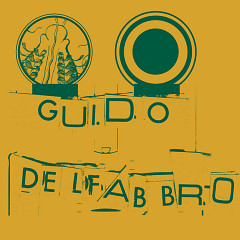
    This release occupies a very rarefied and odd aesthetic, evocatively pitting flurries of remote-sounding electronics against thin sinews of violin. The disc oscillates between a type of ironed-out fiddle music (all ornamentation and melodic contours pressed neatly into fibrous drones) and crackling electrostatic emissions, synthetic hacks and bleats ― a renovated version of sounds from the bygone era of analog abstraction and punch-card operated computing. Said oscillation happens so seamlessly that the listener becomes thoroughly entangled in this neatly woven, rosin-sticky web of hoarse, woody violin lines and arcane-ring-modulated rays and trickles of sound. And while it’s not all just a blast from the past, even so it tends to flicker with the stark futurism of Cluster’s 71, rather than recalling the neon whimsy of the BBC Radiophonic Workshop. Another point of reference, despite Del Fabbro having a more deliberate and active approach, is Ryan Driver and Eric Chenaux’s synth/guitar duets as the Guayaveras (documented on Rat-Drifting). Reminiscences aside, Ctenophora is a unique and strange release that manages to pull together seemingly polarized sonic territory (melody and noise, electronic and acoustic, etc.) in a highly idiosyncratic manner. This is recommended.

    This is recommended

    Éric Normand, Michael Norris dans BMA Magazine

    «Review», Dan Bigna, BMA Magazine, 14 février 2012
    mardi 14 février 2012 Presse

    […] This was a shining example of micro-tonal field performance, but let’s contrast this with the superb Saturday afternoon theatre set from electric guitarist Ryan Kernoa in combination with electric bassist Éric Normand and Canberra musician Michael Norris on electronics. Normand does a lot more than merely strum his instrument in time which one often comes to expect from a bassist. If I can be so bold to make the comparison, Normand does for improvised music what Joy Division bassist Peter Hook did for post-punk in terms of redefining the role of the bass, so that it adopts the role of a lead instrument that allows for harmonic interplay beyond simply laying foundations.

    So it went that Normand attached all sorts of devices to his instrument. He banged and stroked it in equal measures to set a scene that involved controlled feedback, performance theatre in the form of physical contortions in response to the sound, and a highly disciplined approach to noise making. This was enhanced to the nth degree by the mouth watering atonality of guitarist Ryan Kernoa who altogether dispensed with melody to explore bristling electrified string configurations which at times reminded me of Thurston Moore at his finest. When Michael Norris’ flailing tonal pitches on electronics were added to the mix the ensuing sound from the three performers was a welcome exploration of noise that improvised music hasn’t forgotten.

    When Michael Norris’ flailing tonal pitches on electronics were added to the mix the ensuing sound from the three performers was a welcome exploration of noise that improvised music hasn’t forgotten.
  • 9
  • 10
  • 11
  • 12
  • 13
  • 14
  • 15
  • 16
  • 17