Sauter au contenu principal
actuellecd

Blogue

162 résultats
  • 19
  • 20
  • 21
  • 22
  • 23
  • 24
  • 25
  • 26
  • 27
  • Ave <w>, Palétuvier (rouge), Ellipsis, Pink Saliva dans Vital

    «Review», Frans de Waard, Vital, no 765, 24 janvier 2011
    lundi 24 janvier 2011 Presse

    Canada’s Et Records are now in full active force: existing since 2003, but only last year they doubled their amount of releases. That’s great, also since they operate on an interesting crossroad of music styles, and these four new releases show that well. The crossroad is where pop music, improvisation, musique concrète and free-jazz meet up. We have to go the website for additional information (which sometimes linked from the Actuelle label — Canada seems well organized in that respect).

    Let’s start with the most ‘traditional’ one — or so it sounds like. I have never heard of Alexis O’Hara, who uses a lot of human voice — her own — as well as electronic improvisation and video. She has performed on spoken word festivals all over the world, from “new music symposiums to “women & technology events”, and besides various mini CDRs, Ellipsis is her second full length CD. Now it may sound like that this is all serious sound poetry, but this release is perhaps the most ‘pop’ music based I heard from Et Records. O’Hara samples her voice, adds a bit of electronic backing, rhythm machines, maybe a synth (but then perhaps these are sampled from her own voice, who am I to tell), and she signs a song, not use her voice in some dramatic or abstract poetry-like manner. That adds a distinct pop music like element to her music, along with a cabaret/nightclub like feel in some songs — perhaps due to the fact that she uses besides English also French and Spanish. The CD closes with Twenty-three, which sounds like a pastiche of Twenty Jazz funk Greats and Hot On The Heels from Throbbing Gristle. An excellent release! Very relaxed music, very well made.

    From this extreme we bounce to an opposite extreme, the free jazz improvisation of Pink Saliva, a trio from Ellwood Epps (trumpet), Michel F Cote (drums, microphones, lapsteel) and Alexandre St-Onge (electric bass and laptop). A live recording, which is edited down to twelve short ‘songs’ (again?), somewhere between one and four minutes. This music is more traditionally improvised than what I usually like, with a strong sense for jazz. That is not necessarily, of course, a bad thing, but just not so much my cup of tea, although I could envisage myself in a dark cellar smoke filled and pipe in my hand. Perhaps I should say ‘that traditional’, but I have to be careful: maybe this is all done tongue in cheek, but I am not qualified to judge on that.

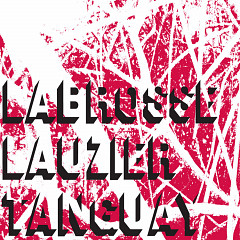
    More improvisation can be found on the trio disc of Diane Labrosse (sampler), Philippe Lauzier (bass clarinet, saxophones) and Pierre Tanguay (drums). With the addition of the sampler, things become straight away more ‘modern’, ‘abstract’ and perhaps also less strictly defined as something like free-jazz. Throughout these four lengthy pieces there is a great sense of controlled playing here, with some quite intense music. This trio keeps things well under control here, with a lot of rumble beneath the surface. Meaning it can be found more in the low end than in the top end of the music, and that is what delivers a certain, great kind of tension to the music. Maybe one could wonder if four such pieces is a bit too much to be taken in at once, but nevertheless its some wonderful music, not be swallowed at once.

    From a more musique concrete perspective we have a CD by one Tiare Kese, who was born in 1948 in Bulgaria, son of a resistance hero and soprano mother, who went in 1965 to Paris to study piano and horn. Later on befriended Karl-Heinz Stockhausen and Guy Debord, left the first, and then started to play music by Cage and Satie. Then he met Michel F Cote and ended up playing music on this CD, for which he plays piano, organ, mellotron, strings, French horn, electronics, samples and voices, plundering works by Satie, Cage, Tétreault, Falaise, Siewert, Brandlmayr, B Günter, Fennesz, Neina and Oval. I have no idea if this is all true, but why spoil a good story by looking up the ‘truth’? The music is good, and that is what counts. If the other three are working towards the crossroad of styles, then its perhaps Kese who is in the middle. Bits of pop/rock tunings are used, mainly when it comes to using distortion, samples of an electro-acoustic nature, treated instruments, and occasionally improvised playing on them, all mingled together into some well crafted soundtrack-like music. A bit of drone here and there, field recordings interwoven, desolate French horn, modern classical glissandi, sparse percussive sounds. Altogether this makes an excellent release. Quite intense, sparse and at times dramatic music. The best out of these four.


    … Et Records operate[s] on an interesting crossroad of music styles, and these four new releases show that well. The crossroad is where pop music, improvisation, musique concrète and free-jazz meet up.

    Érick d’Orion dans Québec Info Musique

    «Nouvelles vagues: variations poétiques et sonores», Lucie Vallée, Québec Info Musique, 22 janvier 2011
    samedi 22 janvier 2011 Presse

    Le 12 janvier 2011 au Studio P, une soirée singulière nous était proposée. Elle visait à apparier art audio et nouvelle littérature dans cet espace culturel accueillant, attenant à la librairie Pantoute. Les deux modes d’expression étaient mis à contribution dans une chaîne de création d’œuvres agissant l’une sur l’autre et se modifiant l’une l’autre pour offrir une performance «nouvelles vagues», formule proposée par les Productions Rhizome et Érick d’Orion, producteurs du projet.

    Ce projet mettait donc en équipe des duos d’artistes audio et littéraires. La démarche à l’origine du projet a été initiée par la production d’une première pièce audio. S’en inspirant, un texte était proposé par la suite. La voix de l’auteur lisant ce texte a été alors enregistrée et remise à l’artiste audio. Texte et voix ont finalement été utilisés pour la création d’une seconde pièce audio. En représentation, était alors proposée une lecture du texte par son auteur, suivie de l’écoute de la pièce composée par l’artiste audio.

    Les artistes pour cette soirée Nouvelles Vagues étaient pour la première partie de la soirée Matthieu Campagna (Québec) et le poète Alexis Lussier (Montréal), et dans un deuxième temps, Mériol Lehmann (Québec) et la poète Annie Lafleur (Montréal). Le premier projet présenté était inspiré par une promenade dans l’espace urbain. La facture sonore appuyait une poésie plus linéaire. Il était intéressant de noter que, malgré la disposition sérielle des deux médium, leur intégration permettait de dégager un ensemble cohérent et d’avoir une appréciation plus perceptible de l’influence de l’un sur l’autre. Dans la seconde partie, le travail d’Annie Leclerc, qui construit «des tensions entre le concret et l’abstrait, la syntaxe linéaire et le chaos», était appuyé de façon plus développée au niveau sonore par le travail de Mériol Lehmann, dans un objet ou le texte enregistré par l’auteur était utilisé et reconstruit et incorporé au projet audio.

    La ville de Québec est un beau laboratoire où se transforment de nouvelles formes artistiques à travers l’exploration des nouveaux médias par des créateurs qui travaillent à renouveler l’art audio et la performance poétique.

    La ville de Québec est un beau laboratoire où se transforment de nouvelles formes artistiques à travers l’exploration des nouveaux médias par des créateurs qui travaillent à renouveler l’art audio et la performance poétique.

    Palétuvier (rouge) dans Monsieur Délire

    «Journal d’écoute», François Couture, Monsieur Délire, 21 janvier 2011
    vendredi 21 janvier 2011 Presse

    Un disque d’improvisation libre d’une douce intensité, avec Labrosse à l’échantillonneur, Lauzier à la clarinette basse et aux saxos, Tanguay à la percussion — ces deux derniers étant enregistrés en technique ultra-rapprochée. Quatre pièces d’une dizaine de minutes chacunes, aux événements discrets et complémentaires, avec une très belle qualité d’écoute. Une écoute exigeante aux résultats probants.

    Quatre pièces d’une dizaine de minutes chacunes, aux événements discrets et complémentaires, avec une très belle qualité d’écoute. Une écoute exigeante aux résultats probants.

    Ave <w> dans Monsieur Délire

    «Journal d’écoute», François Couture, Monsieur Délire, 21 janvier 2011
    vendredi 21 janvier 2011 Presse

    Musiques électroniques commandées par Sylvain Émard Danse, mais qui survivent très bien à leur fonction première. Des pièces aux sources multiples (dont des échantillonnages de Fennesz, d’Oval, Tétreault/Falaise, Bernhard Günter, etc.), souvent vives, aux agencements complexes. Mais elles semblent manquer de profondeur. Besoin d’une seconde écoute — la première est passée plutôt inaperçue, me laissant sur ma faim après la pièce d’ouverture, Unit Vector in Vratsa, un 14 minutes qui m’a pourtant accroché.

    Musiques électroniques commandées par Sylvain Émard Danse, mais qui survivent très bien à leur fonction première.

    Bréviaire d’épuisements dans Downtown Music Gallery

    «Review», Bruce Lee Gallanter, Downtown Music Gallery, 21 janvier 2011
    vendredi 21 janvier 2011 Presse

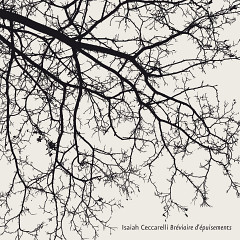
    Bréviaire d’épuisements, composed by the percussionist Isaiah Ceccarelli, is a work woven from the delicate fabric of the tension between darkness and light: a metallic and tenebrous landscape over which the human voice attempts to break like the dawn. This is Montréal-based drummer Isaiah Ceccarelli’s fifth disc on Quebec’s AM label as a leader or co-leader. The music on this disc is most often based on textures rather than on rhythmic structures. Solo 1 opens & features the eerie sound of bowed cymbals, which creates a mysterious other-worldly vibe. There is a seven part suite that features both female vocalists. Their voices are soft and dreamy and filled with haunting harmonies. Although the words are in French and printed in the liner notes, it is the sound of both voices that is most enchanting. There are four solo percussion sections placed in between the parts of the suite. Each one creates an oasis of strange yet soothing ambiance. The bass clarinets and viola da gamba, a smaller rounded on the bottom cello-like instrument, are well used to add other more carefully crafted sections to ponder the words which precede them. Considering that Mr. Ceccarelli is a fine drummer, there is little rhythmic interplay employed. The overall vibe is often stunning nonetheless.

    The overall vibe is often stunning

    Récits de neige dans Downtown Music Gallery

    «Review», Bruce Lee Gallanter, Downtown Music Gallery, 21 janvier 2011
    vendredi 21 janvier 2011 Presse

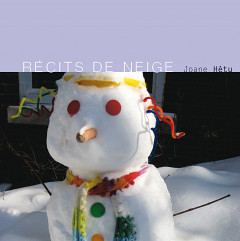
    This disc is the third part of a trilogy about winter and the different ways that snow effects those who live in Quebec. Ms. Hétu is a successful sonic sorceress who has a way of getting her ensemble to focus on and evoke the spirit of multi-dimensional winters. I know of the stress and strain of having to shovel the snow two or more times a day since my girlfriend lives up in Quebec and has to deal with it throughout their long and difficult winters. The eerie sounds of cold winds and ghost-like voices hiss and float throughout the first piece. Joane writes strong, swirling parts for the horns peppered with selective sampler spice and intricate rhythm team inter-action. Although there are some fifteen shorter tracks here, the entire work is continuous and connected by an inner thread. Many of the pieces feature different spoken word vocalists, each describing a different aspect of the winter. This includes the dozen different Inuit words for snow. The music and words have a cinematic feel, evoking a plethora of feelings about the winter and how it effects us. This music sounds as if it is being conducted since every sound is so well placed and different sections deal with seemingly structured changes in direction. This music is progressive in its own way and successful at utilizing the many talents of all of the individuals involved. The handful of spirited solos are the icing on the cake.

    This music is progressive in its own way and successful at utilizing the many talents of all of the individuals involved. The handful of spirited solos are the icing on the cake.
  • 19
  • 20
  • 21
  • 22
  • 23
  • 24
  • 25
  • 26
  • 27