Sauter au contenu principal
actuellecd

Blogue

162 résultats
  • 6
  • 7
  • 8
  • 9
  • 10
  • 11
  • 12
  • 13
  • 14
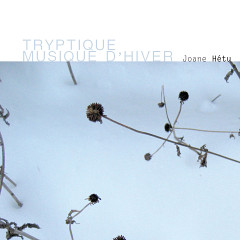
  • Tryptique musique d’hiver dans Downtown Music Gallery

    «Review», Bruce Lee Gallanter, Downtown Music Gallery, 17 juin 2011
    vendredi 17 juin 2011 Presse

    Musique d’hiver: (winter music) pays tribute to the frisky Nordic winds, the blinding luminosity of winter, the February moon, and the craziness of March, in order to communicate the emotional effervescence of winter. A 66-minute piece in four scenes (La chute, On s’les gèle, Lumière de février, Perdu l’nord), Musique d’hiver is arranged for acoustic instruments: piano, voice, flutes, alto sax, accordion, percussion — and electric instruments: synthesizer, sampler, and tape manipulation. It is an invitation to a music ritual for a season of frost and high winds; nakedness, white light, slowness, silence, white noise. A meditative piece, spatially textured, high-pitched, minimalist in words but rich in sonorities blending composition (themes, harmonic structures, shapes) and improvisation (ambient sounds, sound textures, free interpretation), all delivered in a sober, elegant atmosphere. You will be charmed by the freshness of this winter poetry and by this picturesque scene highlighted by acoustic and metaphorical sonorities.

    Nouvelle musique d’hiver: a real audio documentary about winter in Quebec constructed in four sections: Joyeux temps (Happy Times), Être dans le vent (Standing in the Wind), La marmotte (The Groundhog) and Calcium sloche (Calcium Slush). Featured here are the musicians of the Ensemble Super Musique: Jean Derome on flutes, objects & samples, Catherine Dostaler on piano & synth, Joane Hetu on alto sax, voice & direction, Diane Labrosse on accordion & sampler, Lori Freedman on clarinets, Martin Tetreault on turntables, Gilles Derome on narration and Pierre Tanguay on drums. Each section describes a part of the winter with narration in French; English translation included in the liner notes. The difficulties and occasional happy moments of winter are described in Joyeux temps (Happy Times). It is the actual sounds that do the best in evoking the realties of winter with stark flutes, sax sonics, vocal snippets, layers of samples, piano bits and clarinet swirls. The closest thing I can compare to this is The Residents’ ‘Eskimo’ album, another bleak yet astonishing disc of alien wonders. Joane does a splendid job of directing this group, as each sound seems filled with meaning, like a great soundtrack to a marvelous movie for our minds.

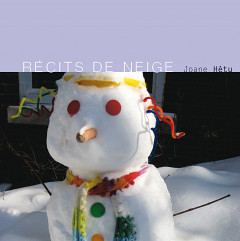
    Récits de neige: This disc is about winter and the different ways that snow effects those who live in Quebec. Ms. Hetu is a successful sonic sorceress who has a way getting her ensemble to focus on and evoke the spirit of multi-dimensional winters. I know of the stress and strain of having to shovel the snow two or more times a day since my girlfriend lives up in Quebec and has to deal with it throughout their long and difficult winters. The eerie sounds of cold winds and ghost-like voices hiss and float throughout the first piece. Joane writes strong, swirling parts for the horns peppered with selective sampler spice and intricate rhythm team inter-action. Although there are some fifteen shorter tracks here, the entire work is continuous and connected by an inner thread. Many of the pieces feature different spoken word vocalists, each describing a different aspect of the winter. This includes the dozen different Inuit words for snow. The music and words have a cinematic feel, evoking a plethora of feelings about the winter and how it effects us. This music sounds as if it is being conducted since every sound is so well placed and different sections deal with seemingly structured changes in direction. This music is progressive in its own way and successful at utilizing the many talents of all of the individuals involved. The handful of spirited solos are the icing on the cake.

    This music is progressive in its own way and successful at utilizing the many talents of all of the individuals involved. The handful of spirited solos are the icing on the cake.

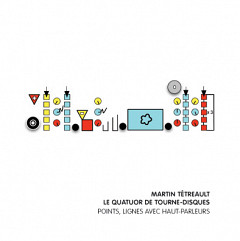
    Points, lignes avec haut-parleurs dans Monsieur Délire

    «Journal d’écoute», François Couture, Monsieur Délire, 14 juin 2011
    mardi 14 juin 2011 Presse

    Martin Tétreault présente son Quatuor de tourne-disques, un projet développé tout récemment. Aux tourne-disques: Nancy Tobin, Alexander MacSween, David Lafrance et Magali Babin. Tétreault à la composition et la direction d’ensemble. La plupart des pièces de ce court disque sont des compositions ou des improvisations dirigées (trois sont des improvisations libres). Les partitions graphiques des compositions sont incluses dans la pochette. Il s’agit d’une musique très abstraite faite de bruits de tourne-disques (aucune citation), plus proche des arts visuels (certaines figures sont presque palpables) que de la matière musicale. Concept intéressant, mais une première écoute ne m’a pas convaincu du résultat. Faudra que j’y revienne. L’album inclut un CD stéréo et un DVD ambiophonique 4.0.

    Il s’agit d’une musique très abstraite faite de bruits de tourne-disques…

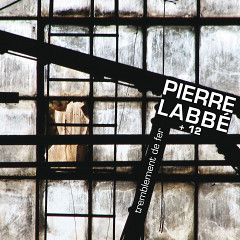
    Tremblement de fer dans The WholeNote

    «Review», Ken Waxman, The WholeNote, no 16:9, 5 juin 2011
    dimanche 5 juin 2011 Presse

    More than 60 years after the big band era, improvising musicians still organize large ensembles to take advantage of its wider scope and range of colors. Such is the versatility of the arrangements possible with large bands as these sessions demonstrate, that each sounds completely unique while maintaining the same excellence. […] With rock-influenced electric piano and guitar prominent, Pierre Labbé’s 12-piece big band takes a different approach on Tremblement de fer, performing a seven-part suite the saxophonist composed for a Montréal festival. A POMO sound essay, the composition is animated by contrapuntal clashes between sections which include four bowed strings, two brass, two reeds, plus guitar, piano, bass and percussion. Although linked, each track can be appreciated on its own. Despite its Arabic title, Le 2e Souk is actually a showcase for Jean Derome’s improvisations on successively, alto saxophone, flute and bass clarinet. Throughout his staccato peeps, sibilant slurs and flutter tonguing are matched by tremolo slides, sawing and scratches from the violinists, violist and cellist. Lavra, on the other hand masses Balkan-sounding string discord with irregular pulses from guitarist Bernard Falaise and drummer Pierre Tanguay as soprano saxophonist André Leroux carries the melody. Resolution comes when trombonist Jean-Nicolas Trottier abandons plunger tones to slurp his way up the scale, accompanied by the strings and pianist Guillaume Dostaler’s steady comping. Tanguay, whose hand taps are suitably exotic when playing darbuka, contributes muscular ruffs throughout. His steadying backbeat is particularly necessary on the final La Fille et la grenouille. Sounding like what would happen if a street-corner Sally Ann band wandered into a country music session, the tune mixes up the bugling from the brass players, rooster crows and spits from the reeds, a bow-legged rhythm with cow-bell pings from Tanguay, and Falaise contrasting his best pseudo-steel-guitar C&W twangs with the somewhat schmaltzy tutti horn lines.

    More than 60 years after the big band era, improvising musicians still organize large ensembles to take advantage of its wider scope and range of colors.

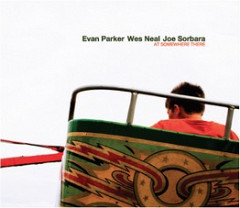
    At Somewhere There dans The WholeNote

    «Review», Ken Waxman, The WholeNote, no 16:9, 5 juin 2011
    dimanche 5 juin 2011 Presse

    Without a hint of condescension, veteran British tenor saxophonist Evan Parker allies his skills with the talents of Torontonians bassist Wes Neal and drummer Joe Sorbara in this first-class essay in free improvisation. During the single track, recorded live at local performance space Somewhere There, rhythms, pitches and tones are mixed, matched, mulched and multiplied with a timbral blend that makes it seems as if the trio members have collaborated for years.

    Balancing methodical plucks and brawny strums with a hint of sul tasto extensions, Neal marshals his strings to create an unremitting chromatic pulse. For his part, Sorbara pops, plucks, strikes and bounces rhythms on the sides and tops of his drums to tint and roughen the narrative. Delicate bell pings, rattling chains and, more frequently, the harsh application of a drum stick along a cymbal, mark transitions.

    Meanwhile Parker, who has been involved in similar ad-hoc improvising since the mid-1960s, varies his output from intense flutter tonguing to glottal punctuation; and from flattement smears to cadenzas of bird-like twittering. Yet even as his inventive free-flowing timbres inflate, constrict or propel the performance in unexpected directions, he never loses its linear thread. A master of cooperation not dominance, even his intervals of nearly superhuman circular breathing are not challenges but an invitation to further group counterpoint. By the finale his occasional pan-tonal bent notes and nephritic explosions have become merely one element in this group sonic picture, separate but equal to the bassist’s double stopping or the drummer’s ruffs and rolls.

    Without a hint of condescension, veteran British tenor saxophonist Evan Parker allies his skills with the talents of Torontonians bassist Wes Neal and drummer Joe Sorbara in this first-class essay in free improvisation.

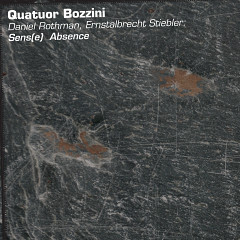
    Daniel Rothman, Ernstalbrecht Stiebler: Sens(e) Absence dans MusicWeb International

    «Review», Byzantion, MusicWeb International, 1 juin 2011
    mercredi 1 juin 2011 Presse

    The Montréal-based Bozzini Quartet, named after the sisters who founded it in 1999, Isabelle (cello) and Stéphanie (viola), have now released a dozen CDs, mostly on the label they set up in 2004. Their dedication to new music is unwavering: according to the liner-notes, they have commissioned an incredible hundred-plus works, and premiered more than 150 — including the two on this disc, which here receive their first, and in all likelihood, last recording.

    There is little current information available about veteran German composer Ernstalbrecht Stiebler on the internet; his works list in the online version of the New Grove Dictionary has not been updated since 2003. What is clear is that Stiebler was at the Darmstadt summer schools in the late 1950s, where he apparently took Karlheinz Stockhausen’s composition course and came under the influence of the musical style — if that is the right word — of LaMonte Young. Nearly fifty years on, Stiebler is still evidently fascinated by those ideas — of sustained sounds and minute changes over time. If it is nothing else, Stiebler’s Sehr Langsam is honest — it is indeed very slow. It begins with a drone that sounds a lot like the quartet tuning up in slow motion — and then carries on in similar fashion for half an hour, ending more or less as it began.

    Stiebler says that the title Sehr Langsam gives both the tempo indication and "characterizes the music itself, asking the listener for patience, for calm concentration, and for abandoning himself to the sound." He adds: "In order to enhance the musical experience of this piece, it is suggested to listen to it at a reduced volume level." Some, perhaps many, may be inclined to take that advice to its extreme and switch the CD off. There is no sense of development or narrative — this is the hardcore end of uncompromising!

    There is even less information about American composer Daniel Rothman readily available. His Sense Absence is in some ways similar to Stiebler’s work — those who are not impressed by this kind of avant-garde soundscaping will find it all too similar, especially confronted with the fact that it is even longer. It could also just as easily have been titled Sehr Langsam. What initially sets it apart, however, is that every now and again, the long drone, which is higher-pitched — reminiscent of a loud tinnitus, perhaps — breaks off to allow several seconds of silence to intervene. Rothman likens the work to "a building whose rooms always seem different as light changes throughout the day and through the seasons", but the listener must also factor in Rothman’s "unusual tuning system" which gives an effect that is both spectral and relentless — until at 23 minutes, that is, when the instrumentalists suddenly take to plucking. Two minutes later the drone tries to start up again, failing at first, but ultimately forcing the sound on to the end which, as with Stiebler’s work, is quite a lot like its beginning, although by now the sonorities are almost electronic in their mesmeric effect.

    Rothman writes that "Composing for strings has always been, for me, a process of discovery, with their infinite tuning possibilities that produce subtle harmonies and timbres of great nuance and beauty", but the beauty in this work is so subtle that most listeners will look for it in vain. Nevertheless, within very narrow constraints, there is more variety here than in Sehr Langsam, more interest.

    The notes suggest that these two works create "a luminous space in which our thoughts can be reflected, can wander and explore freely", but it is hard to believe there is anything but a minuscule market for this kind of experimentalism — a strong liking for Stockhausen or LaMonte Young is probably a prerequisite in any prospective listener.

    On the other hand, for artistic freedom’s sake, the Bozzini Quartet deserve credit for making it available. Sound quality is very good. There is no jewel case or CD booklet as such, however. The disc is housed in a cardboard sleeve which folds out. All information — in French and English, but in fairly short supply — is printed straight onto the card.

    Their dedication to new music is unwavering […] this is the hardcore end of uncompromising
  • 6
  • 7
  • 8
  • 9
  • 10
  • 11
  • 12
  • 13
  • 14