Sauter au contenu principal
actuellecd

Blogue

202 résultats
  • 1
  • 2
  • 3
  • 4
  • 5
  • 6
  • 7
  • 8
  • 9
  • Bryologie dans CISM

    «Jazz-qui-rock-ma-vie», Pierre-Jean Lavigne, CISM, 28 décembre 2010
    mardi 28 décembre 2010 Presse

    Faque j’suis dans un party chez un ami quand j’lui dit: «Yo, c’est trop fly ton shuffle mix», pis là y’m’shoot «Yoooooo, c’pas à shuffle, c’est le nouvel album de Rouge Ciel». Pis la ma tête fait genre BBBRRRKK-SSSHHHHAAARR-RRRRRHHHH-SSSSHHKKKK, pis lui yé comme «yyyeeeaaaahhhh» parce qu’y m’a eu avec sa fake compil qui sonne comme si les best orchestres de film de série B et westerns italiens (pense Morricone qui front Goblin) composaient pour m’accompagner lors de mon vol de banque… sur la planète VAMPIRE!

    «Yo, c’est trop fly ton shuffle mix»

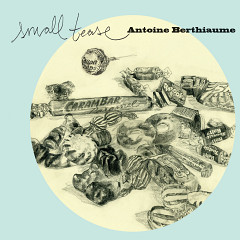
    Small Tease, Danse des breloques dans CFLX 95.5 FM

    «Le Top 50 des musiques éclectiques de Délire musical, édition 2010», François Couture, CFLX 95.5 FM, 21 décembre 2010
    mardi 21 décembre 2010 Presse

    L’émission radiophonique éclectique Délire musical (CFLX-FM, Sherbrooke, Québec) annonce aujourd’hui la liste des 50 disques retenus par son équipe pour son émission de fin d’année. Cette liste regroupe 50 titres aussi variés qu’étonnants, dans des genres disparates comme le folk, le post-rock, le rock progressif, la chanson, les musiques du monde, l’électronique et bien plus.

    Cette liste regroupe 50 titres aussi variés qu’étonnants…

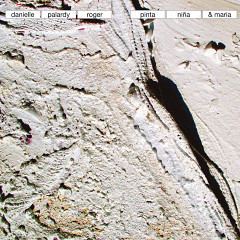
    Pinta, Niña & Maria dans Downtown Music Gallery

    «Review», Bruce Lee Gallanter, Downtown Music Gallery, 17 décembre 2010
    vendredi 17 décembre 2010 Presse

    This is an ambitious — and accompished! — project directed by Québécois percussionist & composer Danielle Palardy Roger leading three different ensembles: AM all-star Ensemble SuperMusique (with Derome, Hétu, Tanguay, Côté, Falaise), GGRIL (Grande Group Regional D’Improvisation Liberee) and ECM+ (Ensemble Contemporain de Montréal). The ‘Pinta, Nina & (Santa) Maria’ of the title refers to the three boats that sailed to the Americas in 1492 to explore the new world. Like each of three boats, each of these ensembles is very different in terms of personnel, instrumentation and direction. Although most of the 23 pieces that make up this three part suite are pretty short, there is a thread the runs through the entire work and each of the suites is continuous.

    La Pinta is performed by GGRIL, a 13-piece ensemble whose instrumentation includes accordions, brass, strings, guitars, dobro, radio, el. bass and percussion. This is a suspense-filled landscape of shifting strings, thoughtful brass, careful guitar feedback fragments, eerie static and organic percussion. The music is both fascinating and somewhat disorienting. There is one section where the members shout out “Hey!” apart and together, adding some exclamatory punctuation to the proceeding, which erupts throughout this disc.

    La Nina is performed by Ensemble SuperMusique, a longtime AM all-star unit which includes Jean Derome, Joane Hetu and Bernard Falaise. ESM are masters of the focused improv idiom and thus their suite is rich and filled with nuance, as well as some selective noise. Distant seasick melodies float on top of waves of shifting currents. I love the way that segments of somewhat familiar songs magically emerge and submerge within the flow. The Santa Maria (or “Who Knows”) is performed by ECM+, a fourteen piece ensemble with reeds, brass, strings & percussion with featured soloists Diane Labrosse on sampler and Michel F Cote on electronic percussion. Commencing with an excerpt from Charles IvesThe Unanswered Question, Labrosse and Cote add selective sonic spice to the occasionally somber, enchanting strings and brass. In many ways, this is a masterwork of successful cosmic strands that have been knitted into brilliant tapestry. Don’t pass this one up, please.

    In many ways, this is a masterwork of successful cosmic strands that have been knitted into brilliant tapestry. Don’t pass this one up, please.

    Bryologie dans Downtown Music Gallery

    «Review», Bruce Lee Gallanter, Downtown Music Gallery, 17 décembre 2010
    vendredi 17 décembre 2010 Presse

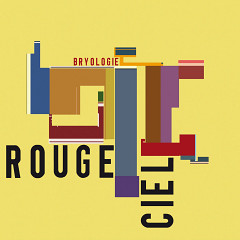
    This is the third disc from the great but under-recognized Quebec-based progressive band Rouge Ciel. After hearing their first two discs and seeing them live at Guelph, I was excited to receive their new one earlier this week. What I dig about this disc is that it is filled with passion and creativity, not any of that complexity for-its-own-sake stuff. This sounds as if it was recorded in the mid-seventies since they use those vintage keyboards like (Hammond?) organ, electric piano & synth. Mr. Del Fabbro plays some great wah-wah violin on Imbroglio, now there’s a sound we haven’t heard in a long while. Agitato has a most majestic sound with lovely cascading violin & piano swells. A few of the melodies used here have a warm, folky sort of resonance which is most charming. Just when you think you have this band figured out, they head for darker, more turbulent waters. Antimemoire has a great, churning quality that builds to a grand conclusion. Classic progressive music has a mythic quality like a soundtrack for an animated journey that we are swept away by. That’s what we find here. You got to love that central pounding drum on Bryologie, a strong blend of eastern and other progressive elements. There is no singing on this disc for those who need to know and it is delightful gem throughout, like a long lost treasure from the olden days (of the seventies). I would hope that Michel Levasseur from the Victo Fest would be wise enough to book this great quartet for a future fest. Both Rouge Ciel and Victo are from the very same province — Québec.

    … it is delightful gem throughout, like a long lost treasure from the olden days (of the seventies).

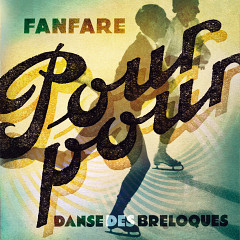
    Danse des breloques dans Sonomu

    «Review», Stephen Fruitman, Sonomu, 14 décembre 2010
    mardi 14 décembre 2010 Presse

    Quebec has one of the most heterogeneous avant-jazz scenes in the world, and all that hard work bending the form has found an outlet for at least twenty of them to let off a little extra steam in the form of Fanfare Pourpour.

    Under the direction of Jean Derome, the grand poobah of Montréal’s musique actuelle scene, and Némo Venba, who plays trumpet and manages the label, half of them have written tunes hitched together in one fifty-six minute long freight train hurtling along but never going off the rails for this, their fourth release.

    Inside the beautifully-designed wallet, there is a photo of the orchestra gathered round the dinner table (stocked with oranges and bottles of wine) which immediately brings to mind the famed portrait of Bob Dylan and The Band on The Basement Tapes. Another crowd of equals vastly enjoying one another’s company. It’s impossible to say for sure, but it seems that everybody gets at least one solo. Still, the main thing is the flawless ensemble play — made more impressive by the fact the whole record was recorded live in the studio.

    Literally beginning with a chugga-chugga choo-choo rhythm and conductor’s whistle, we are off on a milk run to Vaudeville with stops at the circus, a gypsy camp, a Balkan booze-up, a Jewish wedding, and a village fête in rural Quebec. Fanfare Pourpour freshens up classic popular music forms like the tango, waltz, pasodoble and chanson, and treats us to unclassifiable anthems to joy like Pour des ours (which ends with a meow).

    The band includes actor/guitarist Luc Proulx, who sings the first of only two songs, Partir, like M. Hulot on a day not fraught with small catastrophes. Nicolas Letarte brings out his singing saw. Violinist Guido Del Fabbro, who presides over a large ensemble of young improvising experimentalists in his Mouvement de Musique Présente, has penned three wildly divergent numbers. Argentinian-born saxophonist Damian Nisenson, reputedly ”a man who will say anything and can play anything”, is true to both his roots and the motley nature of this crew helming an hilarious avant-klezmer tushy-shaker which translates as “Big Magpie”. Marie-Soleil Bélanger, experimental vioinist, is right in her element, as her day job is to play with traditional genres.

    Also on board are demon accordionist Luzio Altobelli, Dany Nicolas and his banjo and lugging the biggest instrument, Christine Lajeunesse on euphonium.

    Lajeunesse gets to blow that leviathan on Willi grosse baleine, big-band reggae showcasing the brass section; the waltz Transport Suzanne by Del Fabbro is diginified and actually quite moving. It’s nice too sit one out, too, and cool off in the tiki-lounge breeze of Croise le pont.

    As each new number queues up, a different kind of smile crosses your face.

    As each new number queues up, a different kind of smile crosses your face.

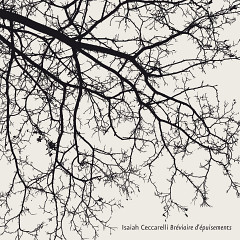
    Bréviaire d’épuisements dans CISM

    «Rémanence», François Dunlop, CISM, 8 décembre 2010
    mercredi 8 décembre 2010 Presse

    Et puis la chute. Et puis plus rien. Et puis beaucoup trop. Combat contre la surtaxe d’images perdues, d’époques mortes. Vétustes choix (de carrière). Le recul comme couteau au cœur, le demain comme cauchemar nécessaire. Inéluctabilisme profond d’une condition humaine gâchée. Suivant les traces chantées de Steppe, Josée Lalonde raconte en duo avec Émilie Laforest l’histoire d’un désordre. Lori Freedman, Pierre-Yves Martel, Philippe Lauzier et notre chef mécanique, Isaiah Cecarrelli s’occupent du reste. La fermeture de l’usine a tué papa. Les résidus du culte d’autrefois tueront maman.
    Suivant les traces chantées de Steppe, Josée Lalonde raconte en duo avec Émilie Laforest l’histoire d’un désordre.
  • 1
  • 2
  • 3
  • 4
  • 5
  • 6
  • 7
  • 8
  • 9