Sauter au contenu principal
actuellecd

Blogue

215 résultats
  • 22
  • 23
  • 24
  • 25
  • 26
  • 27
  • 28
  • 29
  • 30
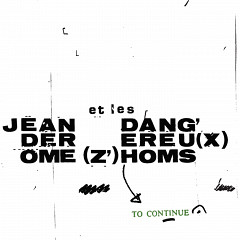
  • To Continue, Departure dans Blow Up

    «Recensione», Enrico Bettinello, Blow Up, no 119, 1 avril 2008
    mardi 1 avril 2008 Presse

    Torna dopo un silenzio di dieci anni uno dei progetti più stimolanti dell’instancabile sassofonista canadese Jean Derome: i suoi Dangereux Zhoms — nei quali troviamo altri nomi imprescindibili della scena Ambiances Magnétiques come il trombonista Tom Walsh e il batterista Pierre Tanguay — sono un organico che ama fondere l’improvvisazione e la scrittura contemporanea, rincorrendo con felice sintesi le più disparate possibilità lessicali della musica di oggi. Sei composizioni di Derome, terreno di splendide invenzioni, irrequiete e coinvolgenti, in grado di abbracciare un testo di Richard Serra come una favola di La Fontaine, per un lavoro ad alto tasso creativo. Ottimo! (8/10)

    Troviamo il batterista Tanguay anche in Yul/Departure, disco pubblicato per la Malasartes Musique, una consorella della Ambiances, in trio con il bassista Michel Mergaerts e il sassofonista belga Erwin Vann. Personalità differenti che si mettono al servizio reciproco, nulla di particolarmente nuovo o imperdibile, ma non mancano energia e sfumature davvero azzeccate. (7/10)

    … un organico che ama fondere l’improvvisazione e la scrittura contemporanea, rincorrendo con felice sintesi le più disparate possibilità lessicali della musica di oggi.
    7

    Musique pour objets en voie de disparition dans Blow Up

    «Recensione», Stefano Isidoro Bianchi, Blow Up, no 119, 1 avril 2008
    mardi 1 avril 2008 Presse

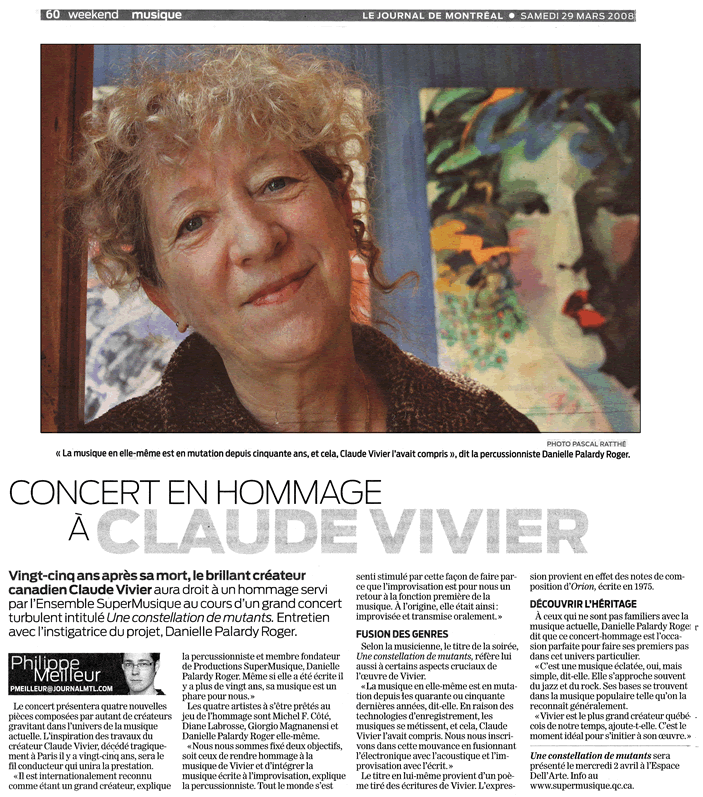
    Diane Labrosse ha avuto un’idea simpatica, originale, delicata, tenerissima. Creare una “musica per oggetti che stanno per scomparire”: otto tracce dedicate a sveglia, moka, registratore a nastro, telefono analogico, TV in bianco e nero, stampante, segreteria telefonica, calcolatore elettrico. Come portare a termine la missione? Registrando i rispettivi suoni-rumori e musicandoli assieme a un ensemble di sei esperti musicisti come Marie-Soleil Bélanger (violino), Jean Derome (flauto e trombetta vocale), Bernard Falaise (chitarra elettrica), Lori Freedman (clarinetto), Jean René (viola) e Pierre Tanguay (percussioni); per sé Diane riserva la fisarmonica. La connessione diretta tra le musiche proposte e i rumori ad esse connessi sfugge (al di là della malinconia di fondo di tutti i pezzi) ma non è ovviamente questo il punto. Tutto ruota infatti intorno ai suoni messi in campo, sempre semplici e nudi di fronte al doloroso annaspare degli oggetti morenti: un metronomico battito di corde (Le réveille-matin à tic-tac, Le magnétophone à ruban), un violino colmo di nostalgia (Le moulin à café manuel, splendida), il melodrammatico incombere di soffi di fisarmonica (Le téléphone à cadran rotatif), il disperato urlo del clarinetto nel mezzo di un caos primordiale (La télé noir et blanc), il flauto che galleggia tra le compressioni ritmiche di una formidabile progressione minimal techno (L’imprimante), l’abile goffo rigurgitare delle note basse di una chitarra (Le répondeur à cassettes), la viola e la fisarmonica che stendono un telo ambient avvolgendo il brulicare di una calcolatrice (Le percolateur électrique). Spesso, tra i pezzi, lo squillo di una sveglia che avverte “memento mori” ai trapassandi. Struggente. (8/10)

    Diane Labrosse ha avuto un’idea simpatica, originale, delicata, tenerissima. Creare una “musica per oggetti che stanno per scomparire”: otto tracce dedicate a sveglia, moka, registratore a nastro…
    8

    Plumb dans Exclaim!

    «Review», Vish Khanna, Exclaim!, 1 avril 2008
    mardi 1 avril 2008 Presse

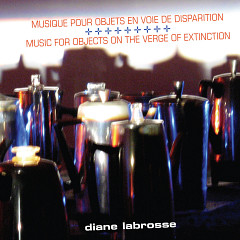
    Plumb is an honest, no-frills document of two of the busiest musicians in Canadian improvised music joining forces for a good-humoured recording session. From a personality perspective, Toronto, ON trombonist Scott Thomson often plays the rascally rogue, while Montréal clarinettist Lori Freedman is more earnest and soulful in her musical explorations. In these solo and duet pieces, each player shifts their roles accordingly, calling and responding to nuanced appeals for new sounds from their respective instruments. Freedman generates squawks and squalls on Aplomb that are rhythmic and damn near poetic. Two Depths is moodier, beginning with the Theremin-like bubbling of Thomson’s gurgling trombone, which suspends Freedman’s subtle accompaniment in the air before both instrumentalists begin bristling at one another in concert. Such physiological experiments, where the trombone, clarinet and bass clarinet each are ascribed with communicative traits usually reserved for braying organisms, continue on the stirring To Horn and the subdued big-band musings of Two Plums. Those with some knowledge of Freedman and Thomson’s work as individuals will likely appreciate Plumb the most but there’s certainly something vivacious about their interplay.

    Those with some knowledge of Freedman and Thomson’s work as individuals will likely appreciate Plumb

    Clic dans Exclaim!

    «Review», David Dacks, Exclaim!, 1 avril 2008
    mardi 1 avril 2008 Presse

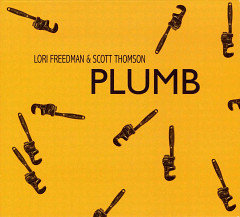
    Falaise has put together a great band, only it’s not a band; it’s a series of overdubs creating a mille-feuille of carefully controlled sounds and influences. Falaise name checks Anthony Braxton, Captain Beefheart, Igor Stravinsky and Robert Wyatt as influences, so you know there’s never a straight path between two points. Sometimes the writing is a little tight assed, with strangled, carnival-esque riffing from the horns and trombone redeemed only by drummer Jean Martin’s powerful groove in Tricheur. There’s a Zappa influence at work as well, with a knack for snaky, highly orchestrated melodies and sudden shifts into loopy solos evident especially in Falaise’s guitar work. Clic makes more sense as a suite than as individual tracks. As one song folds into another, commonalities in the arrangements begin to emerge and the listener begins to appreciate the scope of the work. Certain songs coalesce on their own, such as Lime and Moka, which would appeal to fans of Torngat, while others just keep up the momentum. Shout outs go to the overdubbed; he’s assembled a diversely proficient band with Jean Derome, Lori Freedman, Gordon Allen and Tom Walsh as a hard charging brass “front line.”

    Falaise has put together a great band, only it’s not a band; it’s a series of overdubs creating a mille-feuille of carefully controlled sounds and influences.

    Quartetski dans The Gazette

    «Visionary playing from Quartetski», Kate Molleson, The Gazette, 31 mars 2008
    lundi 31 mars 2008 Presse

    At the height of the First World War, as the Russian Revolution loomed and Europe’s musical traditions erupted, Sergei Prokofiev wrote a set of 20 miniature piano pieces called Visions fugitives. Each is only about a minute long; they’re tiny, fleeting glimpses of texture and character. Some are dark, some are dulcet, many have a touch of the burlesque.

    Local jazz-improv group Quartetski does Prokofiev use these miniatures to conjure visions of their own. They play Prokofiev’s music (as orchestrated by bassist Pierre-Yves Martel) then, in a vocabulary that’s dreamy and fearless and tangibly inspired by Prokofiev, they improvise.

    This is a daring and unusual project — daring because it transcends genre boundaries, unusual because it does so without becoming tacky. Quartetski is made up of four seriously creative improvisers (Martel on bass, Gordon Allen, trumpet, Philippe Lauzier, sax/bass clarinet, and Isaiah Ceccarelli, drums) whose experimenting is as considerate as it is far-flung.

    And the arrangements themselves are artfully orchestrated, which isn’t surprising given Martel’s mongrel pedigree: as well as being a leader of Montréal’s musique actuelle scene, he plays viola de gamba with the Studio de musique ancienne de Montréal and Constantinople, and double bass with several orchestras. Such successful genre-hopping is feasible because he’s technically versatile, and, moreover, an extremely intelligent musician. Diversity is a powerful resource.

    Quartetski played at Upstairs on Friday and Saturday, which, considering the cerebral and unamplified nature of the music, was an admirable piece of programming by the jazz bar.

    Both nights finished with work from Quartetski’s impending album of Duke Ellington tunes — again, beautifully orchestrated and explored. Despite the differences between Prokofiev and Ellington, there’s a sound that’s unmistakably Martel’s. Look out for that CD release when it comes — something along the lines of ‘Quartetski does Ellington,’ I believe…
    Quartetski is made up of four seriously creative improvisers […] whose experimenting is as considerate as it is far-flung.
  • 22
  • 23
  • 24
  • 25
  • 26
  • 27
  • 28
  • 29
  • 30