Sauter au contenu principal
actuellecd

Blogue

223 résultats
  • 20
  • 21
  • 22
  • 23
  • 24
  • 25
  • 26
  • 27
  • 28
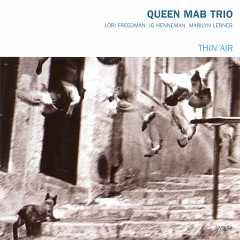
  • Thin Air dans Coda Magazine

    «Coda Reviews», Bruce Carnevale, Coda Magazine, no 333, 1 mai 2007
    mardi 1 mai 2007 Presse

    The Dutch violist Ig Henneman […] runs the Dutch WIG label along with her partner, reedman Ab Baars. Her music straddles a realm between contemporary classical string music and free improvisation: never bereft of humor, her music remains nonetheless restrained, but it also doesn’t shy from extended techniques. In 2002 she joined the Canadian improvising duo Queen Mab: Lori Freedman on bass clarinet, clarinet and Marilyn Lerner on piano. Here the trio plays a program loosely based on the Queen Mab Scherzo by Hector Berlioz. Thin Air, the title track and only piece attributed to all three, begins with Freedman and Henneman sparsely duoing, Henneman edgily scratching her strings; Lerner enters with a prepared-piano sound. Indeed, here and elsewhere, the music sounds chamber trio-esque, with the third piece by Henneman, Drums and Trumpets, containing brief, almost fragile themes repeated theatrically between Freedman’s wail, Henneman later providing a minimalist basso continuo background for Freedman. Henneman’s background accelerates and changes into something Erik Satie could have written. Characteristic of the entire CD, Drums and Trumpets transforms itself with a fragile air.

    Tombak dans Exclaim!

    «Destination Out», David Dacks, Exclaim!, 1 mai 2007
    mardi 1 mai 2007 Presse

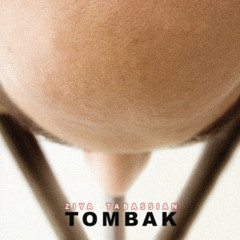
    There’s no shortage of solo drum or percussion ensemble discs. However, very, very few of these attempt to explore their subject matter in an electro acoustic way. This marks Tombak as an important building block in what will surely become more commonplace in years to come. Recorded live with no edits or overdubbing, Tombak shows Tabassian in total control of his instrument. He is well known in Quebec as a proficient player, in the traditional sense, of this single headed, goblet shaped drum, but here he eschews pattern-based regular rhythms in favour of scraping, scratching and advanced tonal manipulation of this incredibly versatile instrument. Perhaps a solo record on tombak works better than on some other percussion instruments due to its inherent versatility. Tabassian capitalises on the quick and sensitive response of the tightly bound drumhead to create everything from pure bass pulses to wind-like howls. The dampening effect achieved by using one’s hand inside the cavity of the drum is also imaginatively deployed. Further sonic ingredients are found in Tabassian’s ability to brush the body of the drum or create distorted effects simply with his hands. All these sonic inventions are interesting but his formal technique also plays a major part in his ability to generate abstract sounds — consider the drum flurries in Varashan, which sound more like smears than precisely metered riffs. The last tune on the album, Danse mon tambour, does give it up and turn it loose with some addictive rhythms and sparkling colours.

    Tombak dans Earlabs

    «Releases», Jos Smolders, Earlabs, 17 avril 2007
    mardi 17 avril 2007 Presse

    Tombak is the name of an important percussion instrument used in Persian classical music. It is a one-sided drum carved out of the trunk of a walnut or mulberry tree and covered in goat or lamb skin. It is in the dedicated hands here of Ziya Tabassian, who studied classical percussion in Montréal, and tombak in Iran. He is member of several ensembles that are engaged in classical and world music. On Tombak however we find all alone with the tombak or zarb. Tabassian composed 9 pieces to demonstrate his love for this instrument. Compositions that are beyond the musical context where the tombak is usually heard. Played with bare hands he creates subtle and sober improvisations, that show the great flexibility of his playing. It is amazing what new sounds and colors he finds on this simple instrument. Through a great variety of techniques and musical principles, he discovers new dimensions on this rich instrument. On the other hand, how inventive and virtuoso this music may be, it is just two hands on one basic percussion instrument. Within these limitations Tabassian does a great job. But as a listener you must have a great affinity with this idiom in order to really appreciate and enjoy it. So I hope Tombak finds it’s way.

    Karusell Musik dans La Presse

    «Fanfare Pourpour & Lars Hollmer: Pourpour… toutes les oreilles férues de fanfares», Alain Brunet, La Presse, 14 avril 2007
    samedi 14 avril 2007 Presse

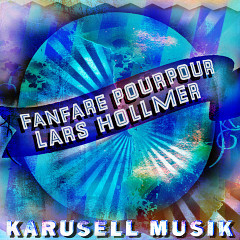
    Issue de la mouvance des fanfares d’avant-garde, Pourpour fait grimper sa cote d’un cran en s’associant à l’accordéoniste et chanteur suédois Lars Hollmer, bien connu dans les réseaux d’avant-garde.

    Classiques, folkloriques ou ultramodernes, les repères de cette «musique de carrousel» sont bien assez clairs pour attirer un public ouvert sans être connaisseur.

    L’effort collectif et certaines performances individuelles s’avèrent assez concluants pour séduire les mélomanes tous azimuts. Les propositions sont assez riches et comportent bien assez de complexité pour satisfaire les férus d’avant-gardisme musical.

    La qualité des arrangements de Jean Derome, directeur musical de cet orchestre à pied, ne fait pas non plus de doute. Les différences de niveaux de virtuosité dans cet ensemble ne constituent en rien un irritant, vu l’approche de Pourpour.

    En somme, ce troisième album de la fanfare montréalaise est de loin son meilleur. Tous les ingrédients de cette plongée dans l’univers passé et présent de la musique foraine de tradition occidentale concourent à une véritable réussite artistique. Avec une touche particulière de Scandinavie dans le cas qui nous occupe, puisque Lars Hollmer y signe les compositions originales.

    +: L’équilibre des ingrédients traditionnels et avant-gardistes

    -: La rythmique de l’orchestre un peu limitée

    4/5

    En somme, ce troisième album de la fanfare montréalaise est de loin son meilleur.

    Snipettes! dans Downtown Music Gallery

    «Review», BLG, Downtown Music Gallery, 13 avril 2007
    vendredi 13 avril 2007 Presse

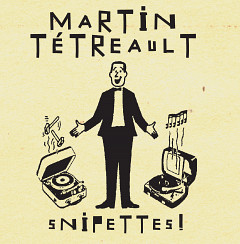
    This reissue of what was previously released as a limited edition cassette is perhaps one of Tétreault’s best works! Snipettes! consists of 22 short pieces and one long piece (31+ minutes), all recorded between 1984 and 1990. These pieces come from early in the music career of Québécois turntablist, Martin Tétreault. At this point, Martin was using two turntables, one mostly featured an album by Eddie Osborne called Baldwin Organ & Bongos, while with the other turntable he samples records on modern classical and musique concrète. He also used tape recorders and a shortwave radio. The recorded voices include Russian cosmonaut, Yuri Gagarin, William Shatner & Leonard Nimoy in their Star Trek voices, plus a variety of French actors. Records by Varèse, Luc Ferrari and the New York Jazz Quartet are utilized. Each piece gets a partial page in the enclosed booklet explaining where the sample is taken from and sometimes there is more info then the sounds we hear on the CD. What I find most charming about this disc is that it sounds like an artifact from a long lost era when folks just used turntables & records, before there were samplers.

    perhaps one of Tétreault’s best works!

    Les salines dans Vital

    «Review», Dolf Mulder, Vital, no 571, 9 avril 2007
    lundi 9 avril 2007 Presse

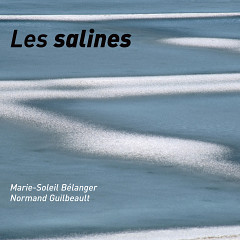
    […] Another exotic instrument we hear on the duo CD by Bélanger and Guilbeault. Marie-Soleil Bélanger plays the ehru, a chinese string instrument, in some of the tracks on their cd Les salines. Most of the time however she sticks to the baritone violin. Norman Guilbeault plays double bass. He may be known to you from his recent Charles Mingus tribute that I reviewed for Vital Weekly. Besides he worked and works with many other musicians from the Ambiances Magnétiques collective like René Lussier, Jean Derome and many others. Bélanger is active in the Montréal scene since 1994, and plays currently with Fanfare Pourpour. On a tour in France in 2005 both found inspiration for their CD, a very nice and inspired work by two excellent string players from Canada. The compositions are very transparent and open and give plenty of room this way to the capabilities of both musicians. Most of all they prove themselves as great vehicles for the musical expression of both players. They communicate in well balanced improvisations, that are not far out concerning their structure. And although they make use of extended techniques, they don’t push things to the extreme. With great ease and joy they move between traditionalist and modern approaches, creating some very warm and human music.
  • 20
  • 21
  • 22
  • 23
  • 24
  • 25
  • 26
  • 27
  • 28