Sauter au contenu principal
actuellecd

Blogue

199 résultats
  • 22
  • 23
  • 24
  • 25
  • 26
  • 27
  • 28
  • 29
  • 30
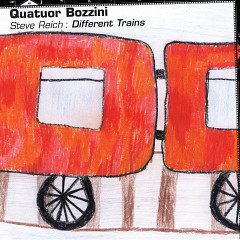
  • Steve Reich: Different Trains dans Sonomu

    «Review», Stephen Fruitman, Sonomu, 10 mars 2006
    vendredi 10 mars 2006 Presse

    A new recording of Different Trains (1988), one of the most significant pieces in composer Steve Reich’s canon, as well as in the œuvre of works dealing with the undealable, the Nazi’s Final Solution.

    Reich explores the Holocaust in a highly personal manner, by juxtaposing his relatively comfortable childhood in the US, being shuttled between his divorced parents across the American continent, with the tape recorded recollections of survivors who had been forced to travel across the European continent on entirely different sorts of trains. A groundbreaking aspect of the piece is the manner in which Reich takes the vocal snippets and has the string quartet imitate the rhythms and cadences of the voices, thereby rendering them in themselves musical. The piece has deservedly received innumerable awards and the World Premiere recording by The Kronos Quartet is simply superb. A devastating acheivement.

    Quatuor Bozzini from Montréal (Clemens Merkel and Nadia Francavilla, violin; Stéphanie Bozzini, viola and Isabelle Bozzini, cello) were encouraged by Reich to attempt their own interpretation. The quartet reinvigorate the piece with its intense playing and attention to detail, and appear even to have inserted some samples of the recorded testimonies which do not appear on the original.

    Different Trains is one of the strongest works of the postwar era. So which to buy? Why not Quatuor Bozzini’s? Aside from the fact that it is every bit as good as Kronos’ version, you will be supporting a new group at the beginning of what promises to be a brilliant career (Kronos hardly need an introduction), own a very nifty little package, all folds and flaps, and spare yourself the tedious second piece on the Nonesuch release, Electric Counterpoint with Pat Metheny on guitar.

    Collection QB is the quartet’s personal imprint under the DAME label umbrella in Quebec, which has already released a previous CD, Portrait Montréal, interpretations of works by their most immediate contemporaries.
    Avec son intensité et l’attention portée aux détails, le quatuor redonne vie à cette pièce.

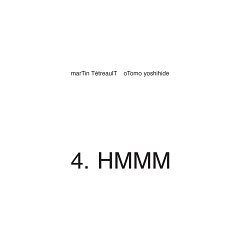
    4. Hmmm dans Vital

    «Review», Dolf Mulder, Vital, no 516, 10 mars 2006
    vendredi 10 mars 2006 Presse

    Another cd from this notorious duo. If I’m not mistaken, their first collaboration dates from 1999 — the cd 21 situations. In 2003 they toured together through Europe. At the end of this tour they recorded in Montréal Studio — Analogique — Numérique, released as three mini-cds. The tour itself is documented in a series of 4 cds (!) of which now the fourth cd is released. This collaboration must have been a very important experience for both gentlemen, as it is so extensively made available. If you know this duo from one of these earlier releases they do not need further introduction. Once again we find them behind their turntables from which they extract the most extreme noises. This ‘music’ is far beyond all categories and standards that normally define music: its noise concrète. Very physical. It fascinates because of the radical approach and offers the opportunity of experiencing the beauty of noises and sounds. Well, if you are in the right disposition of course.

    Once again we find them behind their turntables from which they extract the most extreme noises

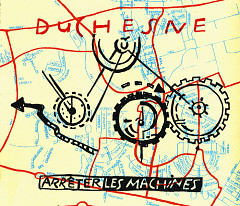
    Arrêter les machines dans Le Devoir

    «Critique», Sylvain Cormier, Le Devoir, 10 mars 2006
    vendredi 10 mars 2006 Presse

    Ne pas parler pour ne rien dire. Il aura fallu presque une vie à André Duchesne, l’as guitariste, le champion compositeur de musique actuelle, le vétéran de Conventum et Locomotive, le cofondateur du label Ambiances Magnétiques, pour qu’il juge nécessaire d’élever de nouveau la voix. Vingt-deux ans séparent ses deux seuls albums de chansons, mais Le Temps des bombes et Arrêtez les machines sont néanmoins frères de colère. Rien n’a changé en mieux, comprend-on: le nouvel album enfile les constats implacables comme on mène des veaux à l’abattoir. Qu’il s’agisse de l’état désespérant du monde (Bruits de guerre, Les petits souliers) ou d’observations plus locales (La machine à sous, Ville ouverte), c’est le même bourbier, décrit sans fard sur fond de musiques inquiètes et intenses. À travers ce paysage ravagé, Dieu merci, subsiste un peu d’espoir (Un bon matin), un peu d’humour (On est dans la merde) et un peu d’amour (Danser contre les ombres, manière Leonard Cohen). Oui, ce disque est d’un abord difficile, comme ceux de Desjardins, mais pareillement réconfortant. On y est moins seuls à désespérer.

    Arrêter les machines dans Voir

    «Critique», Réjean Beaucage, Voir, 9 mars 2006
    jeudi 9 mars 2006 Presse

    Le compositeur et guitariste André Duchesne lançait récemment son sixième disque (sans compter ceux parus sous d’autres noms, Locomotive et Les 4 Guitaristes de l’Apocalypso-bar, ou, dès 1977, Conventum). Il lançait simultanément un site Internet où il sera dorénavant possible de se procurer ses productions sans intermédiaire. S’il a déjà tâté de la chanson, et dès son tout premier disque solo, il y a eu un long passage instrumental avant ce retour au texte. Il dit ce dernier plus souvent qu’il ne le chante, et d’une voix qui «en a vu d’autres». Appuyé par Pierre Tanguay (batterie), Patrick Hamilton (basse) et un Jean Derome (flûte et sax) aussi omniprésent qu’indispensable, le guitariste se fait poète urbain et conteur intimiste.

  • 22
  • 23
  • 24
  • 25
  • 26
  • 27
  • 28
  • 29
  • 30