Sauter au contenu principal
actuellecd

Blogue

192 résultats
  • 24
  • 25
  • 26
  • 27
  • 28
  • 29
  • 30
  • 31
  • 32
  • Speaking in Tongues dans ImproJazz

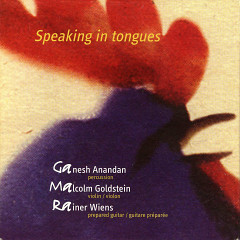
    «Critique», Luc Bouquet, ImproJazz, no 111, 1 janvier 2005
    samedi 1 janvier 2005 Presse

    La fusion des formes (ici, percussions sud-indiennes, improvisation et musique contemporaine) ou le risque de sombrer dans le plus petit dénominateur coinmun. Les trois premières plages de Speaking in tongues ne nous rassurent guère: rythme, coloriage, frontières bien protégées, refus de la subversion. Bref plus de craintes que d’intrigues. C’est à partir de la quatrième improvisation (RaMa) que les doigts se libèrent et s’abandonnent: l’acier vibrant, jusqu’à présent trop discret de Rainer Wiens, trouve sa place et s’immisce dans les fissures d’une musique de plus en plus emportée. Le violon de Malcolm Goldstein (jusqu’ici grinçant, déroutant, nerveux et prolixe, ce qui, ou en conviendra, n’est pas rien) espace le silence et s’abandonne corps et âme à l’instant. Plus tard, les percussions de Ganesh Amandan oublieront le rythme au profit de la seule impulsion. Les timbres pourront s’entrelacer, les énergies se lier. La musique sera collective, partagée, résolue, déroutante. L’aventure peut continuer.

    Les timbres pourront s’entrelacer, les énergies se lier. La musique sera collective, partagée, résolue, déroutante.

    Unison Rituals dans ImproJazz

    «Critique», Luc Bouquet, ImproJazz, no 111, 1 janvier 2005
    samedi 1 janvier 2005 Presse

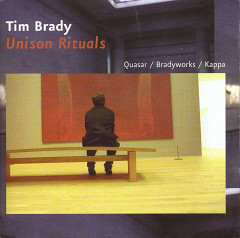
    Tim Brady, compositeur totaliste a gardé du minimalisme le goût du continu et des boucles obsessionnelles. Mais pour Brady, le répétitif n’est pas une fin en soi. Bien plus extensible qu’il n’y paraît, la musique de Brady n’oublie jamais qu’elle est porteuse d’une vraie charge émotionnelle. Souplesse des compositions, articulations collectives, sensibilité assumée, les partitions de Brady en appellent à la quiétude de l’instant. Importe peu alors, l’orchestration choisie (une pièce pour quatuor à cordes, trois pièces pour sextet, une pièce pour big band) et le contexte défini (l’agressivité de Sound Off, la plus ancienne composition du disque, ou les turbulences contrastées de Two chords less than a blues); quelque chose d’apaisé perce l’écorce d’une musique que l’on devine ouverte aux mondes. Mondes parallèles, mondes fertiles, mondes généreux qui s’entrelacent, s’ébattent et toujours se stimulent. A suivre…

    … la musique de Brady n’oublie jamais qu’elle est porteuse d’une vraie charge émotionnelle.

    Risque et pendule dans ImproJazz

    «Critique», Luc Bouquet, ImproJazz, no 111, 1 janvier 2005
    samedi 1 janvier 2005 Presse

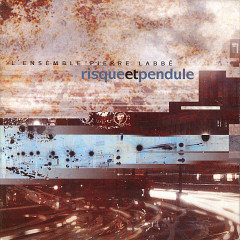
    Les neuf pièces composées par Pierre Labbé ont ceci de réjouissant qu’elles ne semblent jamais verrouillées. Effleurer, arpenter, prendre le temps de l’observation, telles sont, sans doute, les intentions initiales du compositeur, lesquelles n’ont évidemment que faire de la performance et de la compétition. Cette souplesse d’écriture et de styles visités (jazz, improvisation, rock, musique contemporaine…) oscille entre force et fragilité. Les cordes, s’extrayant très souvent de la masse orchestrale, possèdent cette faculté de rebondissement et de stimulation. Elles sont tour à tour lacérées et obsessionnelles, inquiètes ou rassurantes. Reste un leader discret, arrangeur inispiré, saxophoniste parfois convulsif, souvent insaisissable, équilibriste de l’impossible. Bref, un musicien que l’on a envie de retrouver le plus vite possible.

    Cette souplesse d’écriture et de styles visités oscille entre force et fragilité.

    La machine à explorer le tempo dans Coda Magazine

    «Review», Marc Chénard, Coda Magazine, no 307, 1 janvier 2005
    samedi 1 janvier 2005 Presse

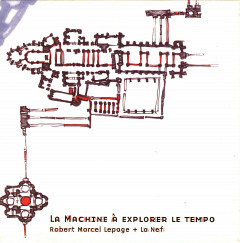
    In this hour-long suite of 18 items penned by Robert Marcel Lepage, the listener is taken on a whimsical trip into the Machine for exploring tempo (a pun which plays on the French equivalent to H.G. Wells’ Time Machine, i.e. La Machine a explorer le temps”). In this instrumental work divided in three acts, the composer actually conducted an eclectic tentet, the core of whom are a baroque ensemble in Montréal called la Nef. Even more unusual is that this ensemble actually commissioned this suite for performance at a contemporary music festival held in March of 2003. And to make things even more curious, when have you have heard a lineup that includes viola de gamba, ritual flutes, sackbut, slide guitare, sampler and tabla? Lepage regularly composes for film, and this is a music of images, of stylistic references galore but of no single or underlying vision. This is light-hearted stuff, which the composer further underscores in his whimsical presentations between the acts. Despite brave attempts to translate parts of his narrations in the liner notes, much of the humor is lost and the spoken tracks will appear pointless to non-speakers of French. In this highly structured music, there is very little soloing, but trombonist extraordinaire Alain Trudel makes the most of his spots. If the music makes you smile, it will have accomplished its aim, so it’s best not to expect any heady stuff. (PS. I attended this performance, and smiled, too.)

    If the music makes you smile, it will have accomplished its aim…

    Sur une balançoire dans Coda Magazine

    «Review», Marc Chénard, Coda Magazine, no 307, 1 janvier 2005
    samedi 1 janvier 2005 Presse

    This latest in a steady stream of discs pumped out by the ubiquitous Joëlle Léandre pairs her with a like-minded improviser, the southern Italian pianist and educator Gianni Lenoci. Its title, meaning “On a Seesaw,” is an appropriate one, too, for we can almost “see” the pianist at his ivories, pinching strings and what not, and Madame la Contrebasse herself “sawing” away in all but one of the fourteen tracks, each called Sur une balançoire No. 1-14. A compact recording in the best sense of the term, its total length of 45 minutes is a relief to the loads of overextended CDs cut nowadays. The predominant use of the bow by Léandre certainly draws the music away from the jazz orbit, and gives it more of a contemporary music feel; in so doing, there is nothing of the traditional division of labor between lead voice and accompanist, but a “balanced” rapport between them, and hence the title, most probably. This release makes for interesting comparative listening with a previous Leandre CD, Signature on the Red Toucan label, with two Japanese pianists. That said, I am sure that by the time this review appears, there will be more CDs popping out of the woodwork in this bassist’s record-of-the-month club. So please stay tuned… at least if you can keep up with her.

    … there is nothing of the traditional division of labor between lead voice and accompanist, but a “balanced” rapport between them, and hence the title, most probably.

    Mi La le mémoire est chasse la mille voix têtes de tête dans de sa Ris neige: le monstre absent dans Signal to Noise

    «Review», Richard Moule, Signal to Noise, no 36, 1 janvier 2005
    samedi 1 janvier 2005 Presse

    Christof Migone’s label brings us this collaboration between two Montréal electroacoustic improviser/composers. Roger Tellier-Craig is a guitarist with the Montréal noise rock group, Le Fly Pan Am and a former member of Godspeed You! Black Emperor, while Alexandre St-Onge has collaborated with Sam Shalabi and David Kristian, among others. St-Onge and Migone also have a duo entitled Undo which, in live performance, has consisted of them swirling contact mics around in their mouths while manipulating the sounds in realtime. This 20-minute 3” CD is in the same spirit as il seems to abolish any conventional notions of coherent sound organization. Firstly, it is pointless trying to make any instrumental distinctions or any organic and electronic demarcations here. Sound fields of fizzing room hiss or are that contact mic hiss are the entry points and soon becomes the background noise in the early part of the piece. Gradually, unadorned and manipulaied rolling clicks, clacks and chomps kick in at irregular intervals; the manipulated clacks like the liquid swiris of someone sucking or biting on a candy. As the piece grows, the static and frequencies increase in intensity until around the mid-point we are in the centre of a digital/analog/musique concrète (!) downpour. The last third of the piece dissolves into standard grainy glitch operations, but it is the first third with its tactile call and response that reaily marks it for its invention and ingenuity.

  • 24
  • 25
  • 26
  • 27
  • 28
  • 29
  • 30
  • 31
  • 32