Sauter au contenu principal
actuellecd

Blogue

239 résultats
  • 3
  • 4
  • 5
  • 6
  • 7
  • 8
  • 9
  • 10
  • 11
  • Jean Derome, Joane Hétu, Nous perçons les oreilles dans One Final Note

    «Edgefest 2004, Ann Arbor MI, 13-16 October 2004», David Dupont, One Final Note, 1 novembre 2004
    lundi 1 novembre 2004 Presse

    Edgefest in Ann Arbor, Michigan is an avant-garde jazz Brigadoon. Walking into the Kerrytown Concert House, the same folks are settling into the same seats as they were just over a year ago, and as they have been in the six years I’ve been making the trek up here. And even the leader of the band ready to take the stage was familiar. Guitarist James Emery had been here last year with the String Trio of New York. In fact, Edgehead-in-chief David Lynch likes to present musicians in different formats. This year he presented Emery leading his own quartet featuring ace reedman Marty Ehrlich with the rhythm team of bassist Drew Gress and percussionist Kevin Norton.[…]

    But Thursday I’m ready to make the short six-block walk to the Firefly Club, a cozy nightspot in the heart of Ann Arbor’s downtown. Opening the two-band show was Nous Percons les Oreillles (We Pierce the Ears) featuring Jean Derome and Joane Hétu. Derome’s appearance is an example of how festival producer David Lynch likes to work. In 2002, Derome was at the festival with two different groups. In 2004, he returned with a third aggregation, a duo with his wife. Together they delivered their own brand of urban bohemian folk music. Their sounds seemed rooted in the urbane detritus of a cosmopolitan household. They both sing—she in a powerful, malleable voice and he in a rich, but unaffected voice. They both play saxophone, though on this night the saxophone playing seemed more of an emulsifier than the key ingredient.

    Derome adds a toy chest full of little instruments—toys, whistles, animal calls, which the duo brought together in odd, whimsical combinations. Sometimes their singing seemed to be emanating from a church. Or on one number, Hétu produced gagging sounds as if she had something lodged in her throat. It had the audience on edge, caught in that odd place wondering whether this was to be taken seriously. I smiled, and breathed a sigh of relief when Hétu’s voice suddenly rang free. Following the piece, Derome explained the text. Sure enough, it was about having something caught in the throat. Yet this was more than the reprise of an unfortunate scene one might witness at the dinner table. Even at her most strangled gagging, the overtones in Hétu’s voice resonated.

    “We’re from Montréal”, Derome said. “This is the kind of music we do.” Not everywhere, he added dryly. “So you can visit.” At one point between numbers, the bar’s ice machine clattered—an aberration, the Firefly is very solicitous of performers. “The ice is nice”, Hétu commented, thinking I suspect about how it could be integrated into the music. The duo closed its set with a game of avant-garde patty-cake, beating hands together while singing a simple four-bar, nursery-song like phrase. That little melodic nugget stayed lodged in my ear during the break between shows.[…]

    So how did Edgefest 2004 stack up? The festival is always a high point of my year, and this year was no exception. As usual the variety of acts that fell under the cover of the festival’s large umbrella was impressive. I suspect the strongest images I’ll retain from this festival will be Rashied Ali’s torrential drumming, the fine balance of James Emery’s quartet, the out-lyricism of Joe McPhee, and those few fleeting moments of Jenny Scheinman’s Salagaster. Those are the kind of memories that will keep me in anticipation of next year’s festival.

    Quatuor Bozzini dans La Scena Musicale

    «Critique», Réjean Beaucage, La Scena Musicale, no 10:3, 1 novembre 2004
    lundi 1 novembre 2004 Presse

    Le Théâtre La Chapelle (TLC), à Montréal, est un lieu particulier où se sont déroulé, depuis 15 ans, de nombreux grands moments de musique nouvelle («actuelle» ou «contemporaine»). Son directeur artistique, Richard Simas, invitait en 2003 le Quatuor Bozzini pour une résidence de deux ans; «Nous voulions, écrit-il dans le programme du prochain concert du Quatuor, établir un dialogue entre notre lieu de création-diffusion et ce brillant ensemble de cordes. Nous croyions pouvoir offrir des perspectives et des possibilités dans le but de participer à une étape de leur évolution. Nous voulions aussi simplement pouvoir entendre le son de leurs cordes et leurs voix chez nous, en répétition, en discussion, en recherche, en travail technique, en spectacle, en lecture de nouvelles pièces.»

    Le Quatuor produisait l’automne dernier un grand événement autour du collectif allemand Wandelweiser en invitant aussi le compositeur Christian Wolff et l’ensemble américain Augenmusick. Cette fois-ci, tout juste de retour d’une série de concerts en Suède et en Allemagne, les membre du Bozzini nous présentent un programme moins éclaté, mais qui ne manque pas d’ambition.

    La violoncelliste Isabelle Bozzini explique: «Nous avons choisi ces deux pièces de compositeurs américains pour leurs thèmes: celle de George Crumb, Black Angels-Thirtteen Images from the Dark Land (1970), pour sa référence à la guerre du Vietnam, et celle de Steve Reich, Different Trains (l980), pour son évocation de la Deuxième Guerre mondiale. Le concert porte le titre In tempore belli (En temps de guerre), et propose donc un parallèle entre les situations évoquées par les compositeurs et celle que nous vivons ces dernières années.» L’altiste Stéphanie Bozzini précise: «Outre leur programme, les œuvres ont aussi en commun le recours à l’amplificadon, celle de Crumb étant pour quatuor électrique et celle de Reich pour quatuor et bande; nous trouvions donc que les deux pièces allaient trés bien ensemble.»

    L’œuvre de Reich a ceci de particulier que le quatuor joue en étant accompagné par un enregistrement de trois quatuors à cordes. Depuis la création de l’œuvre, l’enregistrement qu’utilisent tous les quatuors qui l’interprètent est celui réalisé par le Kronos Quartet pour la création. «Nous avons décidé de faire nos propres enregistrements, explique le violoniste Clemens Merkel. En utilisant le CD stéréo du Kronos Quartet, on doit ajuster notre jeu au leur et il n’y a pas de place pour une interprétation différente. Nous sommes le premier quatuor à réenregistrer les pistes d’accompagnement (16 heures de studio pour 27 minutes). Le son est donc différent (c’est le nôtre!), le mix aussi, et ça nous permettra éventuellement de faire paraître une version surround. Steve Reich en était trés heureux et il a hâte d’écouter le résultat.»

    Le quatuor lancera aussi ce soir-là son premier disque: «Nous avons notre propre collection, “QB”, dans le catalogue de la compagnie de distribution DAME, explique Isabelle Bozzini. La violoniste Nadia Francavilla précise:«i1 s’agit d’œuvres de Jean Lesage (Quatuor no 2), Michael Oesterle (Daydream Mechanics V), Claude Vivier (Pulau Dewata, arr. Oesterle) et Malcolm Goldstein (A New Song of Many Faces for In These Times), réunies sous le titre Portrait Montréal.»

    Au printemps, le Quatuor poursuivra sa collabaration avec le TLC par un grand projet, un Marathon canadien, sur lequel nous reviendrons.

    Idiolalla dans The Georgia Straight

    «Review», Alexander Varty, The Georgia Straight, 28 octobre 2004
    jeudi 28 octobre 2004 Presse

    According to my research, idiolalla is a psychiatric condition in which those afflicted are compelled to make up their own private language. It’s kind of like a fundamentalist-free version of speaking in tongues, and chances are that if we encountered an idiolallite on the street, we’d scurry away, unnerved by their unfathomable barrage of words. Strange, then, that seeing two idiolalla victims on-stage, backed only by a drummer, should prove so fascinating.

    Of course, singers Christine Duncan and DB Boyko don’t really suffer from the syndrome; they’ve just named their new group after it. Idiolalla, in which the two are joined by Duncan’s percussionist partner, Jean Martin, is an exploration of improvisational mouth music, and a chance for three serious musicians to have way too much fun.

    That much was obvious from their VOX-festival set’s closing number, which began with Martin laying down an idiot-simple drum beat, like a kindergarten version of rock ‘n’ roll. The two singers then introduced a set of awkward and naive lyrics about rich people and poor people, skinny people and fat people: it was obvious the song was a cover, but of what? At last it dawned on me: this was Philosophy of the World, the title track from what some critics believe is the worst album ever — and thus pure genius in its own special way.

    The chorus of “Philosophy…” is simple: “You can never please everybody in this world”. But by ending its debut show with a slice of the Shaggs — no doubt a first for any new-music festival, anywhere in the world — Idiolalla pleased at least as many in the musically literate crowd as it puzzled. In fact, the whole set was a blast.

    Duncan and Boyko can sing anything, although the former is known for her jazz and gospel stylings while the latter has trained intensively in Java and Bali. Together, they seem bent on pushing each other ever-further into wordless glossolalia and gibberish, but because their approach is one of complicity rather than confrontation, those out-there warblings smack of effervescent joy. Martin adds colour and punctuation. Although it’s easy for music like this to slip over into self-indulgence, Idiolalla’s performance was too smart, nuanced. These three are on to something, and we wait with interest to see where they go next.

    These three are on to something, and we wait with interest to see where they go next.

    Jardin d’exil dans Voir

    «Critique», Réjean Beaucage, Voir, 28 octobre 2004
    jeudi 28 octobre 2004 Presse

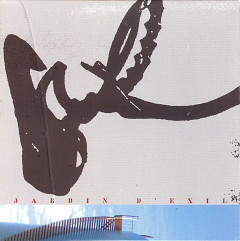
    Voici en quelque sorte une nouvelle branche qui pousse sur l’arbre déjà très touffu de l’étiquette Ambiances Magnétiques. Celle d’un jazz plus “standard” que les explorations que l’on retrouve habituellement à son catalogue. Aperçu quelques fois, à l’Off Festival de Jazz ou au Suoni per il popolo, l’ensemble offre avec ce premier disque une musique étonnamment mature, d’une écriture sobre et sans flafla. C’est peut-être un peu trop “contenu” d’ailleurs; on semble toujours sur le point d’éclater sans jamais y arriver. Les deux compositeurs de l’ensemble, le pianiste Alexandre Grogg et le souffleur Philippe Lauzier (sax et clarinette), sont d’excellents instrumentistes, comme leurs acolytes. Une formation à surveiller.3,5

    Une formation à surveiller.

    Jean Derome, Joane Hétu, Nous perçons les oreilles dans The Ann Arbor News

    «Annual Edgefest Kicks into high Sonic Gear», Will Stewart, The Ann Arbor News, 15 octobre 2004
    vendredi 15 octobre 2004 Presse

    Avantjazz’s outer edge isn’t only razor sharp; it’s also broad enough to accommodate a range of artists who at once push the envelope of improvisatory music to glorious effect, but also, at times, test the patience of the casual listener’s attention span.[…]

    And the fact that some of these performers are pretty far out there only adds merit to their accomplishments. That a vocalist squealing and grunting in French and slapping her torso in time to her accompanist’s caterwauls on various whistles can come across not only as listenable, but enjoyable and oddly soothing, is a tribute not only to the artists’ abilities but to the patience of an open-eared audience.[…]

    Derome and Hétu performed for an hour, their unique sound occasionally living up to their performance moniker: “We Pierce the Ears.” Oddly, for as challenging as their sound was — and “challenging” isn’t a pejorative when it comes to Edgefest — the duo frequently found harmonic plateaus that, while frequently dissonant, had an unmistakable beauty.[…]

    … “challenging” isn’t a pejorative when it comes to Edgefest — the duo frequently found harmonic plateaus that, while frequently dissonant, had an unmistakable beauty.

    Canevas «+» dans Ici Montréal

    «Compact!», François Nadon, Ici Montréal, 14 octobre 2004
    jeudi 14 octobre 2004 Presse

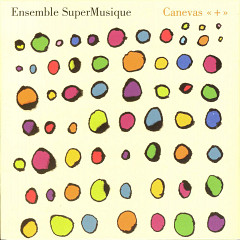
    Pour fêter leurs 25 ans, les Productions SuperMusique lancent Canevas «+», un disque sur lequel nous retrouvons certains de ceux qui font de la scène actualiste montréalaise une communauté si vivante. Les 14 extraits proposés proviennent de cinq concerts entre 1998 et 2004 de l’Ensemble SuperMusique. Cette compilation nous offre un large spectre de la création expérimentale d’ici avec des musiques autant écrites qu’improvisées. Le disque a la qualité de ses défauts: le résultat est quelque peu touffu. Malgré tout, Canevas «+» réjouira les habitués et titillera les oreilles curieuses. Puisque la musique actuelle s’écoute mieux avec les yeux, il y aura pour l’occasion un super concert, le 20 octobre à la Sala Rossa. 7,5

    Canevas «+» réjouira les habitués et titillera les oreilles curieuses.
    7,5
  • 3
  • 4
  • 5
  • 6
  • 7
  • 8
  • 9
  • 10
  • 11