Sauter au contenu principal
actuellecd

Blogue

239 résultats
  • 23
  • 24
  • 25
  • 26
  • 27
  • 28
  • 29
  • 30
  • 31
  • Xavier Charles, Pierre Tanguay, Martin Tétreault dans The Wire

    «Soundcheck Review», Dan Warburton, The Wire, no 241, 1 avril 2004
    jeudi 1 avril 2004 Presse

    On 14 December 2000 in Montréal, turntablist Martin Tétreault and percussionist Pierre Tanguay recorded an offbeat but affectionate homage to the history of jazz in the form of ten three-minute pieces, one for each decade of Uhe 20th century. Three days later Tétreault mailed a DAT of the session to French improvising clarinettist Xavier Charles, who added his own contributions on 29 December before mixing down and pressing the result in a ridiculously limited CD-R edition two days later. The trio can indeed claim to have made the last jazz record of the 20th century.

    In today’s Improv, whose practitioners scowl joylessly at laptops and inputless mixing boards, it’s a pleasant surprise to come across the same sense of humour that once characterised Lol Coxhill’s and Steve Beresford’s work on the Nato label. Recorded in mono, the first four tracks are followed by a Pythonesque “and now — stereo!“ flourish. Though conceptually rigorous, this is no mere exercise in cheap pastiche. Charles’s quotations of Sidney Bechet are as affectionate as they are accomplished, but he makes no attempt to ape the beboppers. Instead he sticks to sustained grainy multiphonics swinging between the left and right channels, leaving Tétreault’s mangled Hammond organ samples and Tanguay’s manic drumming to reference 50s hard bop.

    Similarly, “1960-1970 Free Jazz Tony Williams Lifetime” finds the clarinettist emitting distinctly 21st century spits and rustles. The deliciously cheesy closing track, “1990-2000 Acid Jazz Electronique”, leaves the listener in little doubt as to what the musicians think of the genre, especially Charles who spends the entire track noodling, Feldman-like, on three adjacent semitones. The inner sleeve of this vinyl reissue Iovingly reproduces Delphine Touzet’s delightful original artwork — «Sauvons le Jazz!» indeed. It has rarely taken such a hammering as this.

    Radio Roadmovies dans AllMusic

    «Review», François Couture, AllMusic, 1 avril 2004
    jeudi 1 avril 2004 Presse

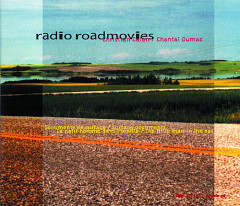
    Composers Christian Calon and Chantal Dumas share interests in electroacoustic music using field recordings at its basis. But here, they also share a 2-month trip across Canada, from Montréal to Vancouver, by way of the Great White North (they reached the Arctic Circle in Yukon) and a return home through the Badlands. Radio Roadmovies is a 2-CD set presenting two hour-long works conceived for the radio (Radio-Canada and DeutschlandRadio Berlin). Le Petit homme dans l’oreille (The Little Man in the Ear) (2000), (Phonurgia Nova Award in 2001) is a fragmented travel diary, filled with people, places and events. The two composers, often addressing the microphone to describe and comment, are joined by a cast of fellow travellers and locals, from children shouting their names at Ouimet Canyon to Native American chiefs greeting them with a song. The work takes the form of a series of snapshots segued through complementing or contrasting sonic elements, instead of following a chronological or geographical logic. The composers’ touch is mostly limited to choosing and editing the recordings, although some sections are heavily — and obviously — treated, like the stampede caller’s heated description of the race turned into a sampled rap. The human factor is through the roof in this bilingual account. Either you will like the various characters or you will be annoyed by their chatter. The second disc is a completely different affair. Culled from the same field recordings, Documents de surface (Surface Documents) (2002) excludes human voices to focus solely on environmental sounds. The work is a gripping display of nature (wind, water) and man (trains, boats) at work. Here, the composers work seamless dissolves between locations to put together theme-related pieces. Côté Pacifique, with its foghorns, trains and crashing waves, is the most striking. Urban listeners will be astounded by the richness of these nature recordings and the elegance of their organization. Rural listeners (like this reviewer) should listen with all windows open, and let real and recorded sounds intermingle, just so you can’t say where that train is coming from.

    … listeners will be astounded by the richness of these nature recordings and the elegance of their organization.

    Speaking in Tongues, Risque et pendule dans ImproJazz

    «Critique», Marc Sarrazy, ImproJazz, no 104, 1 avril 2004
    jeudi 1 avril 2004 Presse

    Vingt et un ans que ce label existe, et toujours cette recherche d’audace et d’originalité. Voici deux nouveautés, deux créations inédites (certains musiciens figuraient déjà dans quelques disques du label)…

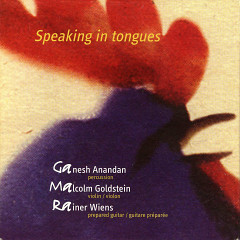
    Ganesh Anandan, Malcom Goldstein et Rainer Wiens (guitare préparée) forment le trio Ga Ma Ra: le violon virevolte avec ferveur, ectoplasme grinçant et insaisissable, dessine d’étranges figures dans l’espace, des Kandinsky aux angles impossibles, des Miró aux couleurs folles, la guitare à côté se prépare, rature, gribouille avec délice des arrière-plans fissurés, des avant-plans rougeoyants, les percussions esquissent des danses de pluie, des danses de feu, impulsent quelques rythmes de chamans… De cette musique profondément sincère, se dégage une forte impression d’exotisme (à lire en son sens le plus noble).

    L’Ensemble Pierre Labbé est un sextet qui unit le leader à quatre cordes (violon, violoncelle, guitare électrique, contrebasse) et un batteur. Sa musique prend des tournures insoupçonnées: alerte, ardue, fraîche, gracieuse, inventive, personnelle, elle se réalise à la croisée des genres, sorte de musique de chambre improvisée. Ceci dit, l’écriture tient une large place dans l’œuvre et, méticuleuse, favorise certainement la profusion d’idées. La finesse du son séduit, tout comme les entrelacs guitare électrique / cordes acoustiques. La première pièce, Outrages, propose maints détours enivrants, avec un son de ténor éraillé, épais et sauvage. Soulignons aussi le jeu de guitare de Bernard Falaise, subtil… magnétique.

    Ces deux disques, chacun à sa façon, privilégient les cordes et ouvrent des espaces pleins de vie. Aura-t-on l’occasion de voir ces formations en concert dans notre pays?

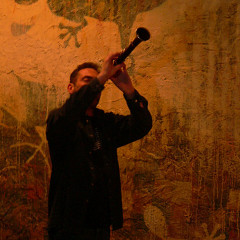
    Sa musique prend des tournures insoupçonnées: alerte, ardue, fraîche, gracieuse, inventive, personnelle…

    La boulezaille dans The Wire

    «Modern Composition», Philip Clark, The Wire, no 242, 1 avril 2004
    jeudi 1 avril 2004 Presse

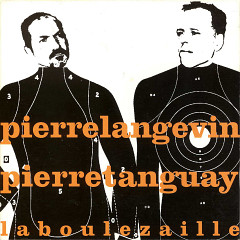
    Don’t be misled by the “Pierres” and the “Boulez“ references here — this disc has nothing to do with the French avant garde. Langevin and Tanguay are French Canadians with a background in jazz and modern composition, and Tanguay describes this blend of traditional and invented instruments as aiming “at understanding the past to better our understanding of the future”. The music often sounds like “invented” folk, as Langevin’s spiky reed playing is underscored by the noise Tanguay generates from percussion, toy instruments and power tools. A kooky and very personal vision.

    A kooky and very personal vision.

    L’Hexacorde dans La Scena Musicale

    «Lancement de disque», PM, La Scena Musicale, no 9:7, 1 avril 2004
    jeudi 1 avril 2004 Presse

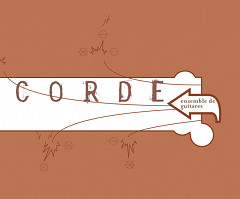
    Formation à géométrie variable, L’Hexacorde privilégie le répertoire contemporain pour ensemble de guitares classiques, mais encore plus l’élargissement de celui-ci. Par le biais d’arrangements, de commandes d’œuvres et de créations, l’ensemble s’attache à explorer les diverses possibilités offertes par ce type de formation peu usité.

    L’ensemble lance un premier album consacré à la création et aux arrangements d’œuvres du répertoire contemporain. On y entendra des œuvres de John Cage (extraits des Sonates et interludes for prepared piano, dans un arrangement pour cinq guitares préparées et basse préparée), Mauricio Kagel (extraits de Rrrrrrr… pour 5 guitares, mandoline et basse), Claude Vivier Pulau dewata, arrangé pour quatre guitares),Martin Levasseur (Empreintes magnolia, pour guitare électrique, 4 guitares et basse) et Francis Marcoux (Obstination, pour cinq guitares et basse).

    À l’occasion du lancement, la formation interprétera des extraits de son nouvel enregistrement ainsi que quelques duos de Béla Barték. L’Hexacorde: Étienne Guérin, Simon Duchesne, Hugo-Andres Larenas, Antoine Berthiaume, Francis Marcoux, guitares; Jérôme Perreault, basse et mandoline. Le mercredi 28 avril, 18h, O Patro VYS (356 Mont-Royal Est, Montréal). Entrée libre. PM

    Le bal dans Radio-Canada: Macadam tribus

    «Tam-tam Macadam: critique», François Blain, Radio-Canada: Macadam tribus, 1 avril 2004
    jeudi 1 avril 2004 Presse

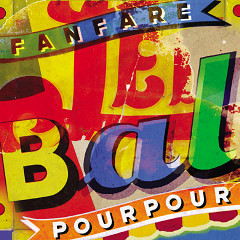
    La Fanfare Pourpour existe sous ce nom depuis 1996. Mais elle a pris différentes formes en 30 ans, soit L’Enfant Fort et le Pouet Pouet Band. Toujours, ce regroupement témoignait d’une appartenance à un quartier, à un mode de vie et à un plaisir de faire de la musique ensemble. Pour ce 2e disque, la Fanfare Pourpour a permis a 9 compositeurs différents de s’exprimer et a invité des pros comme Jean Derome et Normand Guilbeault. Sa musique évoque Nino Rota, Kurt Weill, le rêve et la mélancolie. Valse satisfaction.

    Valse satisfaction.
  • 23
  • 24
  • 25
  • 26
  • 27
  • 28
  • 29
  • 30
  • 31