Sauter au contenu principal
actuellecd

Blogue

188 résultats
  • 7
  • 8
  • 9
  • 10
  • 11
  • 12
  • 13
  • 14
  • 15
  • Soshin dans BBC Music Reviews

    «Review», Peter Marsh, BBC Music Reviews, 1 septembre 2003
    lundi 1 septembre 2003 Presse

    On the face of this lovely record, Canadian improviser Berthiaume is one to watch. Soshin opens with a gorgeous study for prepared guitar(s), but the bulk of the record is given over to duets with fellow axemen Fred Frith and Derek Bailey. He’s a brave man.

    Berthiaume’s empathy with Frith is obvious; Fred is ever restless and relentless, but Berthiaume matches him move for move. Both are unafraid to be melodic, ranging from sweet, jazzy melancholy to industrial strength noise or furious insectoid scratching. They’re a good pair.

    The two duets with Derek Bailey are equally rewarding. Berthiaume shadows Bailey’s usual spindly, ornery lyricism with sweetly ambiguous chords; the results sound like one guitar played with four hands but guided by one brain. Highly recommended.

    Highly recommended.

    Prairie orange dans ImproJazz

    «Critique», Luc Bouquet, ImproJazz, no 98, 1 septembre 2003
    lundi 1 septembre 2003 Presse

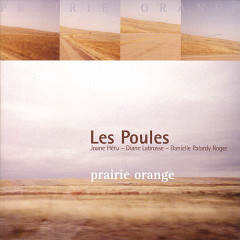
    Sarko, t’es foutu, Les Poules sont dans la rue! La réédition des Contes de l’amére loi (AM 009), l’année dernière l’avait laissé entendre: Les Poules sont de retour! Dix-sept ans se sont écoulés entre les deux enregistrements; de l’électro artisanale du premier disque, il reste quelques bribes étouffées ( Où est l’est?) et quelques inouïes madeleines de Proust à feuilleter (Chaud-froid). Les Poules circa 2003, c’est un trio nomade, sûr de ses souffles et de ses rebonds (Danielle Palardy Roger est exemplaire de sobriété et de rondeur d’un bout à l’autre de cet enregistrement). Joane Hétu, entre cliquetis et saxophone voilé ne cesse de pétrir, d’enflammer puis de menacer la masse sonore (Prairie orange). Vents et liquides se mélangent, nous offrant un continuum barbare, aride, déserté et déconstruit mais toujours ardent et vorace. Un kiss empoisonné en quelque sorte. Sarko, t’es vraiment mal barré!

    Vents et liquides se mélangent, nous offrant un continuum barbare, aride, déserté et déconstruit mais toujours ardent et vorace.

    Studio — Analogique — Numérique, Otomo Yoshihide, Martin Tétreault dans The Squid’s Ear

    «Heard Out», Phil Zampino, The Squid’s Ear, 1 septembre 2003
    lundi 1 septembre 2003 Presse

    The state of turntablism has undergone rapid transformation over the last decade or so. No longer content with manipulating vinyl in unexpected ways, some artists have now turned on the tables themselves, utilizing every inch of the case, platter, motor, tone arm and stylus of the venerable record player.

    Martin Tétreault, part of Montréal’s Ambiances Magnétiques collective, is one such artist. He began this evening with a solo turntable set. Looking something like an impish scientist he sat pensively behind his mixer and two turntables, if turntables you can call them. In fact, one was simply a spinning platter raised high on the table, a piece of rotating metal with a disembodied stylus and tone arm that he used to probe various items at hand. His other turntable was a standard Technics, although Tétreault often eschewed vinyl in preference to metal plates, and he often used open RCA cables in deference to the stylus to generate rumbly, sparking and oddly explosive sounds. He ended one piece by throwing a 7” record onto a pile of objects he had built up on his stylus, eliciting audience laughter, though his more frequent slamming of the tone arm would cause a serious vinyl addict to cringe in horror. At times his approach seemed chaotic or even spastic, while at other times he built revolving grooves that were glitchy and intense. It’s difficult to call Tétreault a DJ in this context, but as a turntablist he sees many unexpected possibilities.

    It was clear from the two Technics decks on Yoshihide’s table that he would focus on the turntables, so it came as a bit of surprise that Yoshihide played much of his solo set on guitar, playing through a blond Marshall amp. His playing was drenched in feedback, starting with a buzzy intro that crescendoed into a ringing harmonic pallette, growling and angry. His playing was urgent, piercing, and vicious, a dirty blues with strong tremolo. Out of this slowly emerged the strains of Ornette Coleman’s ”Lonely Woman,” drifting in the feedback, a languorous rendering of the song. This slowly receded as Yoshihide began applying clips and various tools to his strings to effect, generating blocks of feedback and rich tones that rung and dropped under his thoughtful control. Yoshihide then turned to the tables to complete his solo set. He began by slamming on a disc, generating strong feedback, shaking the decks and probing at his discs to create long looping harmonic grooves punctuated with sudden collisions, unlikely beats and internote interference. The set ended with something sounding like an alien death ray, a fitting end to a charged set.

    After an intermission the players returned as a duo, with both players at their turntables. The similarities in style were as striking as the contrasts: both used their styli as a probe, striking at objects that occasionally included vinyl records, but also included metal plates, cymbals, and seemingly anything loose and nearby. Yoshihide had springs mounted on his styli to force them into repetetive grooves. Tétreault picked up a vinyl record and scratched at it with a free stylus as though it were a guitar. Both developed long grooves over which they busily worked, but generally Yoshihide tended towards more patient development of sounds relying often on delays, including an extended interaction with the package from a battery against his tone arm, making a wailing melodic cry. Meanwhile Tétreault jumped between sound sources in percussive and disruptive ways. As the set developed both settled into grooves, and the point of applying their approaches to turntables as opposed to any other solid object became apparent, as the rhythmic, cycling nature of their sound became more obvious. Dueling airplanes, industrial washing machines, droning noise with the beating of construction nightmares married and exploded, the factory gone haywire under the hands of these two noise pilots. The sheer feedback, interbeats and thunderous sounds threatened to change the listener’s body chemistry, a satisfying and jarring experience.

    The sheer feedback, interbeats and thunderous sounds threatened to change the listener’s body chemistry, a satisfying and jarring experience.
    Un moment de bonheur, Jean Derome dans Jazzman

    «Critique», Nicolas Brémaud, Jazzman, no 94, 1 septembre 2003
    lundi 1 septembre 2003 Presse

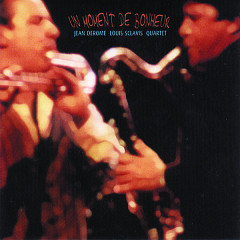
    À l’opposé du concept d’improvisation simulée cher à André Hodeir, on parlerait volontiers dans ce concert enregistré au Canada, de composition simulée, car la spontanéité et la liberté y semblent toujours guidées par un sens très exigeant du développement collectif, de la nécessité musicale sans lesquelles le free conduit rapidement à une grisaille informe. Un intervalle mélodique, une idée d’articulation, une trouvaille sonore due à quelque acrobatie buccale, sont autant de matériaux élémentaires à partir desquelles les quatre musiciens construisent au fil de l’imagination des édifices aux formes magnifiquement organiques. Cette étonnante faculté d’organisation instantanée vient sans doute en partie d’une fréquentation assidue de la musique contemporaine dont le jeu du flûtiste, saxophoniste alto et compositeur canadien Jean Derome se fait parfois l’écho, déployant une infatigable invention instrumentale et une aisance exceptionnelle dans le maniement de lignes mélodiques complexes, atonales et distendues. Il va sans dire que le batteur Pierre Tanguay, compagnon de longue date, et les invités Louis Sclavis et Bruno Chevillon, ne sont nullement effrayés par ces dangereuses explorations, qu’ils se délectent même de ces chemins escarpés qui les maintiennent perpétuellement sur le qui-vive. Enfin, pour ceux qui suspecteraient quelque aridité, on ne saurait trop recommander d’écouter directement Le Baiser et Jonas, où flûtes et clarinettes étirent de poignantes et mystérieuses mélopées, merveilles qui justifieraient à elles seules notre enthousiasme.

    … poignantes et mystérieuses mélopées…

    Soshin dans Bad Alchemy

    «Kritik», Bad Alchemy, no 42, 1 septembre 2003
    lundi 1 septembre 2003 Presse

    Anders als die Namensfolge Bailey, Berthiaume, Frith vermuten lässt, hat man es bei Soshin (AM 113) mit dem Debut des Gitarristen Antoine Berthiaume (1977, Montréal) zu tun. Man hört ihn solo im komponierten Titelstück, alles übrige sind frei improvisierte Duos, zwei mit Derek Bailey, drei mit Fred Frith. Seine Begegnungen mit Bailey im Februar und August 2001 waren für den Kanadier eine Initialzündung gewesen, über den Tellenand seines an der Universite de Montréal erworbenen Master Degrees in zeitgenössischer Komposition hinauszudenken und neue Freiheiten des Gitarrenspiels zu entwickeln. Allein und zusammen mi Frith entfaltet er zarte Webteppiche fließender, flächiger Geräuschfinessen. Bailey bringt dann seine sprÖde plinkenden Widerhaken ins Spiel, die Berthiaume weich und Frisellig abfedert. Die versponnene, nachdenkliche Stimmung wird erst im dritten Dialog mit Frith mit Table-Guaar-Bruitismus angesägt und zerschabt, aber weiterhin piano und von Berthiaume mit träumerischem Fingerpicking Iyrisch gezügelt. Das zweite Duett mit Bailey — weitere sind übrigens auf Balleys Incus-CD Visitors Book enthalten — zeigt die bekannte Rollenverteilung und rundet den poetischen Gesamteindruck ab.

    Asymétries dans Bad Alchemy

    «Kritik», Bad Alchemy, no 42, 1 septembre 2003
    lundi 1 septembre 2003 Presse

    Daneben stehen die frei improvisierten Asymetries (AM 112) des Franzosisch-Schweizer Duos Bertrand Denzler / Hans Koch in der eher noch zugespitzten Tradition des kompromisslosen Bruitismus. Im spuckignuckligen Geschmurgel und widerborstigen Gefiepe des 49° Nord- & Hubbub- Tenorsaxophonisten und dem guttural-krätzigen Zischeln und Blubbern des im Trio mit Schütz & Studer bekannten Bassklarinettisten und Sopranosaxophonisten, die sich bei einem Butch Morris-Projekt kennenlernten und seit’99 zusammenspielen, werden alle kulinarischen Gelüste durch den Fleischwolf gedreht. Auch meine. Wer allerdings im Distinktionsgewinnstreben auf Sarkasmus und Hartgesottenheit setzt, der kann in dieser aus den Fugen geratenen, grätig-reduktionistischen Geräuschwelt den unverdünnten Duft von Freiheit und Abenteuer in vollen Zügen schnuppern. Selbst meine Leidensmiene hellt sich langsam auf, nicht weil Denzler & Koch im Drangsalieren von Sinn & Sinnlichkeit nachlassen, sondern weil es mir schwer fällt, ernst zu bleiben bei einer derart auf Andacht gepolten Absurdität. Außerdem, solange zwei Josephines so in die Schönheit des Unschönen verliebt das Hohe Lied der Andsthesie pfeffen, ist der Triumph von Pop noch nicht komplett.

  • 7
  • 8
  • 9
  • 10
  • 11
  • 12
  • 13
  • 14
  • 15