Sauter au contenu principal
actuellecd

Blogue

179 résultats
  • 6
  • 7
  • 8
  • 9
  • 10
  • 11
  • 12
  • 13
  • 14
  • Chemin de fer, Magali Babin dans AllMusic

    «Review», François Couture, AllMusic, 30 août 2002
    vendredi 30 août 2002 Presse

    Did you ever stop in your tracks while cooking dinner to listen to the sonic possibilities of this pot or that pan? Well, you should. Magali Babin acted on this impulse and has since developed an art form out of kitchen utensils and discarded metal objects. Chemin de fer is her first album. The title means “railroad” but is more accurate when translated literally: “road of iron.” This is not bang-on-a-can noise. Babin studies metallic sounds up close, using close miking to capture all the subtleties of her tappings and scrapings. Her approach bears similarities with lowercase and microsound esthetics — indeed, she puts her “instruments” under the microscope. Looping, filtering, but most of all exploring all the sonorities contained in them, she improvises strange, captivating pieces. However odd they sound, they remain vaguely familiar. Triturations and Petit jardin stand out, simply because they take a form more constant and eventful than the other pieces. Jogging dans la maison hantée was created with producer Mario Gauthier and sound engineer Alain Chénier taking part (although their roles are not specified). Pluie de homards is an improvisation over the noise piece Rain by Ian Nagoski. Ma tribu begins with a simple sound (what?) and builds up to an abrupt end, Francisco López-style. L’entonnoir is the noisiest track, recalling some of GX Jupitter-Larsen’s experiments, but without the macho “subliming violence” vibe. Even in her harsher moments, Babin keeps her art under a feminine touch. Impressive.

    Impressive.

    Les contes de l’amère loi dans Splendid E-Zine

    «Review», Luke Martin, Splendid E-Zine, 6 août 2002
    mardi 6 août 2002 Presse

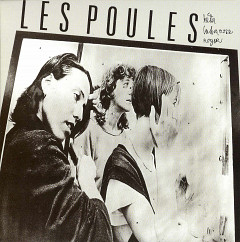
    Originally part of an arts project from 1986, Les contes de l’amère loi is a remastered re-release of one of the odder sections of keyboard-heavy strangepop that you’re likely to hear. Les Poules are a three-piece with largely-electronic instrumentation, and their album seems to mine the “there’s something not quite right here” vein pretty heavily. Shades of music-for-insane-royalty flow through the disc, particularly when it dips into the sort of tonal palette favoured by Drew Neumann’s score for Aeon Flux — a cross between high-tech and high-cheese.

    At times sounding like a couple of kids fumbling on an old Casio, Les Poules display a naive approach to music-making that pays off immensely; the simplicity of children’s television soundtracks is invoked, only with a sense of something darker involved. The sense of an unbalanced world is perhaps best described in Chanson du pain, which sounds like it was ripped out of an episode of Inspector Gadget. There’s slightly jaunty, slightly creepy synthwork, and upbeat harmonies… sung about a missing — only to conclude with the thought that it’d be nice if she returned, because the narrator’s getting hungrier and skinnier. It’s like an evil fairy tale, and portrays the best part of the album: the sense of unease that permeates some kinds of happiness, the same sort of thing that makes some people terrified of clowns. Whatever that lurking horror is, it’s here in spades.

    In short, you should really check this disc out; it’s got enough weirdness to keep any Bungle-head occupied. Scratchings beyond its dayglo carny sleeve will reveal a delightful darkness.

    Scratchings beyond its dayglo carny sleeve will reveal a delightful darkness.

    Chant des adieux, chant de la solitude dans Splendid E-Zine

    «Review», Luke Martin, Splendid E-Zine, 6 août 2002
    mardi 6 août 2002 Presse

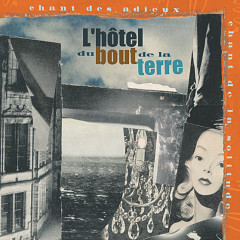
    This is something of a concept album. The liner notes — after a musician’s roll call, natch — begin with a small note from vocalist Marie-Hélène Montpetit about a hotel by the sea, where songs batter against memories of departure. If you’re a victim of the language barrier — the vocals here are all in French — there’s nothing to worry about: the mood is accurately (almost too plainly, given that some tunes come across as being as formulaic as stadium rock) conveyed by the fine playing on show here.

    Musically, the album doesn’t break much out of the smooth jazz mode. By smooth, I don’t mean Kenny G: I mean smooth in terms of that laid-back, late-night languor that suffuses many discs. Nobody appears to be working too hard here, but that’s fine in the surrounds; nobody really expects Ketil Bjornstad to be turning all Jerry Lee Lewis on us anytime soon, either. Meditative is the key word; Blues du troisième étage<|b> features some fantastically introspective contrabass work by Normand Guiltbeault that really guides the tune. For the most part, Pierre St-Jak’s piano dominates the tunes. Occasional incursions by guests (L’hôtel… are normally a four-piece, here expanded to eight) add fire and polish to the action — the song Un homme à la mer sounds like mid-era Pink Floyd gone jazz with some fantastic harmonizing — but mostly, it’s the almost-Debussy tones that guide the album. Occasionally, unluckily, it’s towards a slightly soporific destination.

    The more lively tunes here bring to mind John Zorn’s Masada work; Réparitition des tâches certainly wouldn’t have been out of place on the Bar Kokhba album, for example. It’s a shame that the ensemble doesn’t stretch to this sort of rapture more often; sure, dour and moonlit is nice, but there comes a time when what’s really needed is a bit of fire-fuelled gypsy violinist dancing. It’s something that seems more necessary as the album moved on: the more the piano tends towards angularity, the more I craved reckless release, only to be denied it — a shame.

    Overall, Chant des adieux, chant de la solitude is a classy affair. To be brutally superficial, for those who don’t speak French, it’s a good background disc with enough slow-burn jazz listenability to see you through a couple of bottles of wine. It’s a bit Windham Hill at times, but if you’re able to worm your way past the “Where’s Ute?” feeling, investigation will reap rewards. Not an album for all seasons, but one that I can see getting more than a few revolutions in the late evenings around my way.

    Chant des adieux, chant de la solitude is a classy affair.

    Les 4 ronds sont allumés dans Collected Sounds

    «Review», Anna Maria Stjarnell, Collected Sounds, 4 août 2002
    dimanche 4 août 2002 Presse

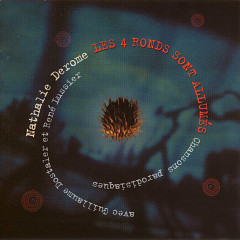
    Nathalie Derome’s music has a weird mood to it. Her lovely voice and intriguing songs ensure that the listener remains interested though.

    Ah non! Anna has a strange voice interrupting Derome’s half spoken delivery to great effect.Ton grand nez is playful yet sinister. It’s played on an accordion which reminds me of the circus. It would be a shadowy circus populated by freaks straight out of a Ray Bradbury novel to fit with the song.

    This is not a commonplace record, but it should still find an audience among more adventurous listeners.

    … playful yet sinister.

    «Dis, Blaise…» chanson du Transsibérien dans AllMusic

    «Review», François Couture, AllMusic, 1 août 2002
    jeudi 1 août 2002 Presse

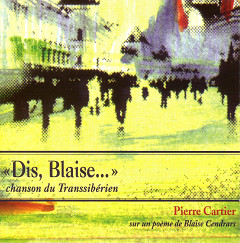
    It takes so long for Pierre Cartier to complete a project, but it is so much worth the wait. After a song cycle on poems by Yves Bonnefoy, he surpassed himself with Dis, Blaise… Chanson du Transsibérien. This work is a setting of Blaise Cendrars’ 1913 poem Prose du Transsibérien et de la petite jehanne de France (“The Prose of the Trans-Siberian and of Little Jehanne of France”). Written in a very advanced form of free verse, it depicts the journey by train of a teenager from Moscow to Siberia. Dark and desperate, the poem seems to have foretold the first World War and the impact it would have on a whole European generation. Cartier, a bassist trained in plainchant, wrote Gregorian-like melodies and avant-garde jazz arrangements to accompany the words. The tension between medieval melodies and avant-garde music is held beautifully. The clash between eras and styles (classical, jazz, rock) produces something very different from Third Stream’s easy answers. Cartier is accompanied by alumni from the Ambiances Magnétiques stables: saxophonist Jean Derome, viola player Jean René, guitarist Bernard Falaise, trombonist Tom Walsh, and drummer Pierre Tanguay. The irregularity of Cendrars’ metric forces a few strange twists in the vocal parts, but in general Dis, Blaise… pleases the ear despite the audacious arrangements and occasional free jazz outbreaks. There are a few overlong passages near the end, but otherwise the work is uplifting and very touching at times. Highlights include the voice, double bass and viola trio in Mon berceau and the heart-breaking Dis, Blaise…, where desperation becomes palpable as the delicate melody is overturned by a growing jazz-rock vamp (like a locomotive approaching dangerously). French-deaf listeners are strongly encouraged to locate a translation of Cendrars’ poem (easy to find) to fully experience this marvelous album, Cartier’s most ambitious to this day.

    … the work is uplifting and very touching at times… Cartier’s most ambitious to this day.

    La vie, c’est simple dans ImproJazz

    «… autour des 10 ans du distributeur québécois DAME…», Luc Bouquet, ImproJazz, no 88, 1 août 2002
    jeudi 1 août 2002 Presse

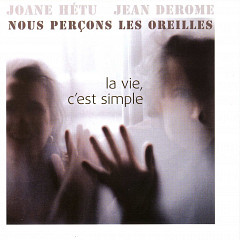
    Nous perçons les oreilles: bel acte de foi et deuxième disque du couple Derome-Hétu. Ça commence par une hilarante histoire d’ego, ça continue par un bon coup de pied au cul, ça s’envole en stridence, cris de hyènes, gloussements de dindons, onomatopées homériques, cris tribaux. Ça porte très haut l’art de l’absurde, ça insiste, ça s’entête comme jamais, ça braconne. Nous perçons les oreilles, c’est certes un acte de foi mais c’est aussi et surtout un constat. Oreilles sensibles s’abstenir.

  • 6
  • 7
  • 8
  • 9
  • 10
  • 11
  • 12
  • 13
  • 14