Sauter au contenu principal
actuellecd

Blogue

131 résultats
  • 7
  • 8
  • 9
  • 10
  • 11
  • 12
  • 13
  • 14
  • 15
  • Plinc! Plonc! dans La Scena Musicale

    «Critique», Marc Chénard, La Scena Musicale, no 6:8, 1 mai 2001
    mardi 1 mai 2001 Presse

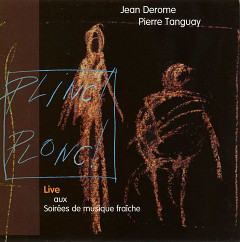
    Flûtiste de formation, Jean Derome est également connu comme saxophoniste (alto surtout, quoiqu’il se sert aussi du baryton et du soprano) et bricoleur sonore tous azimuts, comme l’attestent ses multiples bidules trafiqués (appeaux, porte-voix…). Porte-étandard du mouvement des musiques actuelles au Québec, ce musicien s’est constitué un langage personnel qui recoupe ses multiples intérêts (rock, bruitisme, contemporain et… jazz). Musicien ludique par ailleurs, il aime faire éclater les choses, d’autant plus lorsqu’il se retrouve sur scène avec ses proches collaborateurs, appartenant, comme lui, au collectif Ambiances Magnétiques. De ces derniers, le batteur-percussionmste Pierre Tanguay est un acolyte de longue date et il a appuyé Derome dans tous les contextes possibles, de l’orchestre au duo, dont celui-ci. À voir le titre de cette collaboration discographique, on sait d’emblée que les deux complices se lancent dans une partie de plaisir; qui plus est, le public présent à ce spectacle live, tenu lors des Soirées de musique fraîche à Québec en janvier 1997, les accueille avec des applaudissement nourris après chaque numéro. En une heure, nos deux lascars enfilent six pièces (la première et la dernière étant des impros libres, les autres, signées par l’un ou l’autre, et un thème de Monk en sus, Ba-Lue Bolivar Ba-Lues-Are). Comme il arrive souvent dans ces joutes musicales, la part du spectacle est aussi sinon plus importante (par moments) que le discours musical.

    … on sait d’emblée que les deux complices se lancent dans une partie de plaisir…

    Joue Free dans Pulse!

    «Review», Art Lange, Pulse!, 1 mai 2001
    mardi 1 mai 2001 Presse

    With Joue Free,three canny Québécois musicians, Bernard Falaise, Normand Guilbeault and Robert Marcel Lepage, create a striking homage to American clarinetist Jimmy Giuffre, injecting their own textures and sharp, angular lyricism into the restrained moods and familiar clarinet, guitar and bass instrumentation of Giuffre’s groundbreaking ’50s and ’60s chamber jazz see review.

    … a striking homage to American clarinetist Jimmy Giuffre…

    Qu’ouïs-je?, René Lussier dans The Wire

    «Soundcheck Review», Phil England, The Wire, no 207, 1 mai 2001
    mardi 1 mai 2001 Presse

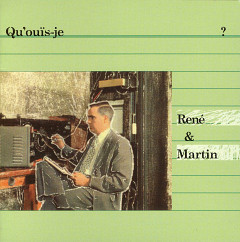
    The duo with Martin Tétreault is, unsurprisingly, a whole other saucepan of reptiles, and follows their widely acclaimed duo Dur noyau dur (1998). The latter consisted of turntable and guitar improvisations, whereas Qu’ouis-je? is a studio constructed piece of musique concrete informed by Surrealism, Dada and art brut. Here Tétreault exchanges turntables for “synthétiseur, pick-up et boite 3 rhythme” and Lussier trades in his electric guitar for a daxophone — the bowed wooden instrument invented by German guitarist Hans Reichel (Lussier played in Reichel’s dexophone quartet).

    The uncanny ability of the daxophone to produce voice-like timbres and intonations is used here to create fantastical landscapes populated by strange, exotic creatures whose wild screechings, calls, conversations, arguments and acts of aggression happen in a rather bleak landscape somewhere in deep space (or is it just post-industrial Earth?). Tétreault creates the crackling, distorted ambiences around the action in a compelling and accomplished work that has been executed with a serious sense of humour.

    … fantastical landscapes populated by strange, exotic creatures… a compelling and accomplished work…

    volume 5: Chante! 1985-2000, Ambiances Magnétiques dans Sztuka Fabryka

    «Review», Geert De Decker, Sztuka Fabryka, 1 mai 2001
    mardi 1 mai 2001 Presse

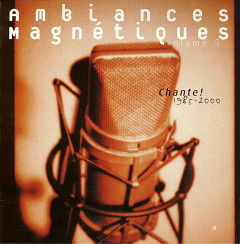
    This CD is a compilation of 18 songs from the Ambiances magnétiques repertoire, dating from 1985 to 2000. It highlights the various style of musical compositions that is available from the label. The main attention of this volume is on the French-Canadian song writing. With other words various kinds of songs we can find from fun music, rock and roll, chanson towards experimental. And the language is French, beside of one number. There is an atmosphere that surrounds this CD. An atmosphere that only French music is able to make. Or is it the precious choice of music on the CD. It feels as you are in a dark smoky pub and the singers passes one by one the review. Precious music from which the texts you can find in the booklet.

    Precious music…

    Chansons d’un jour dans Sztuka Fabryka

    «Review», Geert De Decker, Sztuka Fabryka, 1 mai 2001
    mardi 1 mai 2001 Presse

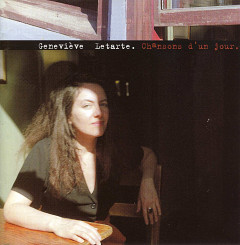
    10 Chansons we find on this CD. It are softly songs which come to you. This CD is difficult to review because only when you listen to it you are able to have an idea of the beauty about it. Chansons it are, but also poetry accompanied with music and even from time to time spoken word. She is accompanied by 4 musicians with guitars, contrabass, percussion, trumpet. The music sounds a bit tragic and brings you silently into a tranquil mood. The text is in French but that makes it for a person who does not understand the music more interesting, poetic. Yet, in the booklet there are some English translations and when you read the texts you see that it is tragic music. A very interesting CD with music that never gets boring because of the variations between the chansons.

    … a bit tragic and brings you silently into a tranquil mood.

    Les 4 ronds sont allumés, Nathalie Derome dans Splendid E-Zine

    «Review», Ryan Tranquilla, Splendid E-Zine, 30 avril 2001
    lundi 30 avril 2001 Presse

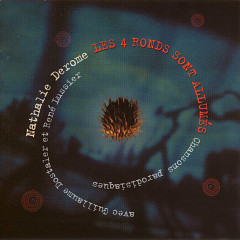
    Only lazy reviewers rely solely on promotional copy to write their reviews. Occasionally, though, nothing sums up a record more succinctly, as is the case with Les quatre ronds sont allumés. “In a short film atmosphere,” reads the press info, “Nathalie Derome performs a few of her songs with Guillame Dostaler and René Lussier.” Making use of vocals (both sung and spoken), guitar, keyboards and synthesizers, Derome leads the listener through a moody, carnivalesque soundscape. With the lyrics and the lyric sheet written in French, English-speakers may find it hard to follow the plot. The album’s first half recalls Tom Wait’s mid-’80s Rain Dogs period, while the second half employs sparse instrumentation and quietly emotional vocals.
    Derome leads the listener through a moody, carnivalesque soundscape.
  • 7
  • 8
  • 9
  • 10
  • 11
  • 12
  • 13
  • 14
  • 15