Sauter au contenu principal
actuellecd
  • This website is also available in English.

Blogue

163 résultats
  • 3
  • 4
  • 5
  • 6
  • 7
  • 8
  • 9
  • 10
  • 11
  • volume 4: Mystère, Ambiances Magnétiques dans AllMusic

    «Review», François Couture, AllMusic, 1 octobre 2000
    dimanche 1 octobre 2000 Presse

    There is nothing mysterious in Mystère, label Ambiances Magnétiques’ four installment in its sampler series. Yes, the track list at the back of the box gives only a list of track numbers with durations — but the card inside contains all the usual information on artists, track titles and albums. Really, nothing to get excited about and no unreleased material. These are sixteen tracks taken from the sixteen albums Ambiances Magnétiques released between 1997 and 1999. If anything, this sampler, compared to volumes 1 (1983-1995) and 2 (1995-1997), shows how much these musicians’ focus has shifted in the mid-1990s from deconstructed pop to free improv. Track selection is inspired. Since there were extensive artist presentations and historical overviews of the label in Ambiances Magnétiques, Volume 1: La bastringue migratoire (1996), Mystère is only accompanied by a card with the track list.

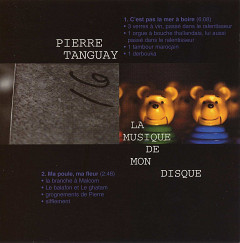
    La musique de mon disque, Pierre Tanguay dans Incursion Music Review

    «Review», Richard di Santo, Incursion Music Review, 1 octobre 2000
    dimanche 1 octobre 2000 Presse

    Inventive composer and percussionist Pierre Tanguay presents his first solo record of music made largely from invented and recycled instruments. It’s been labelled as “’heavy new age’ background music”; I’m not sure what “heavy new age” means, and the music on this disc is a far cry from background music, so I’m not sure if this label does the record any real justice. Tanguay plays anything from more traditional percussion instruments and flutes to household objects like bottles of wine, plastic Winnie-the-Pooh figurines, cowbells and a kazoo. His arrangements are complex and deliberate, the sounds delicately rising from a template of silence. The disc begins quietly with C’est pas la mer à boire; its gentle percussion and quiet drones make for a peaceful introduction, leading into the more varied instrumentation of Ma poule, ma fleur, which also rests gently on the ears. The further into the album we get, the more intricate the arrangements; ranging from quiet and minimal, to loud and alarming (especially so with the frantic tones of Une étoile dans le coeur and L’alarme à l’oeil) and everything in between. The only regrettable track here is Ma tribu personnelle, which has this irritating and monotonous vocal chanting that goes nowhere for me. In the liner notes, Tanguay collects the titles of the 16 pieces and forms a paragraph that is only semi-intelligible (you’d have to read it yourself to see what I mean). This is an interesting comment on the album as a whole, because the distinct pieces of music also form this entity that is by no means a straightforward linear composition. It’s clear that there is much hidden within the arrangements for us to discover. There are many voices, many narratives, and many sounds which, as Tanguay points out, “address everyone, anywhere at anytime”. The only trick is finding out just what it’s all trying to tell us. Recommended for the adventurous.

    Recommended for the adventurous.
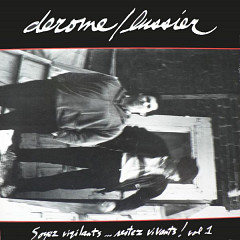
    Soyez vigilants, restez vivants… dans AllMusic

    «Review», François Couture, AllMusic, 1 octobre 2000
    dimanche 1 octobre 2000 Presse

    Soyez vigilants… restez vivants! (Stay Alert Don’t Get Hurt) wasn’t Montréal reed player Jean Derome and guitarist René Lussier’s first collaboration, but it was the first to find its way on record. The two had been working together since 1982 as the duo Ambiances magnétiques (which has been at the origin of the label’s inception) and in numerous film music projects. While their next LP Le Retour des Granules will be more focused (using the term loosely), this one is more of a mixed bag. Still, the Les Granules (they will release their third album on CD in 1992 under this name) sound is already firmly in place: a blend of rock, improvisation, contemporary music, found sound, miscellaneous instruments like bird calls and French-Canadian traditional music. The album includes the first recording of Derome’s Oiseaux, (Birds) which will get a bigger treatment on his album Confitures de Gagaku (Disques Victo, 1988). I a collaboration between Lussier and ex-{Conventum mate André Duchesne, is a beautiful progressive rock piece reminiscent of their old band, but also of early Maneige and of Canterbury prog rock. The totally far-out/almost comedy music style of the duo is found in Le Boudin de Noël (The Christmas Blood Pudding), a deconstructed folk song supposed to depict a Christmas dinner, including an actual recipe and a vocal trio. Chante ta chanson (Sing Your Song) and P’tit Pain (Bun) address the sociocultural reality of French Canadians, a theme that will resurface in René Lussier’s seminal recording Le trésor de la langue. The LP included a lyric sheet with liner notes in French and in English.

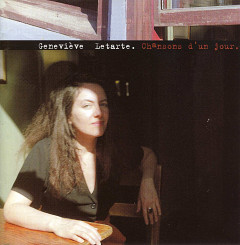
    Chansons d’un jour dans AllMusic

    «Review», François Couture, AllMusic, 1 octobre 2000
    dimanche 1 octobre 2000 Presse

    It took Geneviève Letarte ten years to release a follow-up to her critically acclaimed debut CD Vous seriez un ange. Also a writer and multimedia conceptual artist, she decided to return to recorded music in 2000, delivering a strong second album entitled Chansons d’un jour (One Day Songs). This one sounds a lot more acoustic and natural, even though there are electric guitars and keyboards. Vous seriez un ange also had drum machines and a very late-’80s synthetic quality to it. Center stage, one finds the same voice, just a little cold and detached enough to give it haunting colors, and poetic lyrics (in French, partly translated in the booklet). The music, co-written and arranged by guitarist Claude Fradette, is simpler than on the previous album: exit the disquieting moods of René Lussier’s “Iceberg” or the odd beats of Michel F Côté. Vous seriez un ange, while being popper than most of Ambiances magnétiques’ production, retained something of the label’s sound. This is not the case on Chansons d’un jour, although it doesn’t translate into a mainstream album, if only for Letarte’s very personal singing style and use of foreign and invented languages. A lot of care has been put into textures, dreamy moods, an almost jazzy touch here and there (thanks mostly to Serge Boisvert’s trumpet). Everything is pledged to Letarte’s voice. More accessible than 98% of the Ambiances magnétiques catalogue, Chansons d’un jour offers a beautiful piece of intelligent pop music.

    Chansons d’un Jour offers a beautiful piece of intelligent pop music.

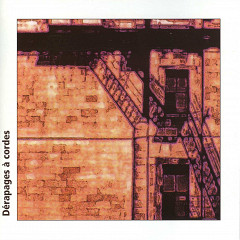
    Dérapages à cordes dans AllMusic

    «Review», François Couture, AllMusic, 1 octobre 2000
    dimanche 1 octobre 2000 Presse

    Nova Scotia (Canada) guitarists Arthur Bull and Daniel Heïkalo released Dérapages à cordes (Strings Skids), their first CD as a duo, in September 2000. Recorded between February 1996 and February 1999, this album introduced both musicians to a wider audience. Bull plays mostly on a semi-acoustic guitar, occasionally touching slide, ebow and prepared guitar. Heïkalo uses mostly acoustic and classical guitars (he plays percussion on two tracks). Guitar duets are far from common in free improv (why is that?) and if anything, Bull and Heïkalo prove how charmingly two avant-garde guitarists can converse. The former’s frenetic jagged strings of notes (reminiscent of René Lussier’s acoustic guitar playing) find the perfect mate in Heïkalo’s playing, more dreamy and strumming-based. Parts of L’intergiboulaison des mages infundibuliformes (this gibberish is impossible to translate) seem to follow similar inspiration, 25 years later, as Conventum on their first album À l’affut d’un complot, Other tracks like Tintamarre de boulingrin point to Derek Bailey, although the dual-guitar setting relates more closely to folk. Dérapages à cordes makes a strong album with a wide sound palette (thanks to percussion and prepared guitar appearing on a couple tracks). Definitely enjoyable.

    Dérapages à Cordes makes a strong album with a wide sound palette (thanks to percussion and prepared guitar appearing on a couple tracks). Definitely enjoyable.

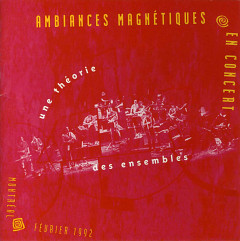
    Une théorie des ensembles, Ambiances Magnétiques dans AllMusic

    «Review», François Couture, AllMusic, 1 octobre 2000
    dimanche 1 octobre 2000 Presse

    This CD was an event. Une théorie des ensembles was the first live album from Ambiances magnétiques (the label) in almost 10 years of existence. It was also the only album ever to be credited to Ambiances magnétiques (the artists’ collective). Recorded on February 7 & 8, 1992 at the Maison de la Culture Frontenac in Montréal, this CD presents performances from all eight members of the collective at the time (founders René Lussier, Jean Derome, André Duchesne and Robert Marcel Lepage}; 1986 inductees Diane Labrosse, Danielle Palardy Roger and Joane Hétu}; 1988 last addition Michel F Côté — Martin Tétreault would join later in the mid-1990s).

    The album opens and closes on two ensemble pieces. Ambulances en plastique is a Derome-penned rock fanfare, while Montréal, 7 h a. m. bears a typical rock guitar-driven Duchesne stamp. This fantastic guitarist/composer has worked so rarely in the 1990s every bit of material is a delight to hear. Between these two pieces, five Ambiances magnétiques groups show their chops. Duchesne’s Locomotive plays fair renditions of three tracks off its CD. Côté’s Bruire delivers two very nice improvs going in the same direction as the second album Les fleurs de Léo. There are also two tracks from the all-girl group Justine, mostly improvised although the first one is recognizable as Vidanges Domestiques (thanks to the quirky melody), off their last CD Langages Fantastiques. The album’s highlight is Les Granules’ 13-minute suite Le bizarre échevelé, a never-recorded piece and the last thing Lussier and Derome’s duo put on disc. The two tracks from La Flore laurentienne are the only crumbs remaining from this Lepage project — and it’s a pity: very good blend of extended clarinet techniques and a more rock/techno approach. Overall, Une théorie des ensembles is a very enjoyable CD that adds valuable material to these artists’ discographies.

    … a very enjoyable CD that adds valuable material to these artists’ discographies.
  • 3
  • 4
  • 5
  • 6
  • 7
  • 8
  • 9
  • 10
  • 11