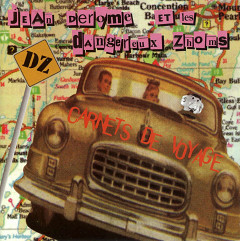
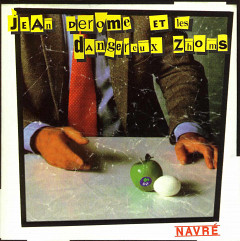
Jean Derome parle de son groupe Jean Derome et les Dangereux Zhoms
mercredi 28 octobre 2009
Vidéo
Dans cette entrevue exclusive,

Dans cette entrevue exclusive,
Lussier serves as the major sideman
With Jean Derome’s sextet, Les Dangereux Zhoms, on Navré. This group, playing compositions by the leader, specializes in odd sounds. The opening notes of the first tune, Anchive, resemble the cacophony of various farm animals. Such sounds continue more or less throughout the piece being solos by the leader on altosaxophone and by bassist Pierre Cartier. The next selection begins with flatulent sounds which may or may not have an anti-Nazi meaning— because of the title, Munich —akin to that by Spike Jones on
Pantin evokes a Spanish feeling, while Lindau brings to mind Scottish music. The leader excels on the most traditional of his compositions. The shifting moods and tempos of the impressionistic and occasionally ruminative Navré remind me of some of Carla Bley’s compositions for the
I applaud this group’s effort because Derome succeeds in creating new sounds. If I had to express reservation about this music, however, I would say that some of it does not seem entirely serious.
All the works on Navré, the second record from this Montréal sextet, were composed by saxophonist Derome during tours with a variety of groups. The influence of the road might show in his predilection for extended structures in which long, slow passages are interrupted by sudden bursts, like the bebop-ish head of Navré or the staccato drumming of “Toronto. “ Or maybe that’s the influence of John Lurie. Like the
Navré is quite another proposition. Jean Derome (reeds, flute & piccolo) is one of the leading figures on the Québec new music scene and his 6-piece reflects the varied interests of this scene—improv, avant-rock, free jazz, chamber composition, etc. Like L’Orkestre des pas perdus, Dangereux Zhoms have a nifty sense of humour, but deploy it in circumstances where greater freedom from composed strictures is encouraged. Any group which sports a daxophone must have a twinkle in its eye, though René Lussier’s exploits are less well known than Reichel’s. On Anchive the little beastie provides the perfect foil for Derome’s Ornettish alto. Train Pour Nuremberg cuts and thrusts between avant-rock and free jazz with shades of Henry Cow in Lussier’s guitar and Derome’s bassoon-like baritone exchanges. The themes (all by Derome) are suitably transparent and flexible enough to allow the improv to take hold and spread in many directions at once