Sauter au contenu principal
actuellecd

Blogue

215 résultats
  • 10
  • 11
  • 12
  • 13
  • 14
  • 15
  • 16
  • 17
  • 18
  • Scat dans Wonderous Stories

    «Recensione», Vincenzo Giorgio, Wonderous Stories, no 13:36, 1 juillet 2008
    mardi 1 juillet 2008 Presse

    Il lavoro è, senza dubbio impegnativo: sette composizioni del musicista canadese che ha da qualche tempo allestito un ensemble “australiano” (Topology appunto) costituito da Robert Davidson (contrabbasso), Kylie Davidson (piano), Christa Powell (violino), Bernard Hoey (viola) e John Babagge (sax) per cui scrive la sua musica. Il centro di gravità è l’avanguardia del novecento con evidenti riferimenti sia alla scuola post-schoenberghiana, ma anche più contigui alla ricerca elettronica (Stockhausen, Ligeti e Nono) senza disdegnare sporadici ritorni ad una rarefatta tonalità che sa (anche) di “sano” minimalismo.

    Il disco si apre con il bellissimo trittico SCAT (because we all have voices and stories to tell), una suite di oltre diciassette minuti che spazia dal frenetico puntillismo del primo movimento tutto giocato sugli effervescenti contrappunti tra fiati ed archi con il piano di Kylie a cristallizzare il sound con massicci “cluster”. Molto più rarefatto il secondo episodio, denso di materia crepuscolare ispessita dai lunghi accordi del violino e da vaghe coloriture percussive (l’ospite David Kemp) che si va a con-fondere in una sorta di fuga minimalista ricco di speziature perfino famigliari a chi ha ascoltato certe cose del Mike Ratledge più rileyano ma, soprattutto, di Philip Glass. Di ambientazione più elettronica la prima parte del dittico Lightning Field — Darkness / Illumination (Brady, oltre alla scrittura e alla direzione fornisce “pesanti” apporti alla chitarra elettrica ed ai sampler) che odora qua e là di Corrieri Cosmici mentre il segmento conclusivo disegna spazi aperti con un suggestivo recupero di accattivanti (ma non scontati) elementi melodici. Conclude questo bel lavoro la dolente atonalità di Dark Matter (Primal Pulse) e Struck Twice by Lightning con la sua digrignante violenza dove, la tormentata viola di Bernard, assicura un robusto puntello cromatico.

    Il centro di gravità è l’avanguardia del novecento con evidenti riferimenti sia alla scuola post-schoenberghiana, ma anche più contigui alla ricerca elettronica (Stockhausen, Ligeti e Nono) senza disdegnare sporadici ritorni ad una rarefatta tonalità che sa (anche) di “sano” minimalismo.

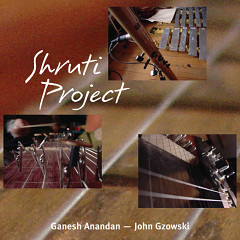
    Shruti Project dans Wonderous Stories

    «Recensione», Vincenzo Giorgio, Wonderous Stories, no 13:36, 1 juillet 2008
    mardi 1 juillet 2008 Presse

    Ci sono molti motivi per dover parlare di questo Shruti Project, e non solo musicali, ma anche sociologici, storici e, perché no, filosofici. D’altronde è cosa nota di come l’osmosi oriente-occidente (fin dai tempi di Platone) abbia prodotto nuove idee e spalancato eccitanti prospettive. Lo stesso può valere per la musica se si tiene conto (solo per fare un esempio tra i tanti) della cosiddetta scuola minimalista nata, una quarantina d’anni fa, da una fatale attrazione dell’America di Terry Riley verso il mantra titanico indiano. Anche se non ci troviamo di fronte a scenari del genere è pur vero che la prospettiva “minimal” persiste nel lavoro di Anandan e Gzowski (musicisti rispettivamente, indiano e canadese in collaborazione dal 1996) se è vero che Shruti è un termine sanscrito che sta proprio ad indicare l’intervallo più piccolo che intercorre tra le note. Ganesh porta tutta la tradizione orientale grazie, soprattutto, ad un nutrito numero di percussioni e ad alla sua vocalità mentre John ci mette un discreto numero di chitarre (acustiche e non). Il risultato finale risulta essere un “ambient” piuttosto materico e sussurrato (I am inside looking out, In a new land, no man’s land.) dove l’elemento melodico non trova posti adeguati per prosperare a differenza della componente ritmica che, invece, sa insinuarsi in ogni anfratto armonico, plasmandolo a propria immagine e somiglianza (With our intuition and instinct). E’, comunque, la componente orientale ad essere maggiormente evidenziata (We listen and act. vocals,, Except maybe the sounds.) anche se non mancano evidenti riferimenti a certa sperimentazione contemporanea (The left hemisphere should intervene) nonché alla tradizione psichedelica più esoterica (To where we are now).


    Il risultato finale risulta essere un “ambient” piuttosto materico e sussurrato…

    Canons + Hoquets dans Wonderous Stories

    «Critique», Vincenzo Giorgio, Wonderous Stories, no 13:36, 1 juillet 2008
    mardi 1 juillet 2008 Presse

    Le cinquième disque de cet incroyable ensemble de cordes, très majoritairement féminin — Clemens Merkel (violon), Nadia Francavilla (violon), Stéphanie Bozzini (alto), Isabelle Bozzini (violoncelle) — représente un chapitre de beauté absolue. Le quatuor canadien (comme du reste cela s’est vu lors des disques précédents, dont un dédié à la musique de Steve Reich) s’intéresse en particulier à l’écriture de musiciens contemporains tels le britannique Howard Skempton (élève de Cornelius Cardew) et le japonais Jo Kondo. Les pièces Catch et Tendrils de Skempton atteignent des sommets de densité incomparable par une dilatation dramatique des espaces timbraux au moyen de chromatismes tourmentés qui fleurent l’instrospection, une spiritualité dense et une douceur décadente sans jamais perdre la référence tonale. Bref, comme l’a écrit Charles Baudelaire, la beauté ineffable d’un coucher de soleil inéluctable… Plus inquiétante l’écriture du compositeur nippon tendant à allonger d’une manière quasi-paroxistique les sons jusqu’à les pousser à effleurer le ciel. Un ciel oblique sans doute. Ainsi la prière déchirante de Hypsotony, un hymne à la «Déplaisance Sublime» alors qu’avec Fern le compositeur récupère l’utilisation du «silence» par le truchement d’une utilisation insistante du «piano» et «pianissimo» en lien avec des cordes merveilleusement combinées dans une perspective de colorations quasi-électroniques. Le disque se conclut de façon superbe par la rugueuse pièce Mr Bloomfield, His Spacing, elle aussi balançant entre des tourments spasmodiques et des silences aériens. Jamais aurions-nous pensé qu’on pouvait tirer de quatre archets une palette chromatique aussi variée: une musique carrément «éblouissante»!!

    Jamais aurions-nous pensé qu’on pouvait tirer de quatre archets une palette chromatique aussi variée: une musique carrément éblouissante!!

    Plumb dans The Wire

    «Review», Philip Clark, The Wire, no 293, 1 juillet 2008
    mardi 1 juillet 2008 Presse

    If this combination of clarinet and trombone echoes a classic jazz frontline from the era of King Oliver or Jelly Roll Morton, it’s not a heritage that Toronto based Lori Freedman and Scott Thomson deny. Indeed one track from this superb duo record, Plumb, eagerly embraces that lineage, as Freedman’s chattery clarinet lines interweave against the contour’s of Thomson’s abstracted tailgating trombone. But there are other concerns too: Freedman bounces off fruity fundamentals as she explores the outer reaches of her instrument’s overtones, while elsewhere deadpan post-dada humour belly-laughs its way to the front. Remarkably serious entertainment.

    Remarkably serious entertainment.

    Tim Brady, Bradyworks, Martin Messier dans Downtown Music Gallery

    «Review of the 25th Annual Festival international de musique actuelle de Victoriaville», Bruce Lee Gallanter, Downtown Music Gallery, 20 juin 2008
    vendredi 20 juin 2008 Presse

    The second day began with Montréal-based guitarist and composer Tim Brady with the video artist Martin Messier and the Bradyworks ensemble. Brady opened with a piece for solo guitar with video. The guitar part was a Frippish quick-strumming work with a video of orange clouds and lines of words at the bottom of the screen. Interesting, it reminded me of some early space-rock. The second piece was called Switch and was in five parts. Some sections reminded me of Nick Didkovsky’s prog/rock guitar sound with some slowed down bent-string weirdness elsewhere. 57 Ways of Playing Guitar displayed some constantly shifting ways to play the guitar with electronic sounds and beats inserted at certain points. The best piece was last, a Shoshtakovich tribute with (a sort-of) double quartet featuring guitar, piano, sax, percussion and a sampled string quartet. The writing recalled some Zappa-like complexities and layers of images of old St. Petersberg with current images of the same city worked very well with the music. […]

    Jean Derome dans Downtown Music Gallery

    «Review of the 25th Annual Festival international de musique actuelle de Victoriaville», Bruce Lee Gallanter, Downtown Music Gallery, 20 juin 2008
    vendredi 20 juin 2008 Presse

    The Victo fest began with Jean Derome et les Dangereux Zhoms at the cinema. It seemed only appropriate that one of Quebec’s most creative composers, musicians and multi-bandleaders, would open this great fest in Victoriaville, a small town in the center of Quebec. Jean Derome is reeds wizard and a most successful and diverse composer and one of the reasons we go keep going back to the Victo Fest every year. Mr. Derome brought his dynamic 5-piece all-star ensemble plus another seven musicians were added. Derome and his 12-piece small orchestra performed two new long pieces called Traquenards and Plates-formes. The musicians included Derome (alto sax & flutes), Lori Freedman (clarinets), Tom Walsh (trombone), Martin Tétreault (turntables) & Joane Hétu (vocals). The rhythm team of Pierre Cartier (el. bass) and Pierre Tanguay (drums) was in especially fine form as they played their cosmic throb undertow while the clarinet and strings played a lovely repeating theme on top. Joane Hétu did a good deal of odd bird-like vocal sounds that blended well with Martin Tétreault’s turntables effects. Jean Derome’s composing continues to get better and better, I dug the way he interspersed more melodic sections with directed freer parts. This piece seemed darker than anything I’ve heard from Jean Derome previously, yet it was quite successful on a variety of levels. Bravo! […]

    Jean Derome’s composing continues to get better and better […] Bravo!
  • 10
  • 11
  • 12
  • 13
  • 14
  • 15
  • 16
  • 17
  • 18