Sauter au contenu principal
actuellecd

Blogue

215 résultats
  • 19
  • 20
  • 21
  • 22
  • 23
  • 24
  • 25
  • 26
  • 27
  • Canons + Hoquets dans Vital

    «Review», Dolf Mulder, Vital, no 624, 22 avril 2008
    mardi 22 avril 2008 Presse

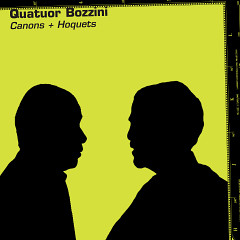
    A few years ago Quator Bozzini — the string quartet of the sisters Bozzini — released a cd with Different Trains of Steve Reich. Disappointing nor because of the musicianship of this excellent quartet, nor their interpretation of this work. But why this work, this composer? Personally, I’m not waiting for once again a registration of well-known works from well-known composers. So I’m happy they focus now on not so familiar composers. The cd opens with two works from the English composer Howard Skempton, namely Catch (2001) and Tendrils (2004). Succeeded by three works by Jo Kondo: Hypsotony (1989), Fern (1990) and Mr Bloomfield, His Spacing (1973). Both pieces of Skempton are sweet elegant compositions. Especially Catch with its canonic structure, is a meditative piece drenched in medieval atmospheres. Tendrils meanders pleasantly along, albeit a bit too long. The works of Japanese composer Kondo continue in more or less the same tempo, but in contrast with the compositions of Skempton, Kondo’s works are very dissonant from start to finish. This is a interesting selection of compositions. In their similarities and differences they make an inspiring anthology, carrying all the string quartets composed by respectively Skempton and Kondo.

    Avec leurs ressemblances et leurs différences, elles (les œuvres) composent une anthologie très inspirante.

    Clic dans Panpot

    «Review», Russ Cooper, Panpot, 11 avril 2008
    vendredi 11 avril 2008 Presse

    This creative review probably should require some kind of editorial warning — but I’m not sure what — or why.

    You wanna know what this record sounds like? Okay, stay with me. George Duke and Bitches Brew are up at the Université de Montréal music building, hanging out, laughing at 4/4 time. Since Bitches Brew is more a concept than an actual person, George can just communicate with it with his mind and by flaring his nostrils. In a series of wiggles, brain and otherwise, George says to Bitches Brew, “Yo, can you do this on your trombone?” Wng wng waaa mwubmub. Bitches Brew doesn’t say anything. Instead, he mentally commandeers a bunch of students to hook up all their pedals to all their instruments and go Wng wng waa mwubwub mwuunngg all at once.

    George is all, like, “What the fizzuck? Okay, can you go this on your flute in 5/16 time? Fwee fwee zizz ziizz twiidly twaaaong. Bitches Brew materializes himself into a large dog from the stench particles in the carpet, grabs a xylophone player and sticks a flute in his nose. Fwee fwee zizz ziizz twiidly twaaaong emanates through the fetid air”.

    Totally weirded out after getting nasally nose-raped by the spirit of a record from 1970, the xylophone player decides to go with it because, you know, that’s jazz. They eat some poutine spiked with mushrooms, grab their big scarves and jackets with elbow patches, and decided to get dark.

    For weeks, their routine consists eating scales and wiping their asses with triplets. When their cheeks were raw beyond a cottony softness, they decide to stop. Crestfallen, each band member sheds a tear of diamonds and places it upon a sunny day.

    George Duke shrugs, gives Bitches Brew a beer, and says, “Not bad. I mean, this record doesn’t sound like somebody’s maiden voyage, but what the fizzuck?

    To Continue dans Vital

    «Review», Dolf Mulder, Vital, no 622, 8 avril 2008
    mardi 8 avril 2008 Presse

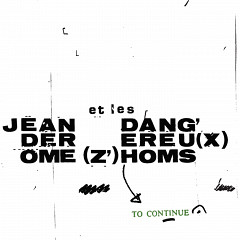
    Jean Derome returns with another CD with his Dangereux Zhoms. After a silence of ten years, now the fourth CD by this ensemble sees the light after Carnets de voyage (1994), Navré (1995), and Torticolis (1998). With Tom Walsh (trombone), Guilaume Dostaler (piano), Pierre Cartier (electric bass), Pierre Tanguay (drums) and Derome himself on saxes and flute, we are 65 minutes entertained with new compositions by Derome. A music that is most close to jazz, but that is above all in between everything. With plenty of room for improvisation the music always stays in the neighborhood of the themes that Derome composed. After so many records out Derome does not surprise with something completely new, but satisfies with a very well-crafted new work by a fine ensemble. Impressive I found the solo of Derome in the last 24-minute composition Prières, were he cries his heart out. Honest music.

    Impressive I found the solo of Derome in the last 24-minute composition Prières, were he cries his heart out. Honest music.

    Musique pour objets en voie de disparition dans Vital

    «Review», Dolf Mulder, Vital, no 622, 8 avril 2008
    mardi 8 avril 2008 Presse

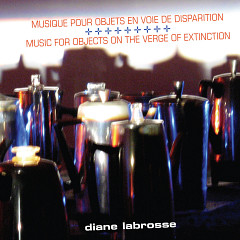
    Two veterans from the Montréal music scene present their newest work. For her new project Diane Labrosse invited the following musicians: Marie-Soleil Bélanger (violin), Jean Derome (flute, fake trumpet), Bernard Falaise (electric guitar), Lori Freedman (clarinet), Jean René (viola), Pierre Tanguay (percussion). Labrosse herself plays accordion. It is a sort of concept album. In 8 compositions she makes use of concrete noises we all know from our daily lives: clocks, telephones, printers, answering machines, etc. Without any manipulation these sounds are integrated in a musical background, by which she tries to evoke a story and atmosphere around these sounds. One could call it a non verbal radioplay, a sonic story that in a way moves along a narrative line. In each composition we hear only one or few musicians. We never hear an ensemble playing. “This disc was entirely assembled without the consent of the musicians playing on it. I thank them for agreeing to record ‘blindfolded’ and let me manipulate them as I pleased” Labrosse explains. So these compositions are probably the result of a lot of editing, etc. This way she has built nice impressionistic, soundscaping pieces. They are carefully structured, with a good feeling for balance and atmosphere.

    This way she has built nice impressionistic, soundscaping pieces.

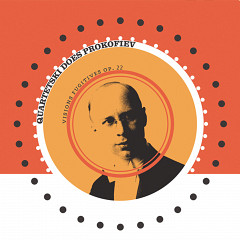
    Visions fugitives op. 22 dans Left Hip Magazine

    «Review», Solomiya Moroz, Left Hip Magazine, 3 avril 2008
    jeudi 3 avril 2008 Presse

    Pierre-Yves Martel’s arrangement of 18 of Prokofiev’s Visions fugitives is an interesting new look at the music of Prokofiev through jazz and improvised music’s perspective. In the past many have tried to arrange Visions fugitives for different ensembles because the tunes of Visions lend themselves easily to adaptation. They are well suited for jazz music because of their colourful, percussive and polytonal nature. One could assume that this is a jazz adaptation because of the instruments involved like double bass, saxophones (soprano, alto, bass clarinet), drum-set, and trumpet. However the musicians rarely venture out into a free improvised jazz world. This kind of approach could be heard just a few times like on tr.2 Andante, tr.14 Dolente or tr.16 Con una dolce lentezza where the music is slow enough to give rise to an improvised jazz-style imagination.

    With all this said, the freely improvised element of the album is the strongest despite many sources of inspiration that the music of Prokofiev and the jazz backgrounds of the musicians bring into play. The arrangements themselves stay very true to the original piano music allowing the improvisations to come in once the musical thoughts of Prokofiev have been expressed in their almost full content. This allows the musicians to have a comfortable space for their own improvisations. A few times the free instrumental improvisations take place before the piece or in the middle. I particularly like when they happen in the middle, allowing for a space between the old material and the new, a retrospective look at the music of Prokofiev. Though the arrangements are directly taken from Prokofiev, the rest of improvisations are all musicians’ creations. The bassist Pierre-Yves Martel, drummer Isaiah Caccerelli, trumpeter Gordon Allen and saxophonist Philippe Lauzier have worked together on many free improvised music sessions, they are all well-known musicians within Montréal’s free-improvised music scene. Thus making improvised music together comes as a very natural activity for these musicians and it is not surprising that they find themselves together in this project initiated by Pierre-Yves Martel.

    Musically, some improvisations grow out of musicians’ thoughts, sometimes having almost nothing to do with the music of Prokofiev that came before. Especially when it is very free and effect inspired. This approach works very well for Con vivacità, where the free improvisations take the listener away into another musical universe just to be brought back by a slower section of the piece lead by the double bass. It also works well on Assai moderato and Feroce. An introductory improvisation suits the beginning of Inquieto, which has two improvisations each very different from another. The album is very poetic especially when a solo instrumental improvisation sets the tone. One has to listen to Pierre-Yves Martel on the bass in the solo sections of the album to catch this poetic quality. Gordon Allen’s improvisations are full of satire and poetry as well. Isaiah’s tumbrel drumming helped by many different kinds of drumming sticks adds a lot to the jazz feel and tone of the Visions, giving the ensemble an invitation to indefinite-pitch explorations. While Philippe Lauzier demonstrates fine soprano saxophone playing with a tone that is both light and playful adding a theatrical element to the Visions and bringing the original material into a sharper focus. There are some beautiful ensemble moments like on tr.17 Allegretto II, perhaps due to a broken-up piece segment structure alternated by improvisational segments, keeping our attention focused on improvisations to come.
    … the freely improvised element of the album is the strongest…
  • 19
  • 20
  • 21
  • 22
  • 23
  • 24
  • 25
  • 26
  • 27